
A general counsel opens a spreadsheet on a Monday morning and counts forty-two trademark registrations spread across eighteen countries. Three renewals are due within sixty days. Two Madrid Protocol subsequent designations are pending. One opposition deadline in the European Union is a week away. There is no one on staff who has managed a docket this complex, and hiring a full-time in-house paralegal for one department feels like overkill.
This is exactly the moment when companies decide to hire a remote trademark paralegal with international portfolio experience. The role has moved from a “nice to have” to a genuine operational necessity for law firms, corporate legal departments, and boutique IP practices managing brands across multiple jurisdictions.

This guide walks through what the role actually involves, the skills and credentials that separate a strong hire from a risky one, a step-by-step hiring process, common mistakes to avoid, and realistic cost expectations. Whether you are a solo practitioner adding trademark capacity or a corporate IP director scaling a global portfolio, this article gives you a practical framework to make the right decision.
Notably, the shift toward remote IP support is not a temporary trend. Over the past several years, law firms and corporate legal departments alike have restructured how they staff docketing and prosecution support functions. Cloud-based docketing platforms, secure client portals, and video-conferencing tools have made geography far less relevant to the quality of support a paralegal can provide. As a result, the question firms now ask is no longer “should we consider remote support,” but rather “how do we identify the right remote trademark paralegal for a portfolio this complex.”
That distinction matters because international trademark work carries real financial consequences when handled poorly. A missed renewal in a single country can mean losing exclusive rights to a brand name in that market entirely, sometimes permanently. Therefore, the hiring decision described in this guide is not simply an administrative staffing choice; it is a risk-management decision that touches directly on brand value.
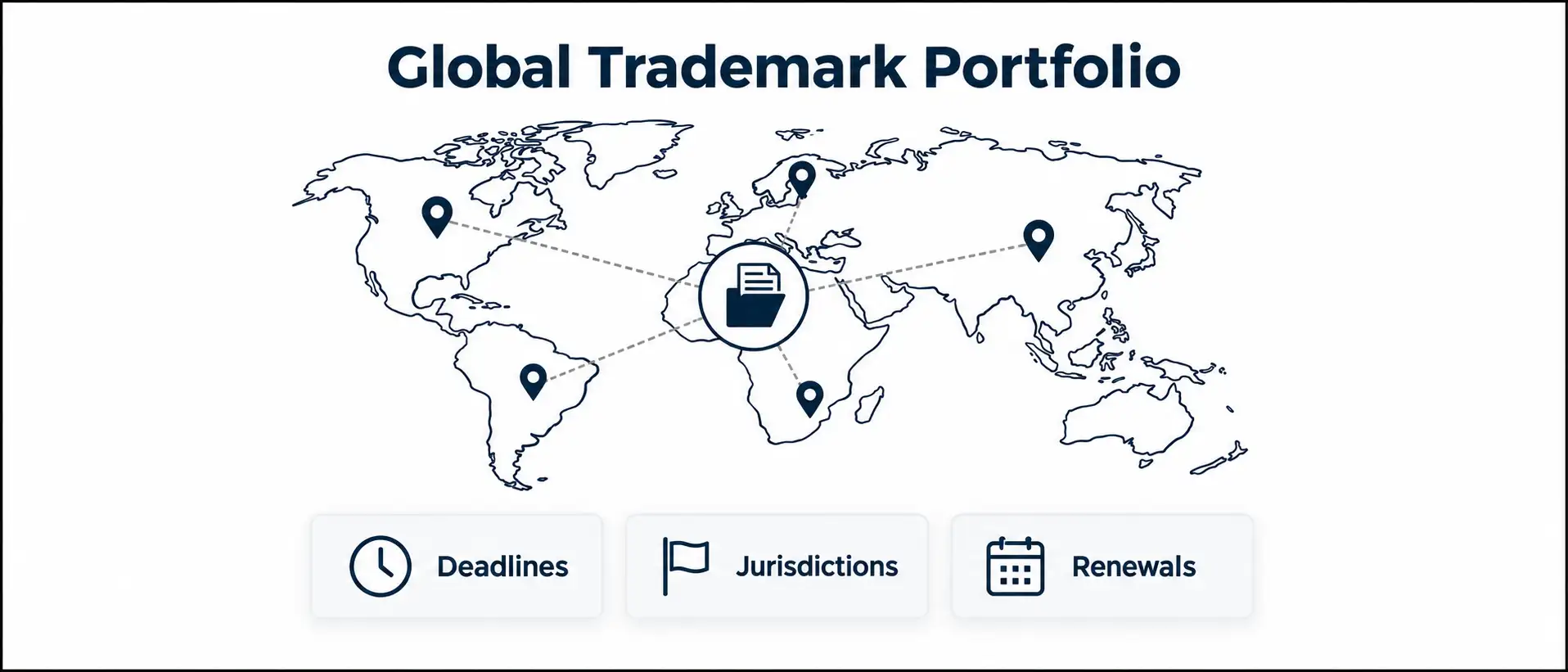
What is a Remote Trademark Paralegal With International Portfolio Experience?
A remote trademark paralegal with international portfolio experience is a legal support professional who manages trademark filings, deadlines, and correspondence across multiple countries while working outside a traditional office. Unlike a general paralegal, this specialist understands the Madrid Protocol, foreign associate coordination, multi-jurisdiction docketing, and country-specific filing requirements.
In short, this person acts as the connective tissue between your firm and every trademark office your brand touches, whether that is the USPTO, EUIPO, UKIPO, or a national office in Japan, Brazil, or India.
Quick definition for reference:
A trademark paralegal supports attorneys with trademark prosecution tasks such as filing applications, responding to office actions, tracking deadlines, and maintaining registrations. When the role covers “international portfolio experience,” it specifically means the paralegal has hands-on knowledge of cross-border filing systems, foreign associate workflows, and multi-country renewal cycles.
It is worth noting that “remote” and “international” are two separate qualifications that only become powerful when combined. A paralegal can work remotely while only handling domestic filings, and conversely, a paralegal can have deep international experience while working entirely from a physical office. When you specifically hire a remote trademark paralegal with international portfolio experience, you are looking for someone who satisfies both criteria at once: comfort with distributed, asynchronous work, and genuine procedural fluency across multiple national and regional trademark systems.
This combination has become increasingly valuable as companies expand into new markets faster than their legal support infrastructure can keep pace. A brand that files in three countries today may be filing in fifteen within two or three years, and the paralegal support model needs to scale accordingly, often well before a full-time in-house hire in every relevant time zone becomes financially justifiable.
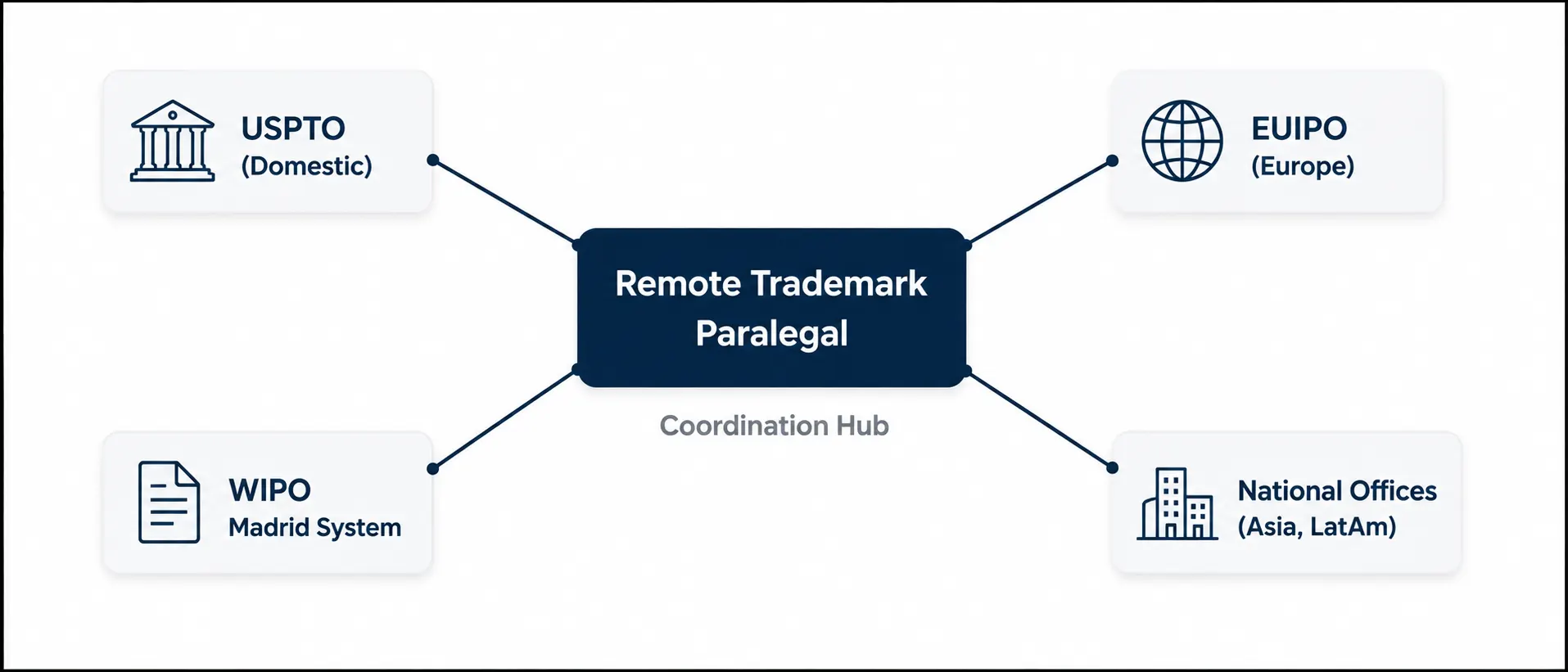
Why Companies Increasingly Hire a Remote Trademark Paralegal With International Portfolio Experience
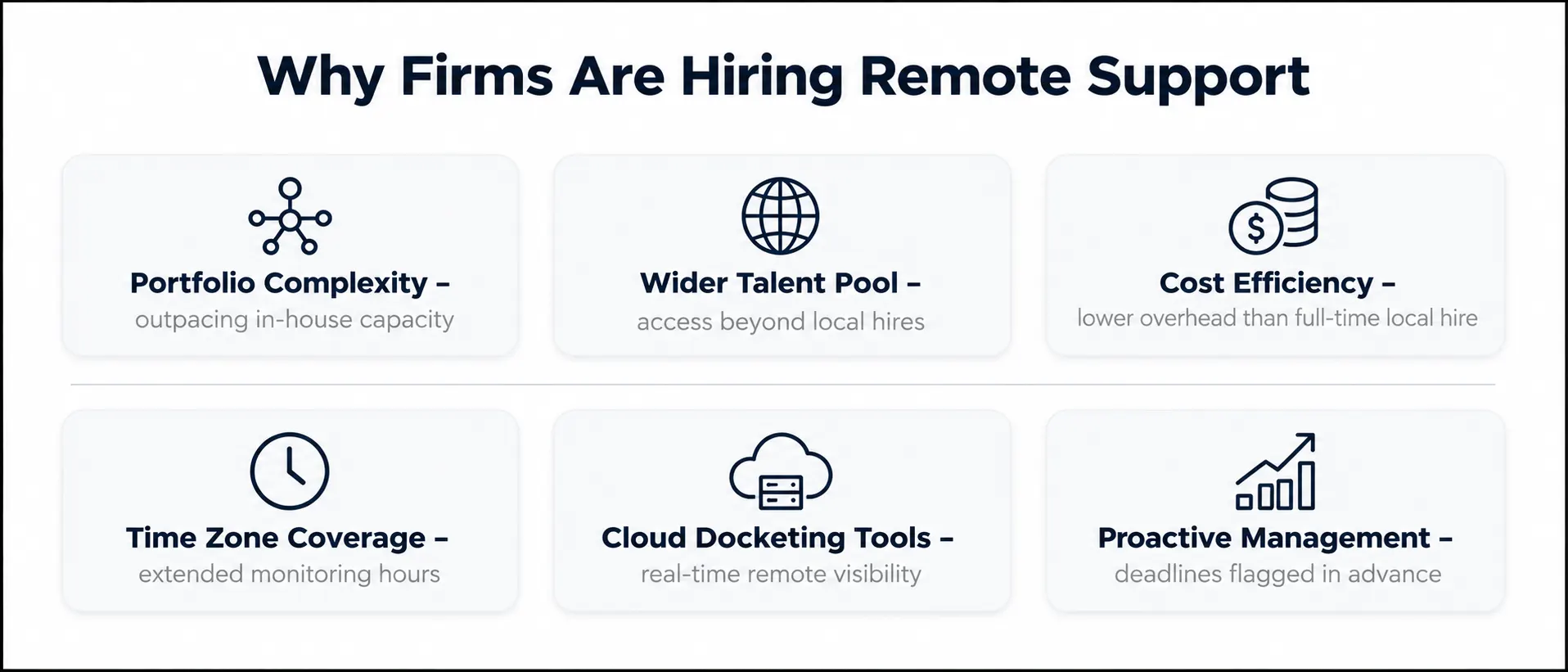
Global brand protection has become the norm rather than the exception. Even mid-sized companies now file trademarks in ten or more countries within their first few years of international expansion. Consequently, the demand for specialized, remote-capable support has grown sharply.
Here are the primary drivers behind this shift:
- Portfolio complexity has outpaced in-house capacity. Most legal departments were not built to track deadlines across dozens of jurisdictions simultaneously.
- Remote talent pools widen access to specialized skill sets. Firms are no longer limited to paralegals within commuting distance of their office.
- Cost efficiency matters more than ever. A remote hire, particularly one working across time zones, often costs significantly less than an equivalent in-house employee in a major metro area.
- Time zone coverage extends working hours. A paralegal working from a different region can monitor foreign deadlines and respond to overseas associates during hours when your domestic team is offline.
- Software and cloud docketing tools make remote collaboration seamless. Modern IP management platforms allow real-time visibility regardless of location.
Furthermore, because international trademark work is procedural and deadline-driven, it lends itself naturally to remote structures, provided the paralegal has the right training and oversight.
The Shift From Reactive to Proactive Portfolio Management
Historically, many firms managed international trademarks reactively, responding to deadlines as they surfaced rather than planning around them. However, as portfolios grow, this reactive approach becomes unsustainable. A dedicated remote trademark paralegal with international experience shifts the function toward proactive management: building forward-looking deadline calendars, flagging upcoming renewal windows months in advance, and coordinating with foreign associates before, rather than after, a deadline becomes urgent.
This proactive posture is particularly valuable during periods of business change, such as mergers, acquisitions, or rebranding initiatives, when trademark portfolios must be audited, updated, and sometimes restructured across many jurisdictions simultaneously. Firms that already run structured docketing practices on the patent side often recognize the same discipline is needed for global trademark portfolios.
Core Responsibilities of a Remote Trademark Paralegal With International Experience
Before you hire a remote trademark paralegal with international portfolio experience, it helps to understand exactly what falls within the scope of the role. The table below breaks down the primary responsibilities.
| Responsibility Area | What It Involves |
|---|---|
| Docketing and deadline management | Tracking filing, response, and renewal deadlines across every jurisdiction in the portfolio |
| Madrid Protocol filings | Preparing and submitting international applications and subsequent designations through WIPO |
| Foreign associate coordination | Communicating instructions, budgets, and status updates with local counsel in each country |
| Office action tracking | Monitoring incoming office actions from foreign trademark offices and routing them to attorneys |
| Renewal management | Preparing and submitting renewal filings before statutory deadlines lapse |
| Trademark search support | Coordinating clearance and availability searches across multiple registries |
| Recordation filings | Handling assignments, name changes, and address updates with relevant trademark offices |
| Portfolio reporting | Generating status reports for clients or internal stakeholders on a recurring basis |
Additionally, many remote trademark paralegals assist with opposition and cancellation proceedings, invoice reconciliation for foreign counsel fees, and data migration when a firm switches docketing software.
Beyond these core tasks, the strongest candidates also contribute institutional knowledge over time. For example, they learn which foreign associates respond quickly and which require extra lead time, which jurisdictions have unusually strict formatting requirements for powers of attorney, and which countries frequently issue provisional refusals that require a substantive response rather than a simple procedural fix. This accumulated knowledge becomes a genuine operational asset, one that is difficult to replicate quickly if the role changes hands without proper documentation.
Skills and Qualifications to Look For
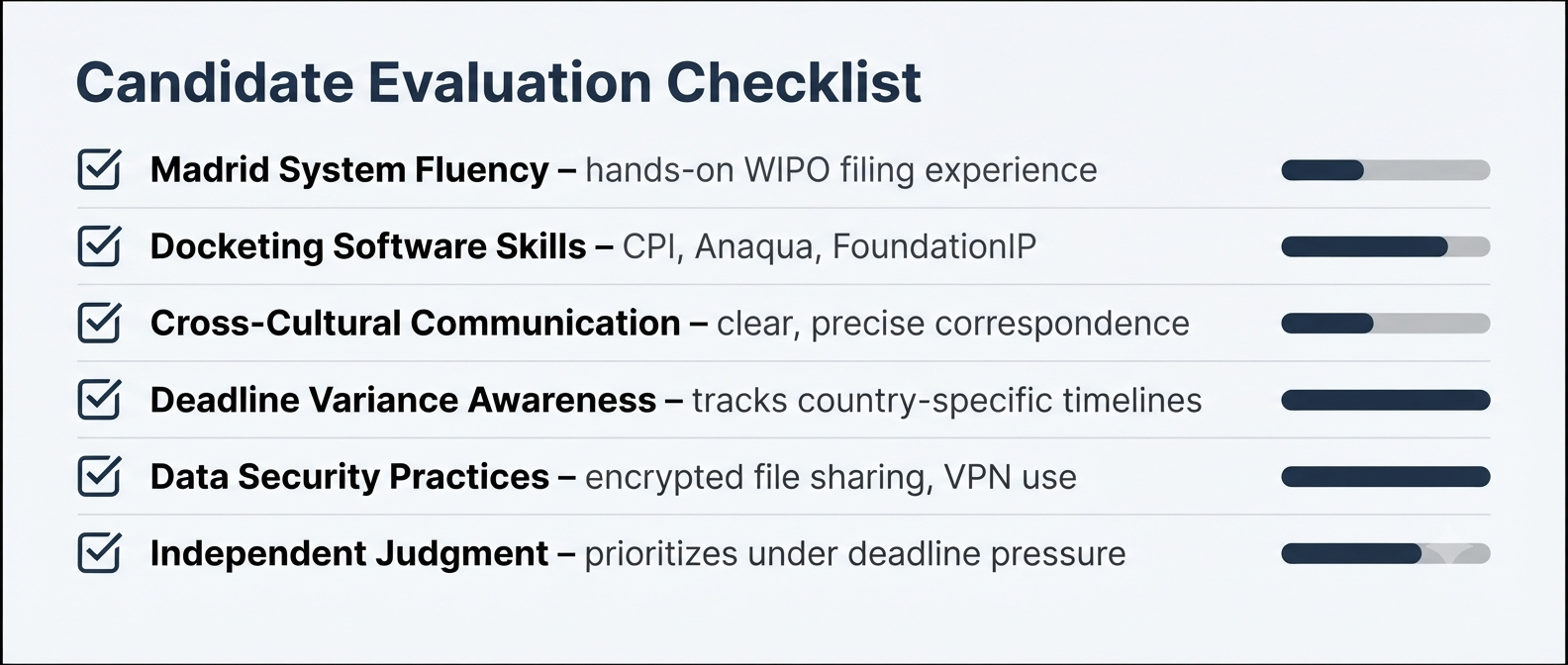
Not every trademark paralegal is equipped to manage an international docket. When you hire a remote trademark paralegal with international portfolio experience, prioritize candidates who demonstrate the following.
1. Familiarity With the Madrid System and Regional Filing Routes
A candidate should be comfortable explaining the difference between filing a Madrid Protocol application through the WIPO Madrid System and pursuing direct national filings. This distinction affects cost, timeline, and strategy, so genuine hands-on experience matters more than textbook knowledge.
2. Docketing Software Proficiency
Look for experience with platforms such as CPI, Anaqua, FoundationIP, or Clarivate’s IP management tools. A paralegal who has actually configured deadline rules for multiple jurisdictions inside these systems will ramp up far faster than one who has only used a single domestic system.
3. Cross-Cultural Communication Skills
Because this role involves daily correspondence with foreign associates, strong written communication and cultural awareness reduce friction and miscommunication, particularly when instructions must be precise to avoid costly filing errors.
4. Attention to Statutory Deadline Variance
Deadlines are not uniform across countries. For instance, renewal grace periods, opposition windows, and response deadlines vary considerably by jurisdiction. A qualified paralegal tracks these differences meticulously rather than assuming U.S.-style timelines apply everywhere. Resources such as the International Trademark Association (INTA) publish country-specific practice guides that experienced paralegals often reference to stay current on these variances.
5. Data Security Awareness
Since remote work involves handling confidential client and brand information outside a firm’s physical office, candidates should understand basic data protection practices, including secure file sharing, VPN use, and compliance with firm confidentiality policies.
6. Independent Judgment Under Deadline Pressure
Remote work requires more self-direction than in-office roles. Therefore, look for candidates who can prioritize competing deadlines without constant supervision while still escalating genuinely urgent issues promptly.
Step-by-Step Guide: How to Hire a Remote Trademark Paralegal With International Portfolio Experience
Hiring the right person requires a structured process rather than a quick resume review. Below is a practical, step-by-step approach.
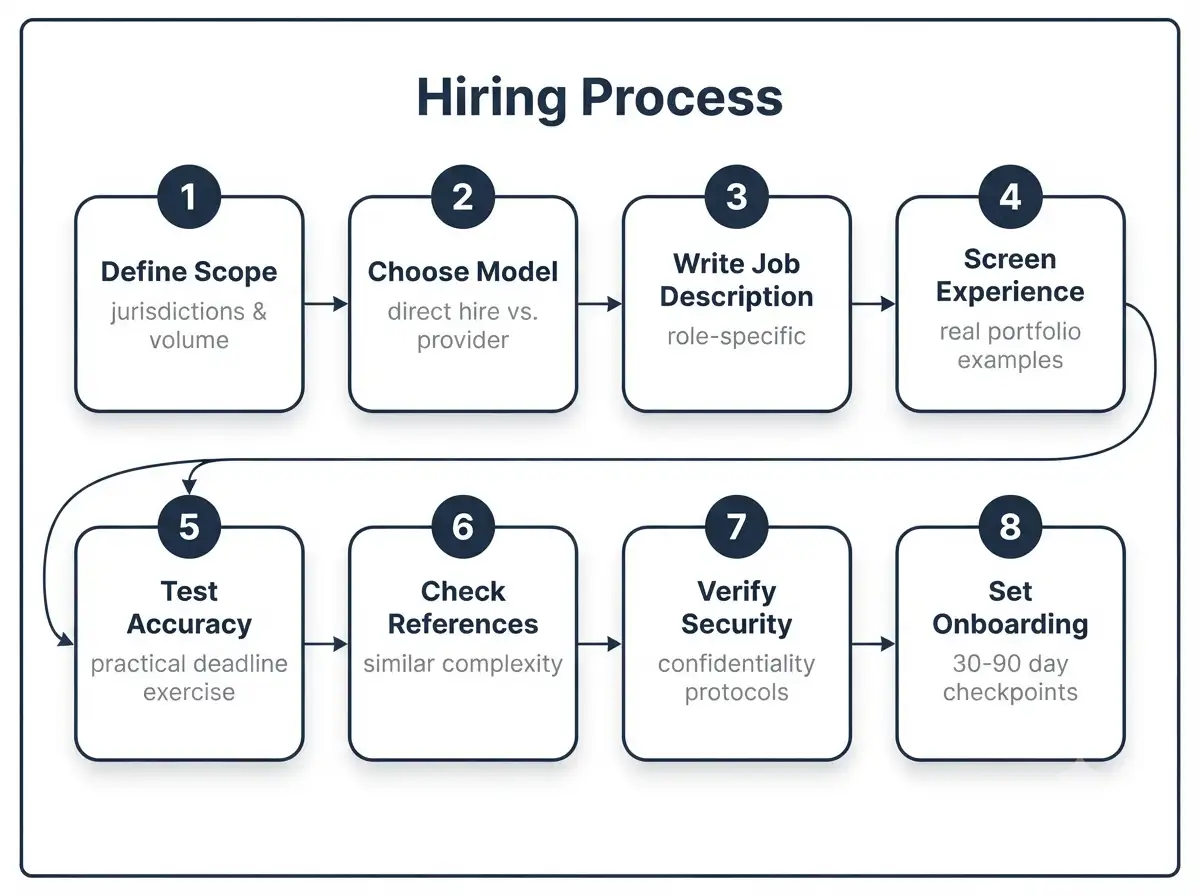
- Define the scope of the portfolio. Determine how many jurisdictions, trademarks, and filing types the paralegal will manage, since this shapes the experience level you need.
- Decide between a direct hire and an outsourced service provider. A direct remote employee offers dedicated attention, while an outsourced paralegal service provides built-in redundancy and specialized training.
- Write a role-specific job description. Avoid generic paralegal postings; specify Madrid Protocol experience, docketing software, and the number of jurisdictions the candidate should be prepared to manage.
- Screen for hands-on portfolio experience, not just certifications. Ask candidates to walk through a real (anonymized) example of a multi-country renewal cycle they managed.
- Test docketing accuracy during the interview process. A short practical exercise, such as calculating a response deadline under a hypothetical fact pattern, reveals more than a resume ever will.
- Verify references from firms with similar portfolio complexity. A reference from a domestic-only practice may not validate international competency.
- Confirm data security and confidentiality protocols. Ensure the candidate or provider follows encrypted file transfer, access controls, and firm-specific confidentiality agreements.
- Establish clear onboarding and quality-control checkpoints. Set a structured 30- to 90-day review period with defined milestones before granting full portfolio access.
Following this sequence significantly reduces the risk of costly filing errors during the transition period.
In-House vs. Outsourced Remote Trademark Paralegal: A Comparison
Many firms weigh whether to hire a dedicated remote employee or partner with a specialized outsourcing provider. Both paths can work, but they carry different trade-offs.
| Factor | In-House Remote Hire | Outsourced Paralegal Service |
|---|---|---|
| Onboarding time | Longer, since training starts from scratch | Shorter, since providers pre-train staff on international workflows |
| Redundancy if staff leaves | Low; a single point of failure | High; providers typically assign backup coverage |
| Cost structure | Fixed salary plus benefits | Often flexible, pay-per-service or à la carte pricing |
| Oversight and quality control | Managed entirely internally | Frequently includes built-in multi-layer review processes |
| Specialization depth | Depends on individual candidate | Often broader, drawing on a team’s collective experience |
| Best suited for | Firms with a large, steady international docket | Firms with fluctuating volume or leaner internal teams |
If your firm needs help deciding between these approaches, our article on how to evaluate and compare IP outsourcing companies outlines a more detailed vendor comparison framework.
Common Mistakes When Hiring a Remote Trademark Paralegal With International Experience
Even experienced hiring managers make avoidable errors during this process. Watch for these common pitfalls.
- Assuming domestic trademark experience transfers automatically. A paralegal skilled in U.S. filings may not understand the nuances of EUIPO oppositions or Madrid Protocol subsequent designations.
- Skipping a practical skills assessment. Resumes can overstate familiarity with international systems, so verify competency directly.
- Underestimating time zone logistics. Failing to plan overlap hours with foreign associates can slow down urgent matters.
- Neglecting data security due diligence. Remote access to confidential portfolios requires clear protocols from day one.
- Choosing the lowest-cost option without evaluating quality control. A missed international deadline can cost far more than the savings from a cheaper hire.
- Failing to define escalation procedures. Without clear guidance on when to loop in an attorney, minor issues can turn into missed deadlines.
Avoiding these mistakes protects both your portfolio and your budget.
It is also worth noting that these mistakes tend to compound. For instance, a firm that skips a practical skills assessment and also underestimates time zone logistics may not discover the gap in competency until a genuine deadline is already at risk, at which point the cost of correcting course is far higher than it would have been during hiring. Building even a lightweight verification process into the hiring workflow, such as the practical exercise described in the step-by-step guide above, meaningfully reduces this compounding risk.
Expert Tips for a Smooth Onboarding Process
Once you hire a remote trademark paralegal with international portfolio experience, onboarding well is just as important as the hiring decision itself. Consider these expert tips.
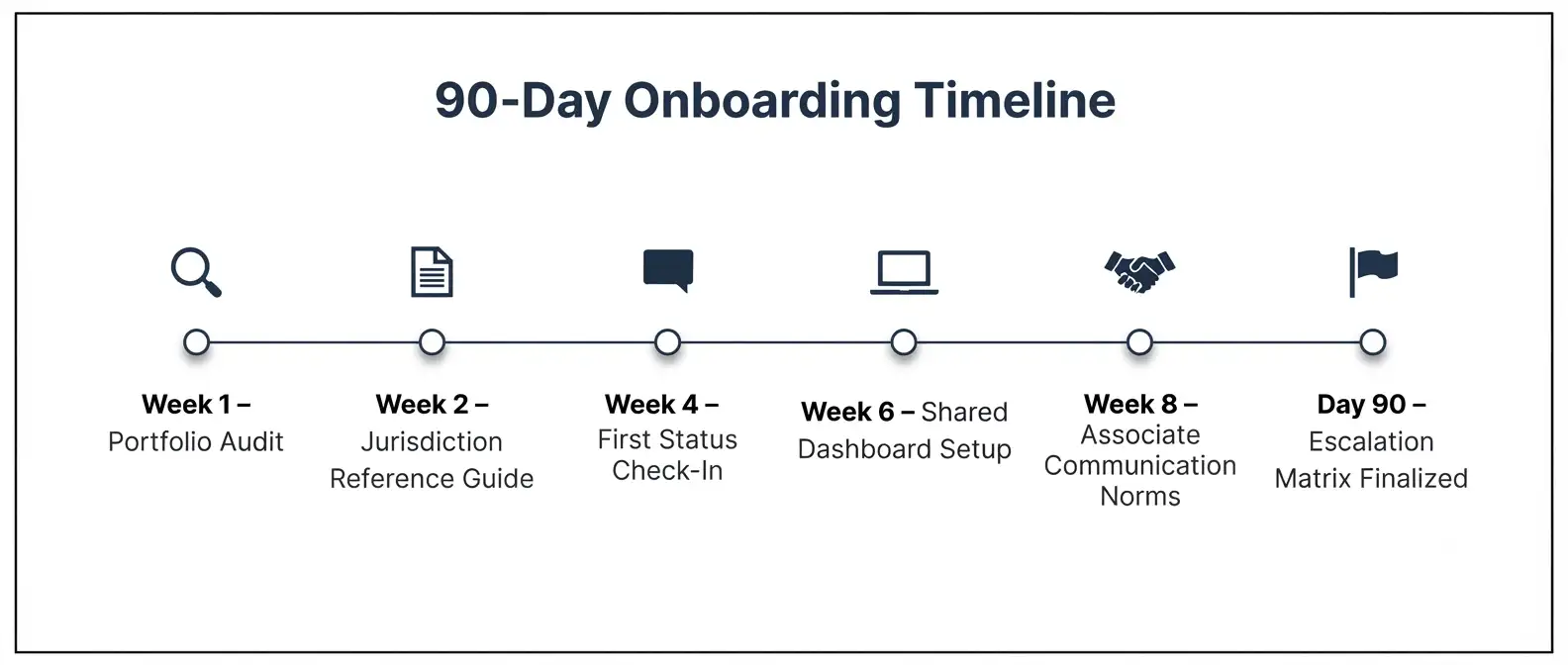
- Start with a portfolio audit together. Have the new paralegal review the existing docket in the first week to catch any inherited errors early.
- Create a jurisdiction reference guide. Document country-specific quirks, such as unusual grace periods or required local agent formats, so knowledge is not lost if staff changes.
- Set recurring status check-ins. Weekly or biweekly syncs during the first ninety days help surface questions before they become deadline problems.
- Use shared docketing dashboards. Real-time visibility reduces the need for constant email updates and keeps everyone aligned.
- Clarify communication norms with foreign associates. Decide who has authority to instruct local counsel directly versus who requires attorney sign-off.
- Document a jurisdiction escalation matrix. List which jurisdictions historically cause the most delays or complications, so the new paralegal knows where to apply extra caution from day one.
Taken together, these onboarding practices transform a new hire from a source of risk into a source of stability within the first quarter of engagement. Firms that invest this structured effort upfront consistently report fewer missed deadlines and smoother foreign associate relationships during the paralegal’s first year.
Typical Cost Considerations
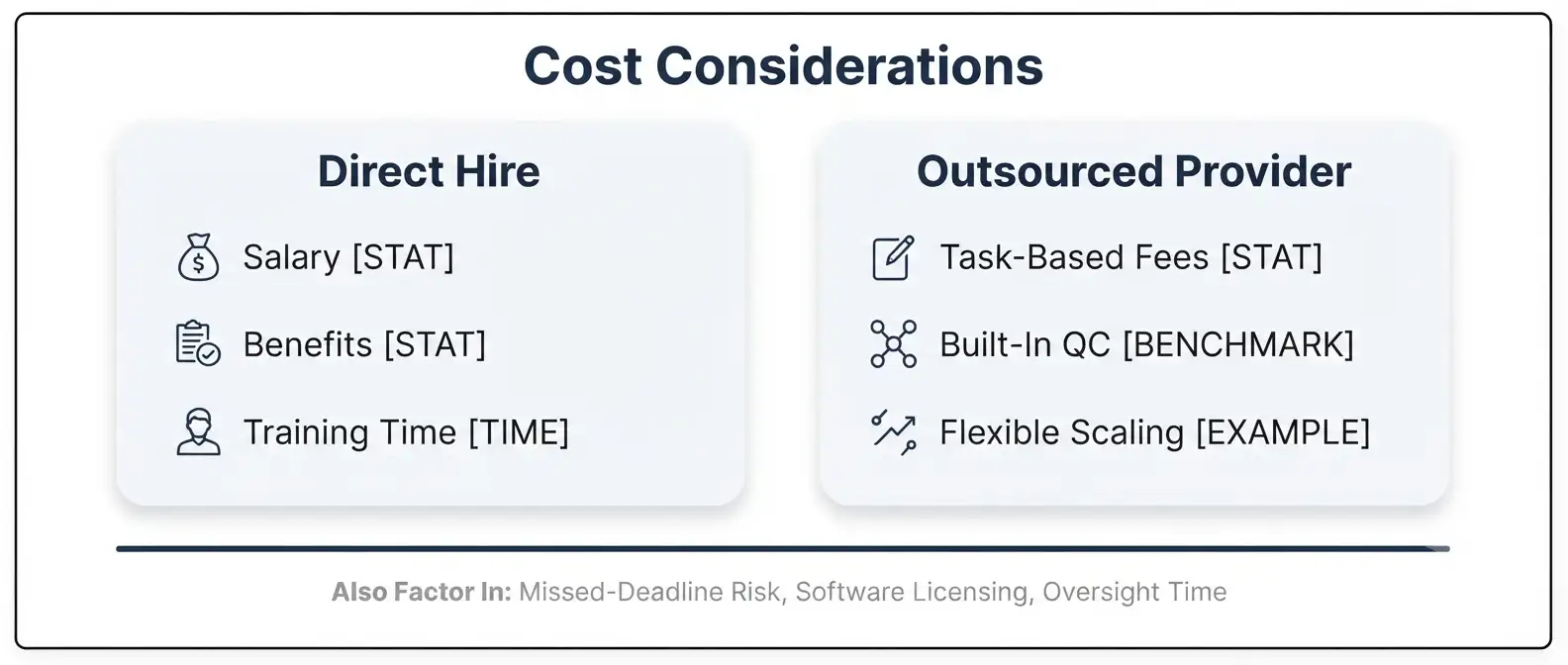
Costs vary considerably depending on whether you hire directly or partner with a specialized firm, as well as the paralegal’s location and experience level. Generally, direct remote hires command a salary comparable to mid-level domestic paralegals, while outsourced providers often use flexible, à la carte pricing tied to specific tasks such as filings, renewals, or docketing support.
When comparing costs, factor in indirect expenses too, including training time, software licensing, quality-control overhead, and the financial risk of a missed deadline. A firm’s article on IP portfolio management outsourcing cost, process, and ROI offers a deeper breakdown of these budgeting considerations.
How This Role Fits Into a Broader IP Support Strategy
Hiring a remote trademark paralegal rarely happens in isolation. It is usually one piece of a broader strategy to strengthen global brand protection. For example, firms often pair this hire with improved renewal tracking, as outlined in our guide on how to manage corporate trademark renewals globally, or with a clearer understanding of the distinction covered in what is the difference between a trademark search and trademark monitoring.
Corporate legal departments managing especially complex, high-volume portfolios sometimes also compare full-service options, such as those reviewed in the best trademark portfolio management services, before deciding whether a single remote hire is sufficient or whether a managed docketing solution makes more sense, a decision explored further in managed trademark docketing versus software.
Boutique firms in particular benefit from this layered approach, since scaling international capability without adding full-time headcount is often the difference between winning and losing larger corporate clients, a theme covered in IP support services for boutique IP law firms.
Finally, if your firm also handles patent matters, it is worth noting that similar remote-support principles apply on the patent side as well, as discussed in whether remote patent paralegal services remain compliant with USPTO rules. Firms managing both trademark and TTAB matters may also want to review which providers offer trained TTAB paralegal support services, since opposition and cancellation proceedings often intersect with international portfolio work.
Legal Supervision and Compliance Considerations
Even the most experienced remote trademark paralegal must work under appropriate attorney supervision. This is not merely a best practice; in many jurisdictions, paralegals are prohibited from providing legal advice or exercising independent legal judgment on substantive matters. Consequently, firms should build clear supervision structures into the remote arrangement from the outset.
In practice, this means the paralegal should:
- Route all substantive legal questions, such as office action response strategy, to a licensed attorney.
- Operate under documented standard operating procedures approved by supervising counsel.
- Have filings and correspondence reviewed at defined checkpoints, particularly during the first several months.
- Maintain clear, auditable records of every action taken on a client’s or company’s behalf.
Firms working with an outsourced provider should specifically confirm that attorney oversight is built into the provider’s internal workflow, rather than assumed. This is one of the most important, and most frequently overlooked, due diligence steps when a firm decides to hire a remote trademark paralegal with international portfolio experience through a third-party service rather than a direct employee.
How This Role Differs Across Firm Types
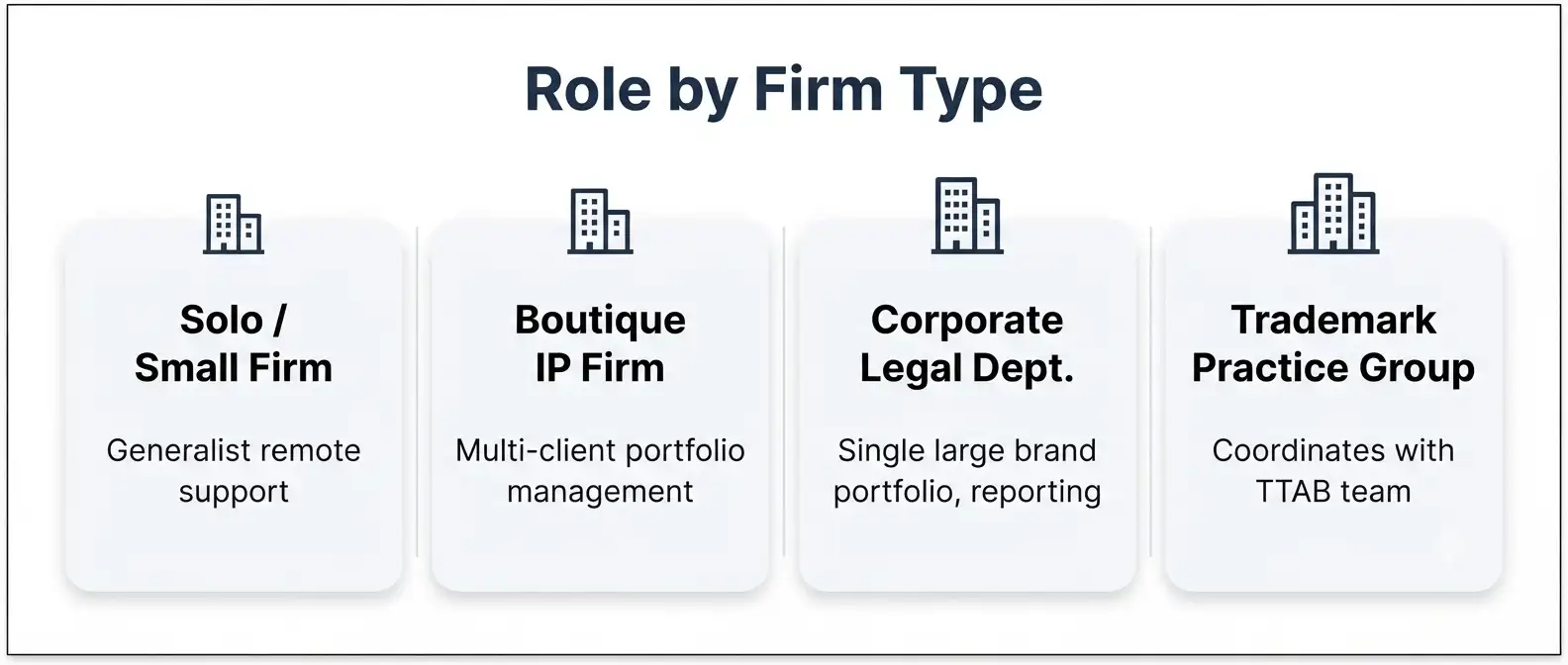
The exact shape of this role can differ considerably depending on the type of organization hiring for it. A quick comparison helps illustrate these differences:
- Solo practitioners and small firms typically need a generalist remote paralegal capable of handling filings, docketing, and light client communication across a moderate number of countries.
- Boutique IP firms often need someone who can manage several clients’ portfolios simultaneously, requiring stronger organizational systems and clear client-by-client segregation of work.
- Corporate legal departments tend to need a paralegal focused on a single, often very large, brand portfolio, with deeper reporting requirements to internal stakeholders and finance teams tracking foreign counsel spend.
- Law firms with dedicated trademark practice groups frequently need paralegals who can also support related matters, such as coordinating with the team handling TTAB opposition and cancellation proceedings, since these matters often intersect with the broader international portfolio.
Recognizing which category your organization falls into helps sharpen the job description and interview questions before you begin the hiring process.
Frequently Asked Questions
What does it mean to hire a remote trademark paralegal with international portfolio experience?
It means bringing on a legal support professional, working outside a traditional office, who specifically understands multi-jurisdiction trademark filings, Madrid Protocol procedures, and foreign associate coordination, rather than only domestic trademark prosecution.
How much does it cost to hire a remote trademark paralegal with international portfolio experience?
Costs vary based on location, experience, and whether you hire directly or through an outsourced provider. Direct hires typically involve salary and benefits, while outsourced services often use flexible, task-based pricing.
What qualifications should I look for in an international trademark paralegal?
Prioritize candidates with hands-on Madrid Protocol experience, docketing software proficiency, strong cross-cultural communication skills, and a demonstrated track record managing deadlines across multiple countries.
Is it safe to hire a remote trademark paralegal for confidential portfolio work?
Yes, provided the hire or provider follows established data security protocols, including encrypted file sharing, controlled system access, and signed confidentiality agreements. Always verify these safeguards before granting portfolio access.
Should I hire an individual remote paralegal or use an outsourced service?
It depends on your portfolio size and volatility. Firms with steady, high-volume dockets often benefit from a dedicated remote hire, while firms with fluctuating workloads frequently prefer the flexibility and built-in redundancy of an outsourced service.
How long does onboarding typically take for this role?
Most firms should expect a thirty- to ninety-day onboarding window that includes a portfolio audit, jurisdiction-specific training, and regular check-ins to confirm the paralegal is handling deadlines accurately before full autonomy is granted.
Conclusion
Global brand portfolios rarely shrink; they expand as companies enter new markets and file in new countries. Consequently, the decision to hire a remote trademark paralegal with international portfolio experience is less about convenience and more about protecting valuable IP assets from preventable, deadline-driven losses.
By defining the scope of your portfolio, screening for genuine hands-on international experience, verifying data security practices, and structuring a thoughtful onboarding process, you can build a remote support function that performs as reliably as any in-house team, often at a more flexible cost.
If you are ready to strengthen your trademark portfolio with experienced, attorney-supervised remote paralegal support, reach out to Teak IP Services to discuss a solution tailored to your firm’s specific jurisdictional footprint.

