
A single missed TTAB deadline does not send a polite reminder before it costs a client their opposition or cancellation case. It simply expires, and by the time anyone notices, the damage is already done. That is exactly why so many junior attorneys and solo practitioners start searching for companies that provide trained TTAB paralegal support services the moment their Trademark Trial and Appeal Board docket starts to feel unmanageable.

If you are handling an opposition, a cancellation proceeding, or a first-time ex parte appeal without a seasoned paralegal beside you, the procedural rules alone can eat your entire week. TTAB practice is unforgiving about form. Filings must follow the TBMP (Trademark Trial and Appeal Board Manual of Procedure) to the letter, deadlines are calculated in ways that trip up even experienced litigators, and ESTTA’s electronic filing system has its own quirks that are not always intuitive on a first attempt.
This guide walks through what trained TTAB paralegal support actually includes, how to evaluate the companies that provide it, and what a solo practitioner or small firm should expect to pay. Along the way, you will find practical templates, common mistakes to avoid, and a comparison table to help you shortlist the right partner.
What Does “Trained TTAB Paralegal Support” Actually Mean?
Before comparing vendors, it helps to define the term precisely, since it gets used loosely across the industry.
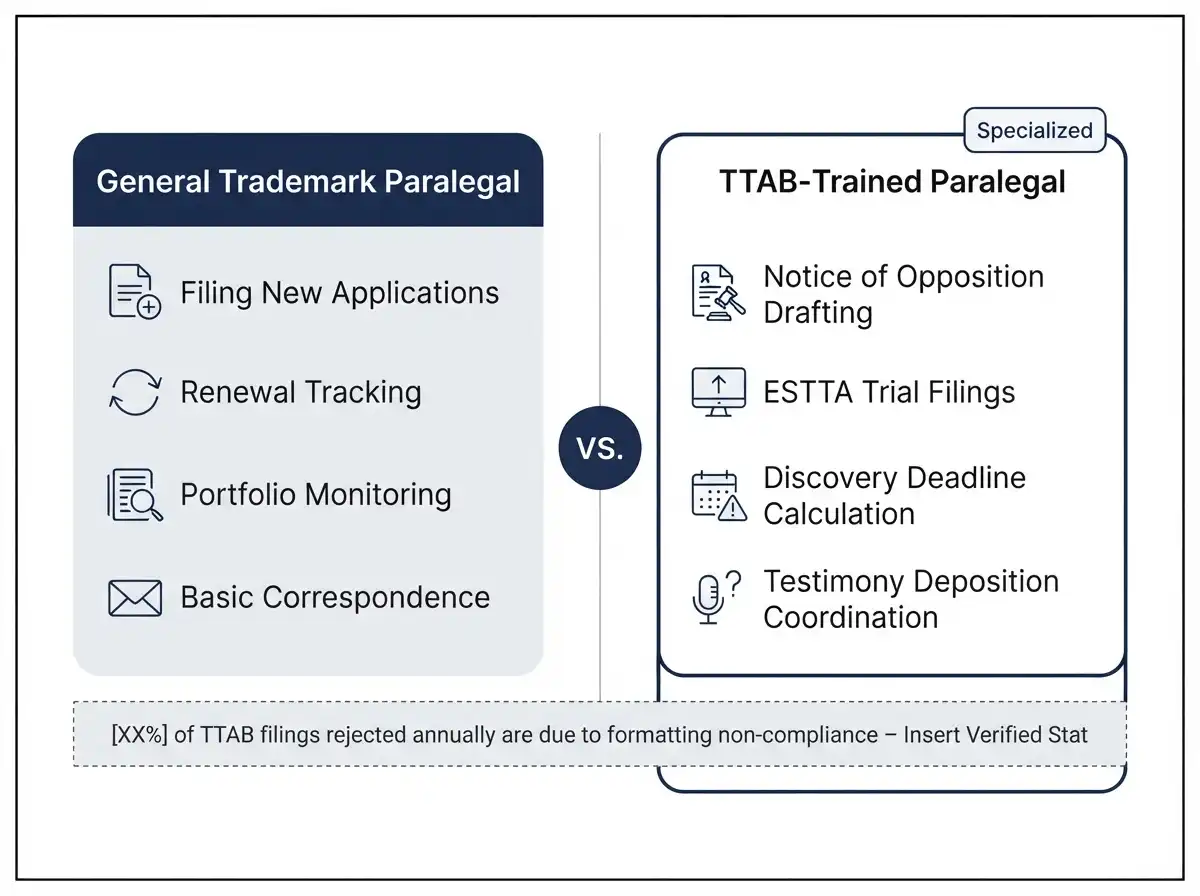
Trained TTAB paralegal support refers to paralegal-level assistance from professionals who specialize specifically in Trademark Trial and Appeal Board proceedings, not general trademark prosecution. This is a meaningful distinction. A paralegal who is excellent at filing trademark applications and monitoring renewal deadlines may have never drafted a Notice of Opposition, calculated a discovery deadline under the Board’s standard protocol order, or prepared an ESTTA filing package for a motion to compel.
TTAB-trained paralegals typically bring hands-on experience with:
- Drafting and filing Notices of Opposition and Petitions to Cancel
- Calculating and tracking discovery, disclosure, and trial period deadlines
- Preparing and filing documents through ESTTA (the Electronic System for Trademark Trials and Appeals)
- Assembling and formatting evidence submissions, including notices of reliance
- Drafting standard motions, such as extensions of time, suspensions, and consented motions
- Coordinating with expert witnesses and court reporters for testimony depositions
- Monitoring the TTABVUE docket for opposing party filings and Board orders
Why Junior Attorneys and Solo Practitioners Need This Support
If you are early in your trademark litigation career, or you run a solo practice without a deep bench of support staff, TTAB matters present a specific kind of pressure. You are expected to litigate a federal administrative proceeding with the same procedural precision as a district court case, but often without a mentor paralegal sitting three feet away.
Here is what that pressure typically looks like in practice:
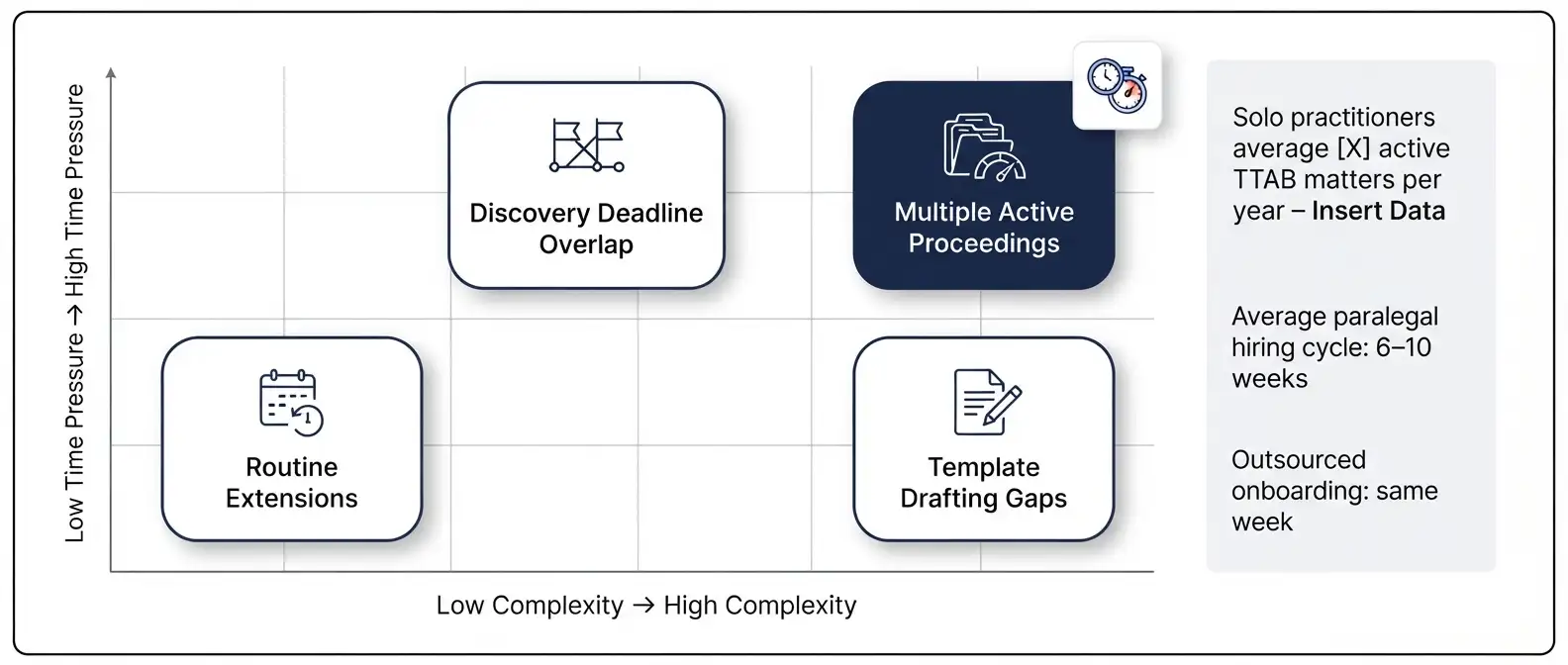
- Deadline complexity. TTAB deadlines are not always straightforward calendar-day counts. Some run from service dates, others from Board order dates, and standard protocol orders can shift entire discovery schedules.
- Formatting rigidity. ESTTA rejects filings that do not match its required format, and a rejected filing after a deadline has passed can create real prejudice for the client.
- Template gaps. Junior attorneys frequently need reliable, tested templates for common filings rather than drafting every motion from a blank page under time pressure.
- Volume without headcount. Solo and small-firm practitioners rarely have the budget to hire a full-time, in-house TTAB paralegal, even though the workload during an active proceeding can spike sharply.
This is precisely the gap that outsourced and remote paralegal support firms are built to close. Instead of hiring a full-time employee, firms engage a trained TTAB paralegal support service on an as-needed or ongoing basis, paying only for the hours or matters they actually need covered.
What to Look For When Choosing TTAB Paralegal Support Companies
Not every legal support vendor understands TTAB practice at the same depth. Before signing an engagement letter, run prospective vendors through the following checklist.
1. Verified TTAB-Specific Experience
Ask directly how many active TTAB matters the paralegal team has handled in the last 12 months, and request examples of the proceeding types they support (oppositions, cancellations, ex parte appeals, or concurrent use proceedings). General trademark prosecution experience is not a substitute.
2. Attorney Oversight Structure
The strongest support companies operate under direct oversight from licensed U.S. IP attorneys, even when the paralegal team itself is not composed of attorneys. This oversight layer catches substantive errors before a filing goes out the door, rather than after a Board order flags a defect.
3. ESTTA Filing Proficiency
Confirm the team has hands-on, current experience filing through ESTTA, including complex filings like consolidated proceedings, motions with voluminous exhibits, and testimony depositions. ESTTA’s interface changes periodically, so recent experience matters more than years of tenure alone.
4. Turnaround Time Commitments
TTAB deadlines rarely move to accommodate a vendor’s internal queue. Ask for typical turnaround windows on standard tasks like drafting a routine motion for extension versus a substantive discovery response.
5. Data Security and Confidentiality Practices
Trademark disputes often involve sensitive commercial information. Confirm the vendor’s data handling practices, including encryption standards, access controls, and confidentiality agreements, before sharing client files.
6. Pricing Transparency
Look for a clear pricing model rather than vague “custom quote” language that leaves cost planning uncertain until after the engagement begins.
Quick Answer
Companies that provide trained TTAB paralegal support services are legal outsourcing and IP support firms that supply paralegals experienced specifically in Trademark Trial and Appeal Board proceedings. These firms typically offer:
- Notice of Opposition and Petition to Cancel drafting support
- ESTTA filing management
- Discovery and trial deadline calculation and docketing
- Motion drafting using tested TTAB templates
- Attorney-reviewed deliverables for accuracy and compliance
They operate on flexible, à la carte, or subscription-based pricing models, allowing solo practitioners and small firms to access experienced support without the overhead of a full-time hire.
Common Mistakes Firms Make When Outsourcing TTAB Support
Even when a firm decides to bring in outside paralegal help, a few recurring mistakes undermine the benefit.
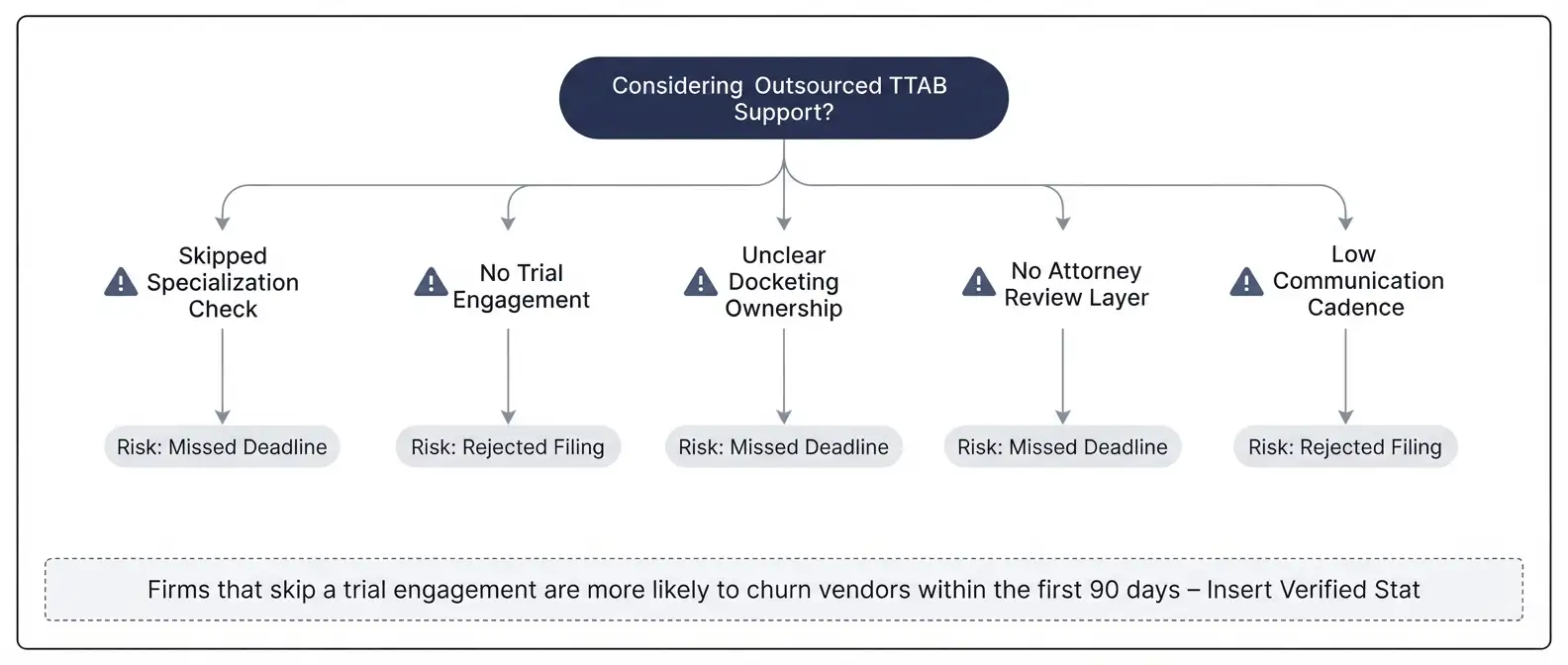
- Choosing a general legal outsourcing vendor without TTAB specialization. General paralegal support is not interchangeable with TTAB-trained support; the procedural nuances are too specific.
- Skipping a trial engagement. Committing to a long-term contract before testing the vendor on a lower-stakes matter, such as an extension request, removes the opportunity to evaluate quality early.
- Failing to clarify docketing responsibility. If it is unclear whether the vendor or the in-house team owns deadline tracking, deadlines can fall through the gap between the two.
- Not verifying attorney review. Some vendors provide paralegal drafting only, with no attorney-level review layer, which shifts more risk back onto the hiring firm.
- Ignoring communication cadence. During an active trial phase, infrequent status updates can leave an attorney unaware of a looming deadline until it is nearly too late.
Expert Tips for Working With a TTAB Paralegal Support Partner
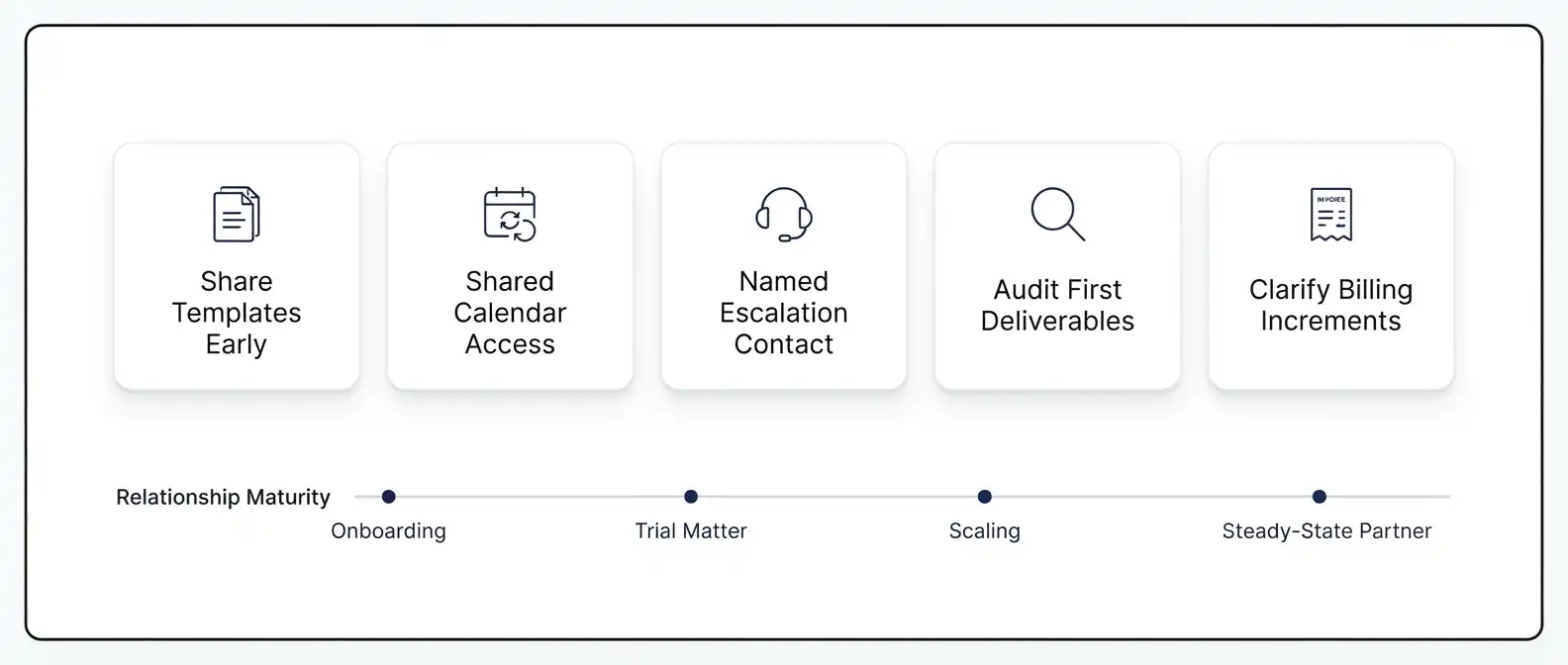
Once you have selected a vendor, a few habits make the relationship far more effective.
- Share your firm’s standard templates upfront, even if the vendor has its own, so filings are consistent with your firm’s existing case files.
- Set a shared calendar or docketing system so both sides see the same deadlines in real time, rather than relying on email updates alone.
- Establish an escalation contact for time-sensitive issues, separate from routine status check-ins.
- Review the first three deliverables closely before scaling up volume, to confirm the paralegal team’s work matches your firm’s quality bar.
- Clarify billing increments in advance, whether hourly, per-task, or flat-fee per proceeding, to avoid surprises on the invoice.
Step-by-Step: How to Engage a TTAB Paralegal Support Company
- Define the scope. Decide whether you need help with a single active proceeding, ongoing docket monitoring, or full-cycle support from filing through trial.
- Shortlist 3–4 vendors using the evaluation checklist above.
- Request sample work product, such as a redacted motion for extension or a discovery response template.
- Run a paid trial matter, ideally something with a moderate deadline rather than an emergency filing.
- Review the deliverable against TBMP requirements and your own internal quality standards.
- Formalize the engagement with a clear scope of work, pricing structure, and confidentiality agreement.
- Set up shared docketing access before the next deadline in the matter arrives.
Comparison: In-House Hire vs. Outsourced TTAB Paralegal Support
| Factor | In-House TTAB Paralegal | Outsourced TTAB Paralegal Support |
|---|---|---|
| Cost structure | Fixed salary, benefits, training costs | Pay per task, per matter, or à la carte |
| Ramp-up time | Weeks to months for hiring and training | Immediate access to trained staff |
| Scalability | Difficult to scale up or down quickly | Easily scales with caseload volume |
| Specialization depth | Depends on individual hire’s background | Teams often specialize across many active matters |
| Coverage during leave/turnover | Coverage gap if paralegal is out | Continuity maintained by support team |
| Best fit for | High, steady TTAB caseload | Solo practitioners, small firms, variable caseload |
Typical Services Included in TTAB Paralegal Support Packages
| Service Category | What It Covers |
|---|---|
| Filing preparation | Notices of Opposition, Petitions to Cancel, Answers, ESTTA submissions |
| Deadline management | Discovery, disclosure, trial, and briefing deadline calculation and tracking |
| Motion drafting | Extensions, suspensions, consented motions, motions to compel |
| Evidence support | Notices of reliance, exhibit formatting, testimony deposition coordination |
| Docket monitoring | TTABVUE tracking for opposing party activity and Board orders |
| Communication support | Status updates, client-ready summaries, escalation alerts |
How Teak IP Services Approaches TTAB Paralegal Support
Teak IP Services structures its paralegal support model around attorney-led oversight, meaning every deliverable is reviewed by licensed U.S. IP attorneys before it reaches the client’s desk. This layered quality control matters most in TTAB practice, where a single formatting error or missed calculation can compromise an otherwise strong case.
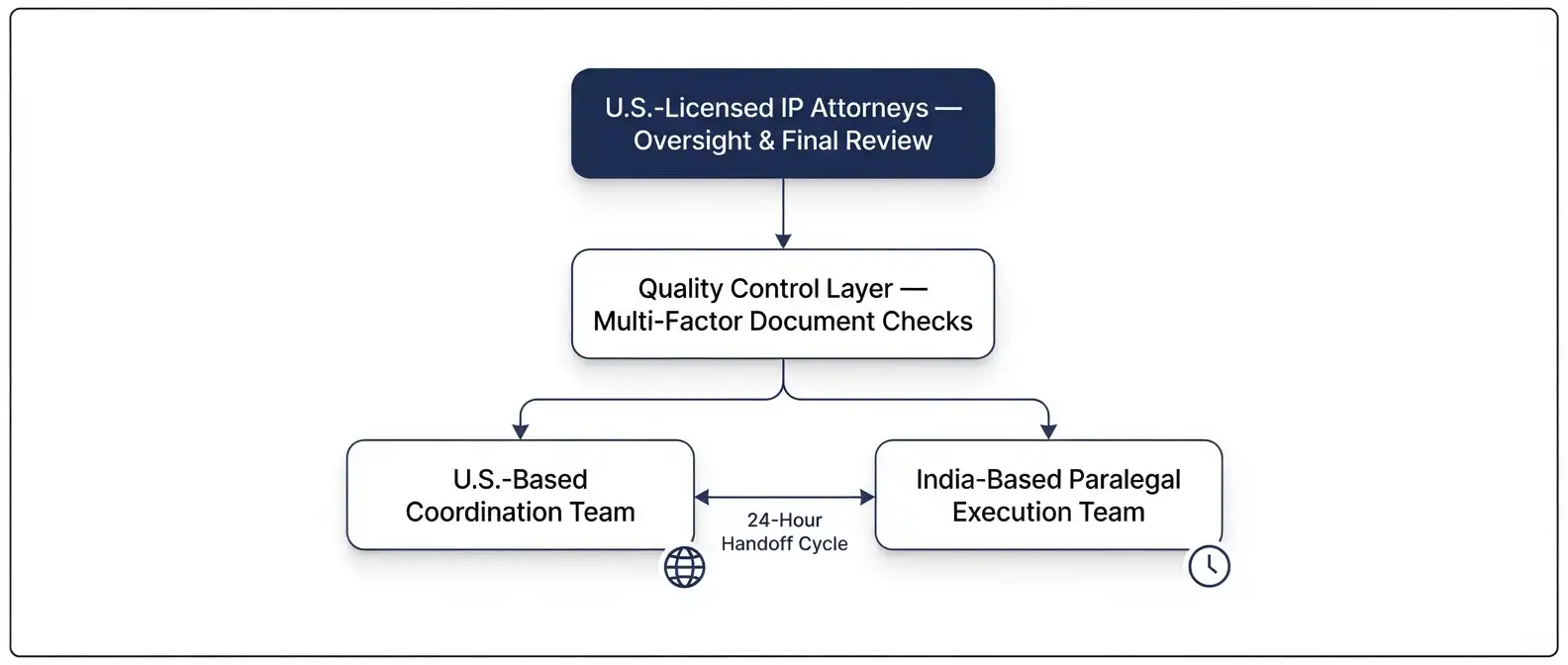
The firm pairs U.S.-based attorney oversight with an experienced India-based paralegal team, giving solo practitioners and small firms access to trained TTAB support without the overhead of a full-time domestic hire. This structure also enables faster turnaround, since work can move across time zones rather than waiting for a single-shift team.
For firms weighing whether to build an internal team or bring in outside support, this comparison of IP outsourcing companies breaks down the evaluation criteria in more depth, and the Best Trademark Paralegal Services for Law Firms guide covers how trademark-specific paralegal support differs from general legal staffing.
How This Fits Into Your Broader Trademark Docket
TTAB proceedings rarely happen in isolation. A firm handling an opposition is usually also managing renewal deadlines, portfolio monitoring, and routine prosecution work across the same client’s trademark portfolio. If your team is already stretched thin on the litigation side, it is worth reviewing how managed trademark docketing compares to docketing software alone, since deadline tracking failures often originate outside the TTAB matter itself.
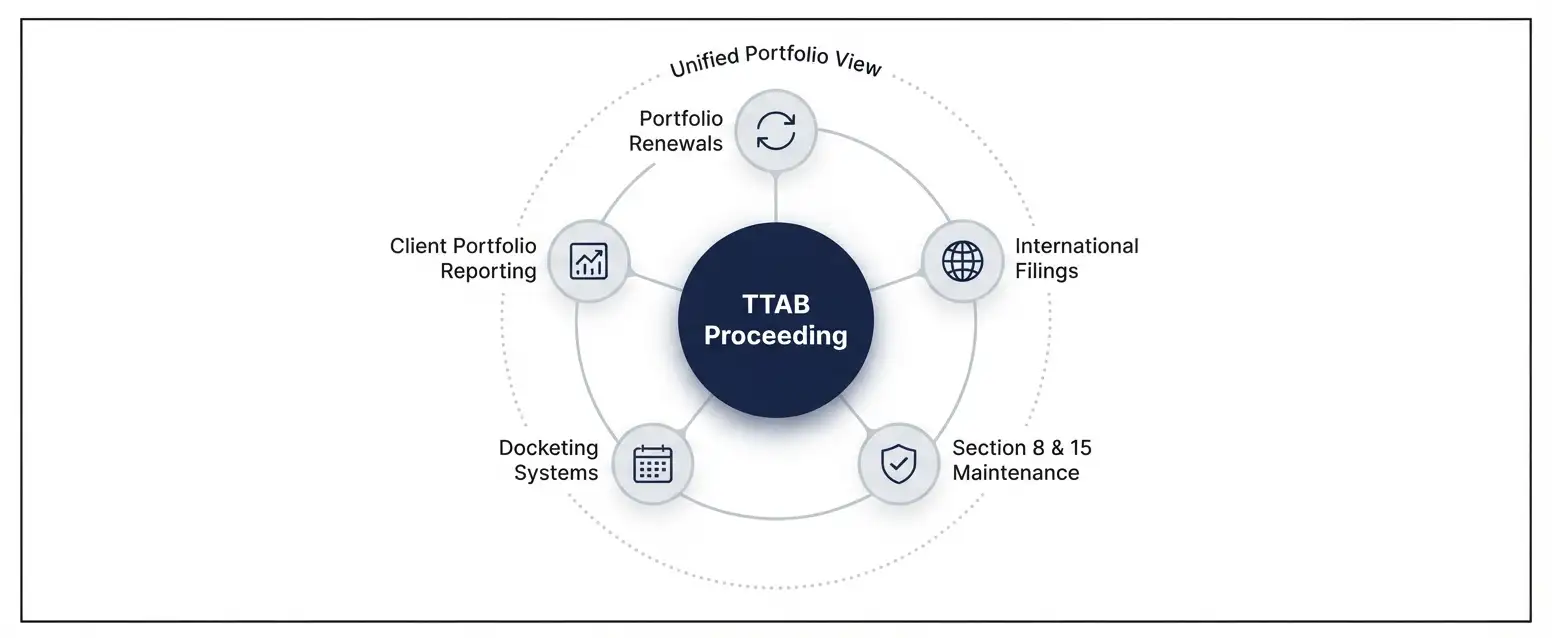
Firms managing multi-jurisdiction brands should also review guidance on managing corporate trademark renewals globally and managing an international trademark portfolio, since a TTAB proceeding domestically can have downstream implications for related foreign filings.
If your practice also handles Section 8 and Section 15 maintenance filings for the marks involved in active proceedings, the guide on when to file a Trademark Section 8 and 15 Affidavit is a useful companion resource. And for firms specifically comparing full-scale trademark portfolio management providers rather than proceeding-specific support, the Best Trademark Portfolio Management Services roundup lays out the top providers side by side.
What Trained TTAB Paralegal Support Costs
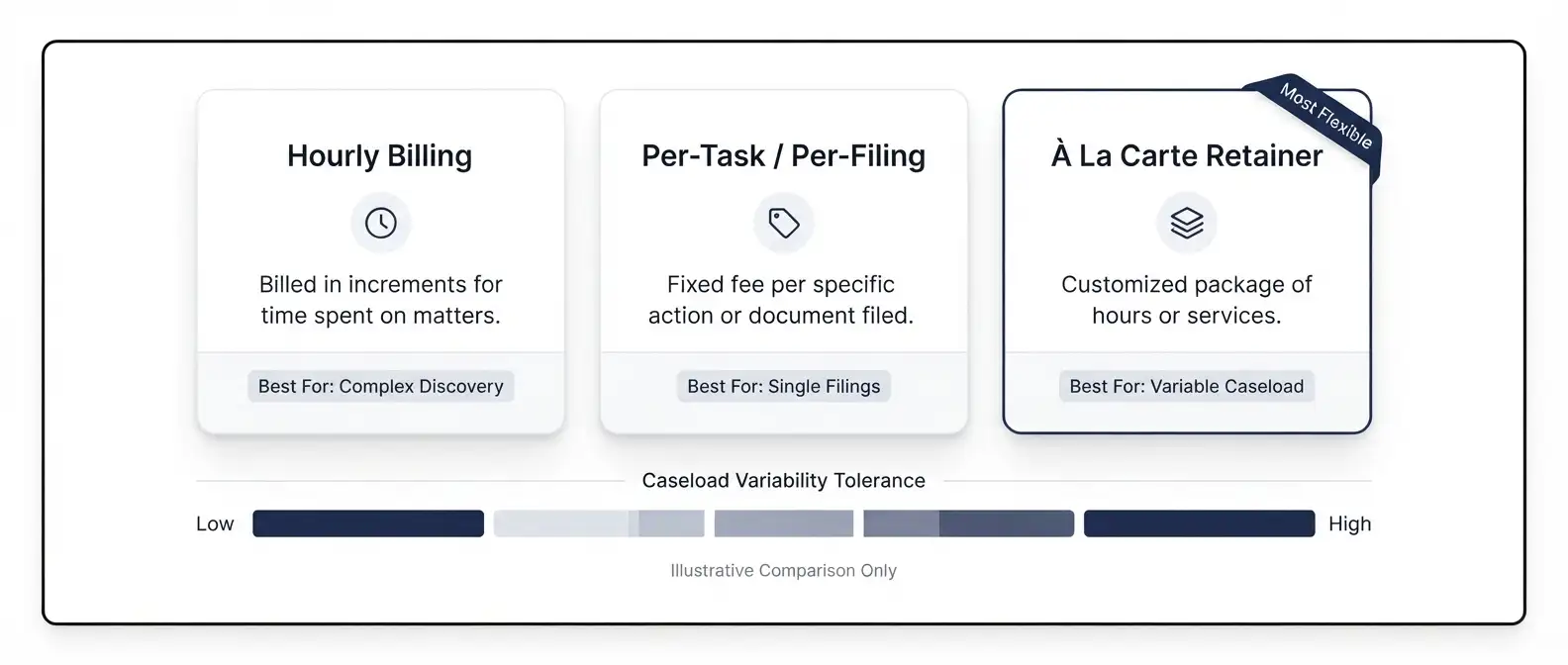
Pricing for TTAB paralegal support generally follows one of three models:
- Hourly billing, typically ranging based on task complexity, with routine drafting billed lower than complex discovery or trial support.
- Per-task or per-filing pricing, where the firm quotes a flat rate for a defined deliverable, such as drafting a single motion.
- À la carte retainer models, where a firm pays only for the services used within a given month, without a minimum staffing commitment.
Solo practitioners and small firms generally benefit most from à la carte or per-task pricing, since TTAB caseloads fluctuate significantly month to month. A firm actively litigating three oppositions has very different support needs than the same firm three months later, once those matters settle or move into a quiet discovery period.
FAQ: Companies That Provide Trained TTAB Paralegal Support Services
What is a TTAB paralegal, and how is it different from a general trademark paralegal?
A TTAB paralegal specializes in Trademark Trial and Appeal Board proceedings specifically, including oppositions, cancellations, and ex parte appeals, while a general trademark paralegal typically focuses on prosecution tasks like filing new applications and tracking renewals.
Can outsourced TTAB paralegal support handle ESTTA filings on my behalf?
Yes. Most companies that provide trained TTAB paralegal support services include ESTTA filing preparation and submission as a core part of their service, though the filing is typically submitted under the attorney of record’s credentials with the vendor preparing the package.
Is outsourced TTAB paralegal support suitable for solo practitioners?
Outsourced support is often a better fit for solo practitioners than an in-house hire, since it allows access to trained staff without the fixed cost of a full-time salary, and it scales up or down with active caseload.
How quickly can a TTAB support company turn around an extension motion?
Turnaround times vary by vendor, but many companies can prepare and file a routine motion for extension within one to two business days, provided the request is not submitted at the last minute before the deadline.
Do these companies provide attorney review, or only paralegal-level drafting?
This varies significantly by vendor. Some firms, including those structured with U.S. attorney oversight, build attorney-level review into every deliverable, while others provide paralegal drafting only. Confirm this distinction before engaging any provider.
Conclusion
Finding the right companies that provide trained TTAB paralegal support services comes down to verifying real proceeding-specific experience, confirming attorney oversight, and choosing a pricing model that matches the unpredictable rhythm of TTAB litigation. For junior attorneys building their first opposition case and solo practitioners managing a docket without a full support team, the right partner can be the difference between a filing that sails through ESTTA and one that gets bounced back on a deadline day.
Before your next Notice of Opposition or discovery deadline arrives, it is worth shortlisting a support partner rather than scrambling once the clock is already running. Contact Teak IP Services to discuss how attorney-led, TTAB-trained paralegal support can fit into your firm’s existing docket.

