
Choosing the wrong intellectual property outsourcing partner does not just waste a budget line. It puts deadlines, patent rights, and client trust on the line. If you are an IP director, managing partner, or general counsel weighing vendors for docketing, paralegal support, patent drawings, or trademark management, you already know that not every provider marketed as an “IP outsourcing company” operates at the same level of rigor.

Learning how to compare IP outsourcing companies is less about finding the cheapest quote and more about building a repeatable evaluation process – one that tests security, quality control, subject-matter depth, and long-term scalability before a single document changes hands. This guide walks through that process step by step, so you can shortlist, vet, and select a partner with confidence instead of guesswork.
By the end, you will have a complete, practical framework: the criteria that matter most, the questions to ask during vendor calls, the red flags that should end a conversation immediately, and a comparison table you can adapt for your own RFP process.
What Does It Mean to “Compare” IP Outsourcing Companies?
At its core, comparing IP outsourcing companies means evaluating multiple vendors against a consistent set of weighted criteria rather than judging each proposal in isolation. A structured comparison typically covers:
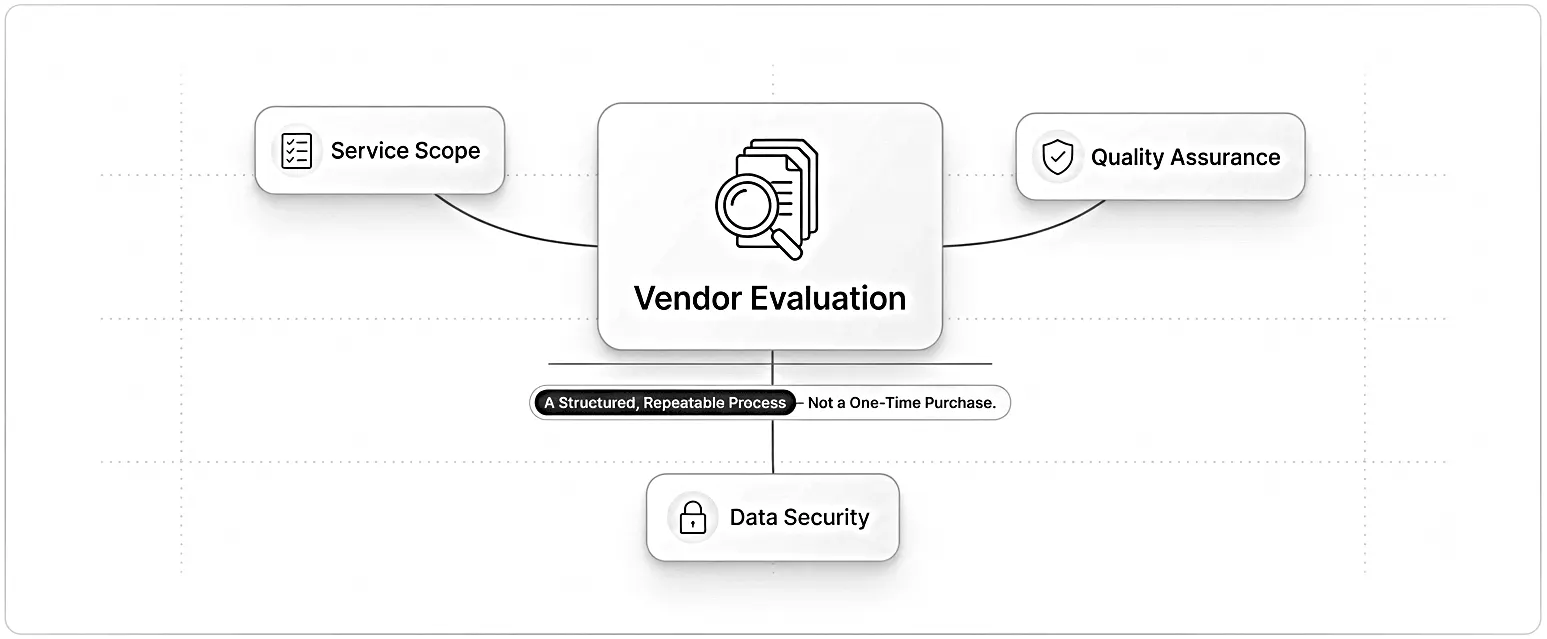
- Service scope – Does the vendor handle docketing, paralegal support, IDS preparation, patent drawings, PCT filings, or trademark monitoring, or only a narrow slice?
- Quality assurance – What review layers exist before work reaches your desk?
- Data security – How is confidential client and invention data protected in transit and at rest?
- Team credentials – Are paralegals and attorneys involved, and what is their tenure?
- Pricing model – Flat-fee, à la carte, retainer, or hybrid?
- Turnaround and scalability – Can the vendor absorb volume spikes without slipping deadlines?
Rather than treating this as a one-time purchasing decision, the most successful legal teams treat vendor evaluation as an ongoing discipline that gets revisited every 12 to 24 months as portfolio needs evolve.
Why a Structured Evaluation Process Matters
Intellectual property work is unforgiving of errors. A missed renewal deadline can result in the loss of valuable patent rights, while a mishandled Information Disclosure Statement (IDS) can jeopardize patent enforceability. Because the margin for error is so thin, an ad hoc vendor selection process-such as choosing a provider based solely on a referral or the lowest bid-introduces risks that can far outweigh any short-term savings.
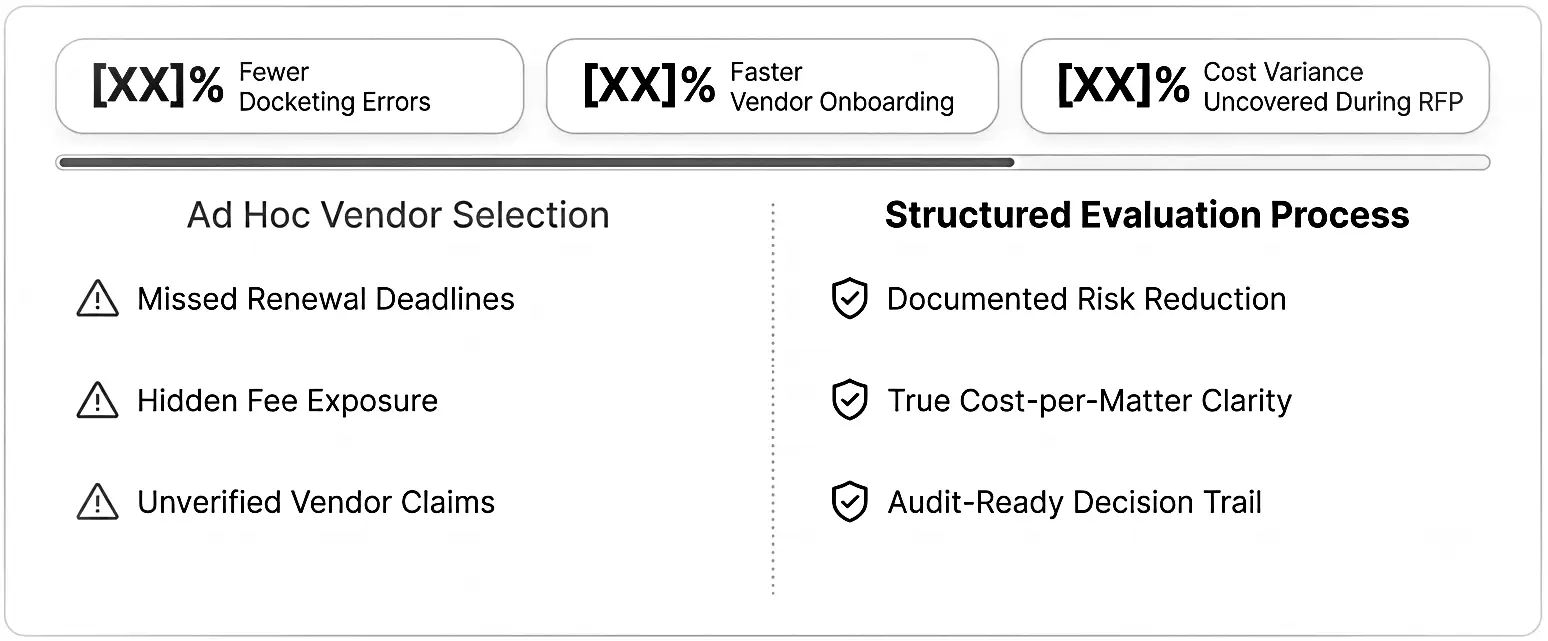
A structured comparison process delivers three concrete benefits:
- Risk reduction. Formal due diligence surfaces gaps in security, staffing, or quality control before they become your problem.
- Cost clarity. Side-by-side evaluation exposes hidden fees and helps you compare true cost per matter, not just the headline rate.
- Defensibility. If a vendor decision is ever questioned internally or during an audit, a documented evaluation process shows diligence was exercised.
According to guidance from the American Bar Association on legal technology and outsourcing, firms that outsource legal support work retain an ethical duty to supervise that work and verify vendor competence. That responsibility begins with a rigorous vendor selection process, not just a signed contract.
Step 1: Define Your Scope and Requirements Before You Shop
Before requesting a single proposal, IP directors and general counsel should document exactly what they need. Vendors cannot be fairly compared if each is quoting a different scope of work.
Ask internally:
- Which IP functions need support: docketing, paralegal work, drawings, IDS filings, trademark monitoring, PCT applications, or a combination?
- What volume of matters moves through your team monthly or annually?
- Do you need US-based coverage, offshore support, or a hybrid model?
- What existing docketing software or IP management system must the vendor integrate with?
- Is this a permanent extension of your team or a temporary surge-capacity solution?
Teams that skip this step often end up comparing apples to oranges: one vendor’s “full-service” proposal against another’s narrow “docketing only” quote, with no reliable way to judge true value. If you are still narrowing down which function to outsource first, our guide on patent lifecycle management outsourcing breaks down which stages of the patent lifecycle are typically outsourced and why.
Step 2: Build Your Evaluation Criteria Framework
Once scope is defined, translate it into weighted evaluation categories. Most experienced IP directors organize their scorecards around six pillars.
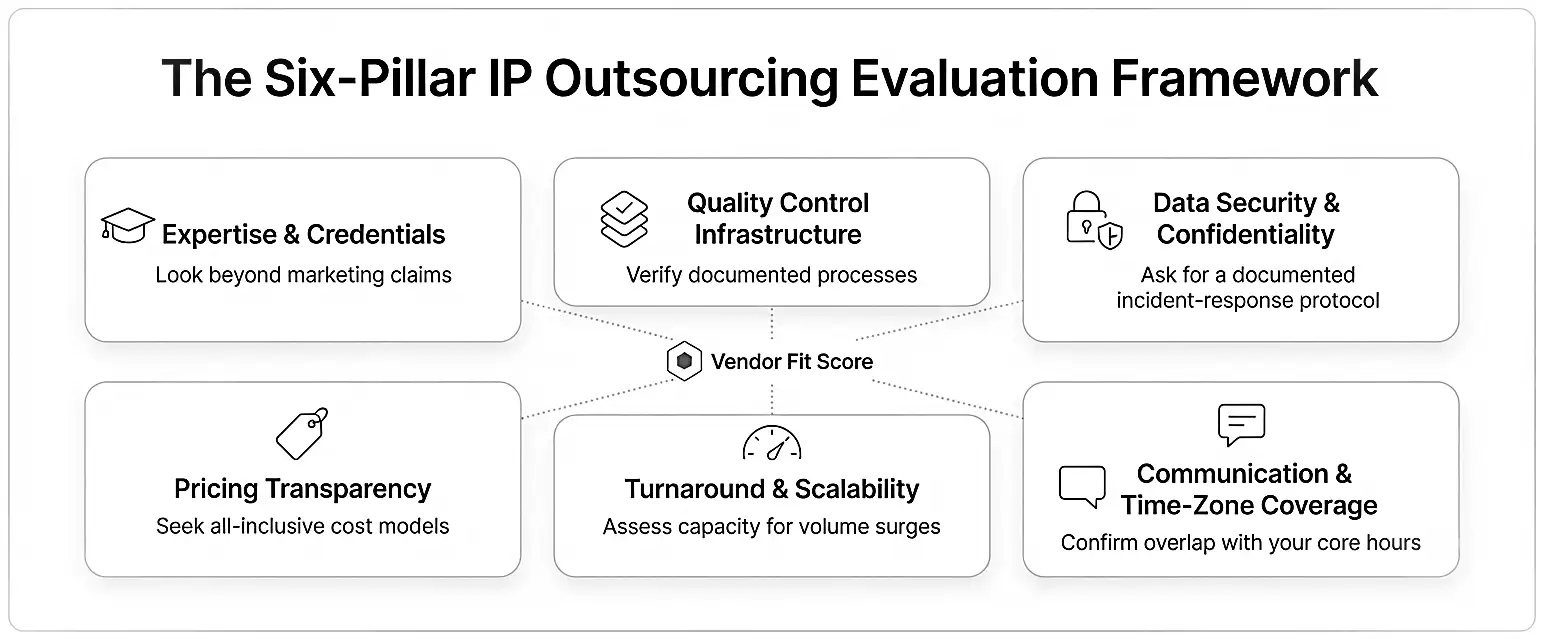
1. Expertise and Credentials
Look for evidence of first-hand experience, not just marketing claims. Specifically:
- Are paralegals trained and supervised by licensed US IP attorneys?
- How many years of combined experience does the team carry?
- Does the vendor specialize in patents, trademarks, or both, and does that match your need?
- Can they provide redacted work samples relevant to your technology area?
2. Quality Control Infrastructure
Errors in IP work compound quickly. A serious vendor should describe a multi-layered review process – not a single person checking their own work. Ask for specifics: how many review checkpoints exist between drafting and delivery, and what error-rate data (if any) they track internally.
3. Data Security and Confidentiality
IP outsourcing inherently involves sharing unfiled inventions, prosecution strategy, and client-privileged material. At minimum,
Vendors should demonstrate:
- Encrypted data transfer and storage
- Restricted, role-based system access
- Signed confidentiality and non-disclosure agreements
- A documented incident-response protocol
The NIST Cybersecurity Framework provides a useful benchmark for evaluating whether vendors align with widely recognized cybersecurity practices, even if they have not formally adopted the framework. It is broadly recognized across regulated industries, including legal services.
4. Pricing Transparency
Pricing structures vary widely: flat per-matter fees, hourly rates, retainers, or à la carte models where you pay only for services used. Whichever model a vendor proposes, transparency matters more than the number itself. Request a sample invoice or fee schedule before signing anything.
5. Turnaround Time and Scalability
Ask how the vendor handles volume spikes – a sudden batch of office actions, a portfolio acquisition, or a quarter-end docketing surge. A vendor that cannot flex capacity will eventually become your bottleneck rather than your relief valve.
6. Communication and Time-Zone Coverage
Vendors operating across US and offshore time zones can offer near-24-hour coverage, but only if communication channels are clear. Ask how escalations are handled and whether you get a dedicated point of contact or a rotating queue.
Step 3: Request Proposals Using a Standardized RFP
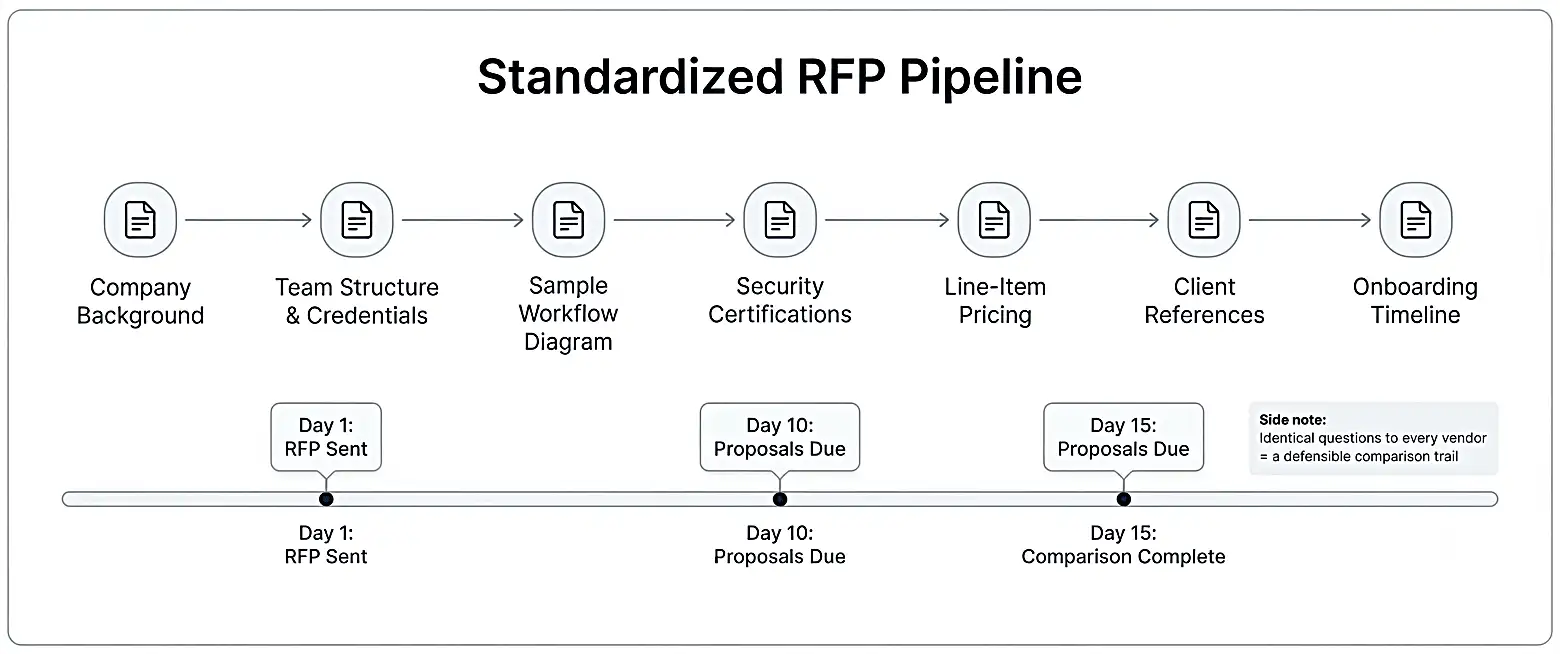
Send every vendor on your shortlist the same request-for-proposal document. Standardization is what makes true comparison possible.
A solid IP outsourcing RFP should request:
- Company background and years in IP support services
- Team structure (attorneys, paralegals, reviewers) and credentials
- Sample workflow diagram for your specific service need
- Security certifications or policies
- Pricing broken down by service line
- References from clients with a similar practice profile
- Onboarding timeline and transition plan
Requesting identical information from every vendor also protects you legally and ethically, since it creates a documented, consistent evaluation trail.
Step 4: Score and Weight Each Vendor
A comparison table turns subjective impressions into objective decisions. Assign each criterion a weight based on what matters most to your practice, then score every vendor on a consistent scale.
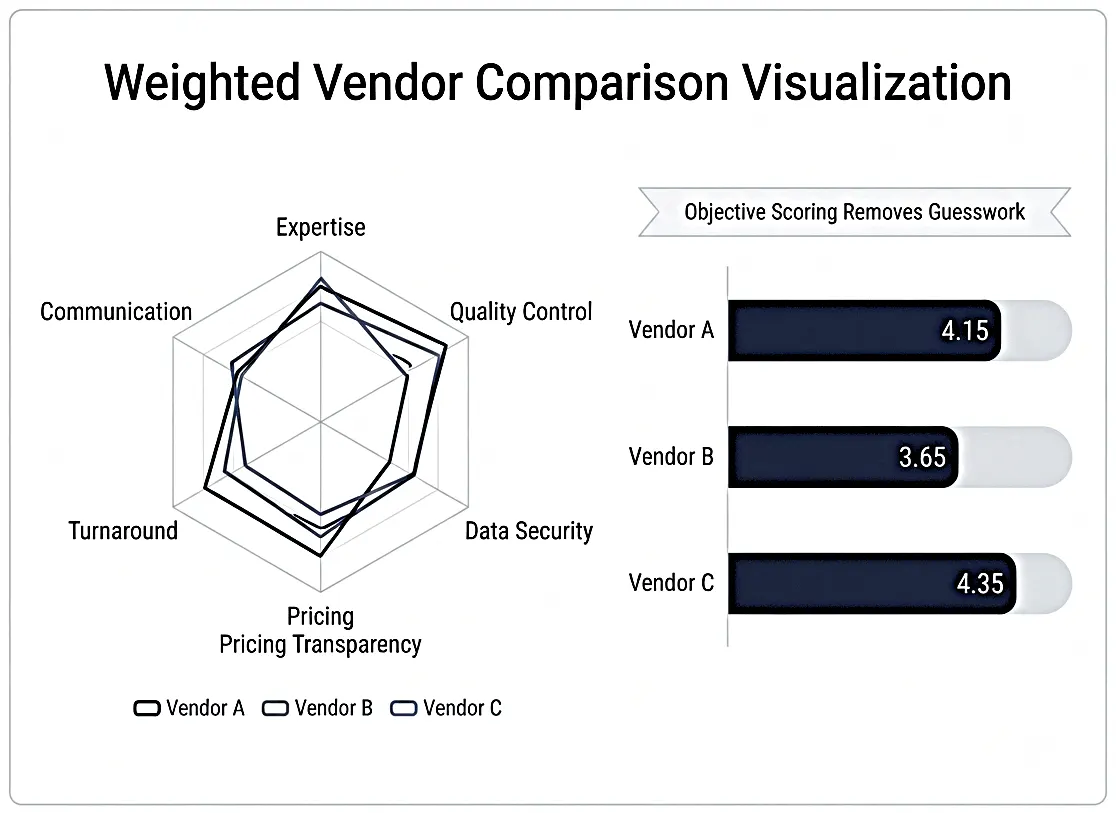
Sample IP Outsourcing Vendor Evaluation Table
| Evaluation Criterion | Weight | Vendor A Score (1–5) | Vendor B Score (1–5) | Vendor C Score (1–5) |
|---|---|---|---|---|
| Expertise & Attorney Oversight | 25% | 4 | 3 | 5 |
| Quality Control Process | 20% | 5 | 3 | 4 |
| Data Security & Confidentiality | 20% | 4 | 4 | 5 |
| Pricing Transparency | 15% | 3 | 5 | 3 |
| Turnaround & Scalability | 10% | 5 | 3 | 4 |
| Communication & Coverage | 10% | 4 | 4 | 4 |
| Weighted Total | 100% | 4.15 | 3.65 | 4.35 |
Even a simple weighted table like this removes emotion and gut instinct from the decision, replacing them with a documented, defensible score.
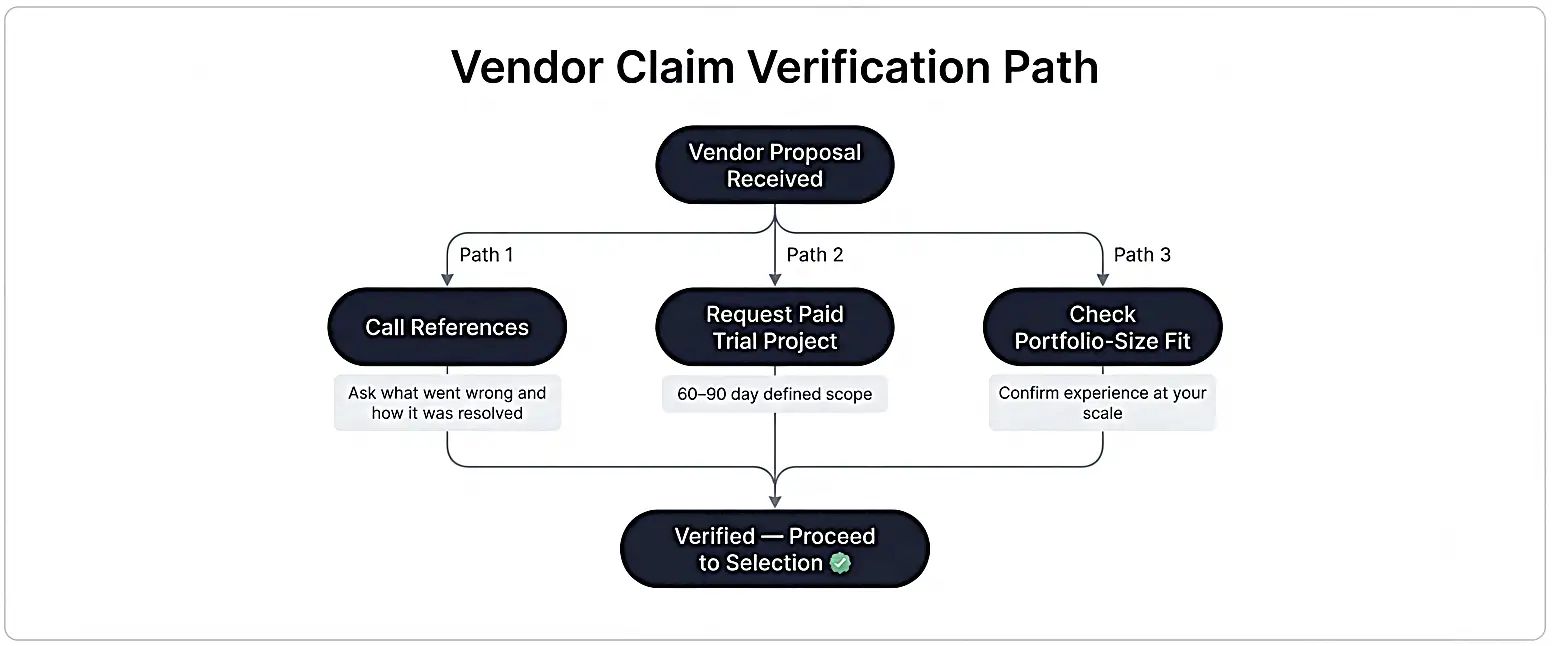
Step 5: Verify Claims With References and Trial Work
Every vendor will describe itself as experienced, secure, and detail-oriented. The only way to confirm those claims is direct verification.
- Call references, and specifically ask what went wrong at some point and how the vendor handled it. A vendor with no story of a resolved mistake has probably not been tested.
- Request a paid trial project on a low-risk matter before committing your full portfolio.
- Check for a track record with similar-sized IP departments – a vendor built for solo inventors may not scale to a corporate portfolio of thousands of matters.
If trademark-specific paralegal support is part of your evaluation, our breakdown of the best trademark paralegal services for law firms outlines additional vetting questions specific to trademark workflows.
Common Mistakes When Comparing IP Outsourcing Companies
Even experienced legal teams fall into predictable traps during vendor selection. Watch for these:
Choosing on price alone
The lowest bid often reflects reduced review layers or less experienced staff, not efficiency.
Skipping the security questionnaire.
Confidential invention data deserves the same scrutiny you would apply to a cybersecurity vendor.
Ignoring scalability.
A vendor that fits today’s volume may buckle under next year’s growth.
Failing to standardize the RFP.
Comparing mismatched proposals leads to decisions based on presentation quality rather than substance.
Overlooking cultural and communication fit.
A technically strong vendor with poor responsiveness will still create friction across a long-term engagement.
Not asking about attorney oversight.
Paralegal-only vendors without attorney review introduce a compliance gap for many firms.
Expert Tips for a Smarter Comparison Process
Treat the RFP as a filtering tool, not a formality.
Vendors who submit incomplete or generic answers are showing you how they will perform under real deadlines.
Ask for a redacted sample of a docketing report or IDS filing.
Work samples reveal more about quality than any sales pitch.
Involve your docketing or paralegal staff in the evaluation
It is always wise decision to involve your docketing or paralegal staff in the evaluation, since they will interact with the vendor daily and can spot workflow friction others might miss.
Negotiate a trial period with defined exit terms
You should always negotiate a trial period with defined exit terms before signing a multi-year agreement.
Reassess annually.
Vendor quality can drift over time as staff turns over; an annual scorecard review keeps the relationship accountable.
For a deeper look at how cost, process, and return on investment interact across a full portfolio engagement, see our guide to IP portfolio management outsourcing: cost, process, and ROI.
Step-by-Step Summary: How to Compare IP Outsourcing Companies
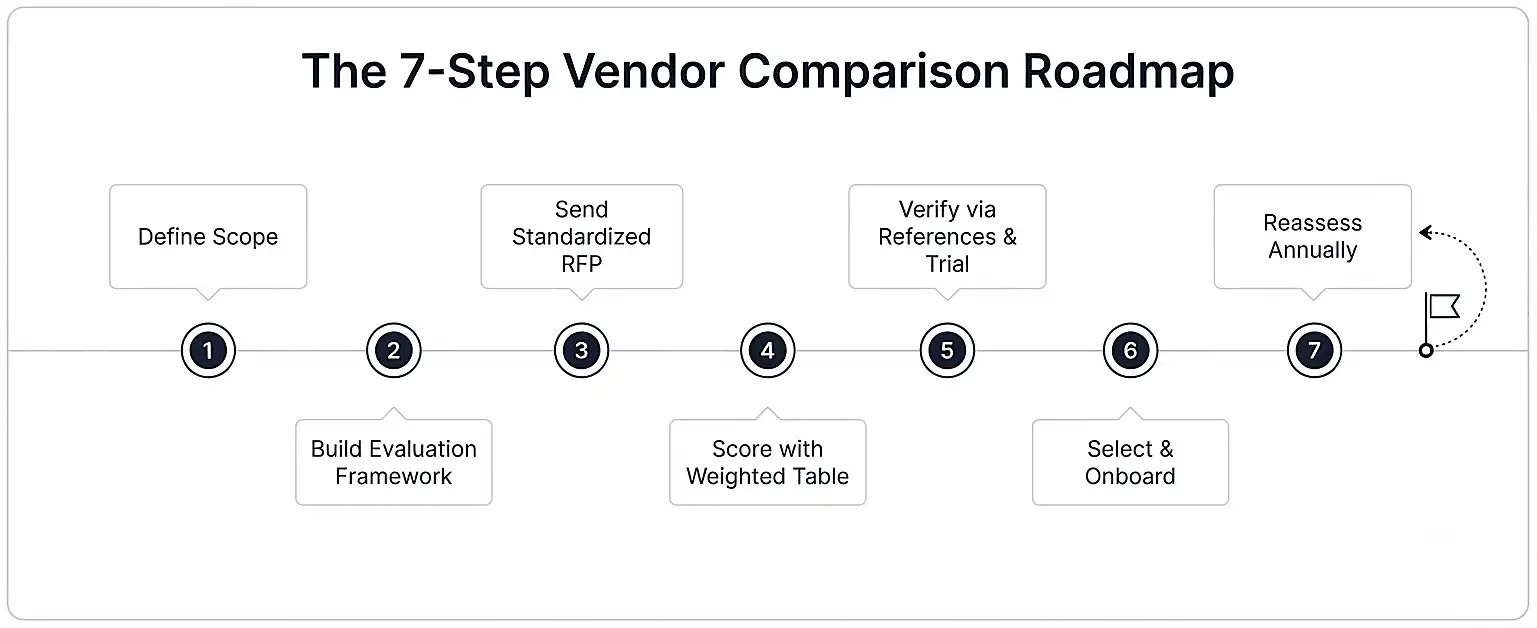
- Define your internal scope, volume, and requirements.
- Build a weighted evaluation framework across six core pillars.
- Send a standardized RFP to every shortlisted vendor.
- Score each proposal using a consistent comparison table.
- Verify claims through references and a paid trial project.
- Select a partner and define a documented onboarding and transition plan.
- Reassess vendor performance on a recurring schedule.
In-House vs. Outsourced: A Quick Comparison
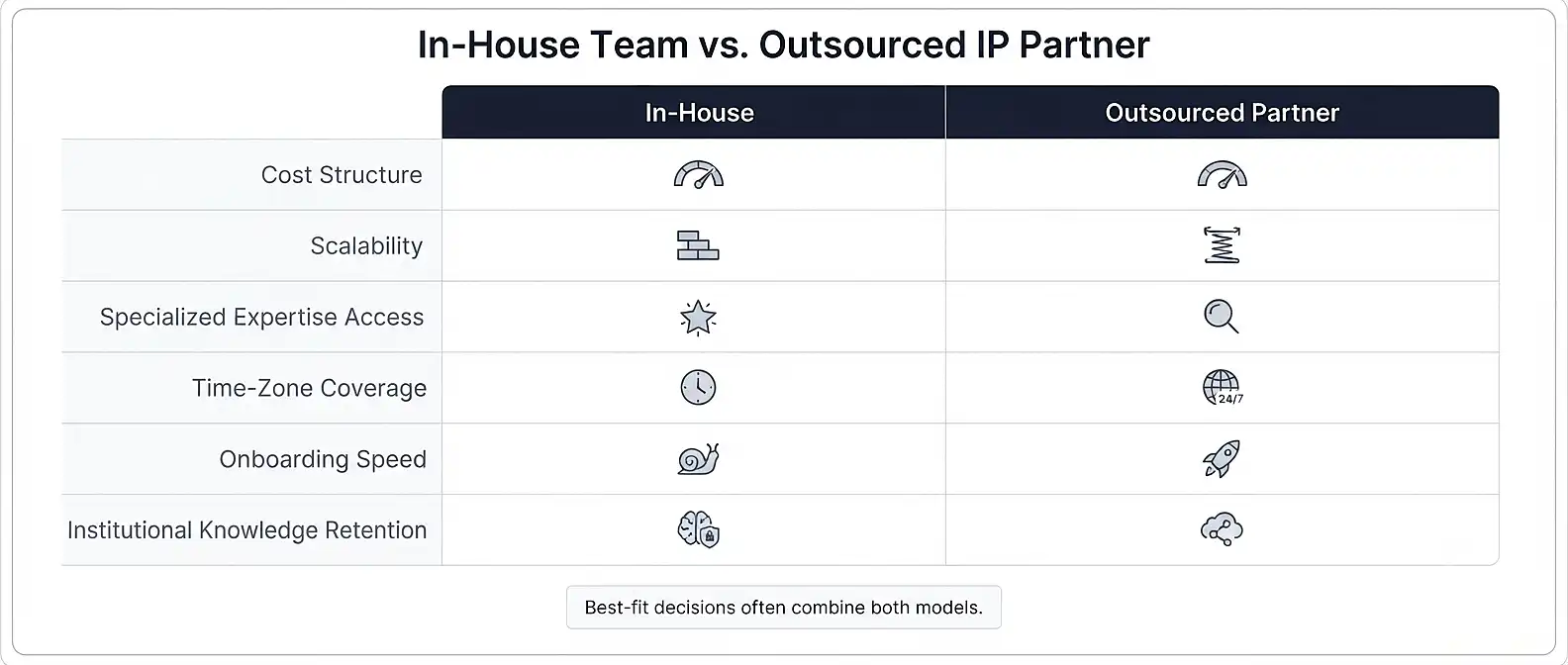
Many teams comparing outsourcing vendors are also weighing whether to outsource a given function at all. The table below summarizes the trade-offs.
| Factor | In-House Team | Outsourced IP Partner |
|---|---|---|
| Cost Structure | Fixed salaries, benefits, overhead | Variable, pay-for-service or retainer |
| Scalability | Limited by headcount approvals | Flexes with matter volume |
| Specialized Expertise | Depends on hiring budget | Access to attorneys and paralegals across specialties |
| Time-Zone Coverage | Business hours only | Extended or near-24-hour coverage possible |
| Onboarding Time | Weeks to months for new hires | Days to weeks for a vetted vendor |
| Institutional Knowledge | Retained internally | Depends on vendor continuity and documentation |
If you are still deciding between building internal capacity or bringing in outside support for paralegal work specifically, our article on whether it is better to hire an in-house or virtual patent paralegal walks through that decision in more detail.
How Docketing and Cost Factors Shape Your Comparison
Docketing accuracy and cost predictability are often the two criteria that most influence a final decision, since docketing errors carry direct financial and legal consequences. When comparing vendors on this front, review our related resources on the best patent docketing services for mid-size and large IP firms and the trademark docketing outsourcing cost guide, both of which include real-world pricing benchmarks you can use to sanity-check vendor quotes.
If your comparison also involves paralegal staffing for a corporate legal department rather than a law firm, the considerations shift slightly around integration with in-house systems and internal stakeholders. Our guide to patent paralegal outsourcing for corporate IP departments covers that scenario directly.
Data Security: A Non-Negotiable Comparison Criterion
Because IP outsourcing involves handling unpublished inventions, prosecution strategy, and sometimes trade secrets, data security deserves its own dedicated line in any comparison framework, not a passing mention. At minimum,
Ask each vendor to confirm:
- Where data is physically stored and processed
- Whether access logs and audit trails exist
- How subcontractors, if any, are vetted and bound by confidentiality terms
- Whether the vendor has experienced a data breach, and if so, how it was disclosed and remediated
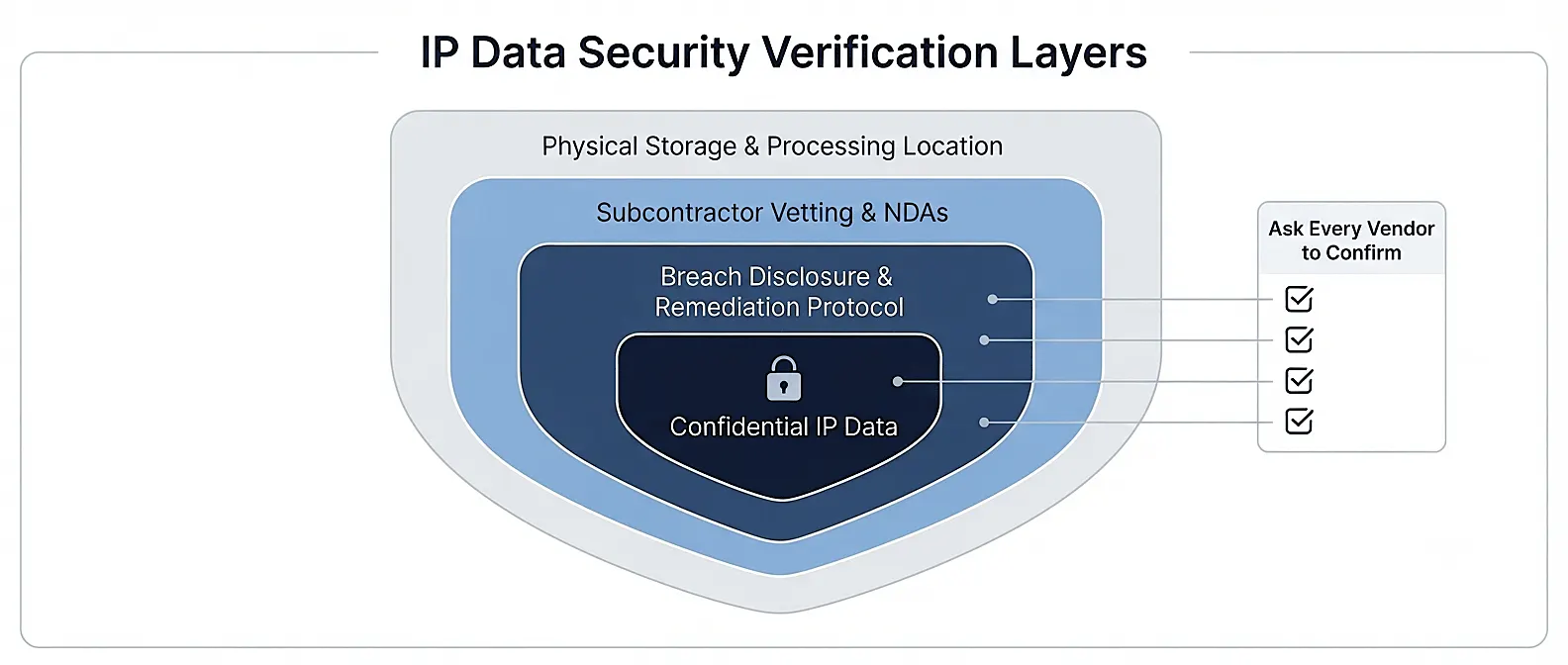
The USPTO’s guidance on trade secret protection provides a useful reference for understanding the baseline expectations for confidentiality that any vendor handling intellectual property or sensitive business information should meet or exceed.
Frequently Asked Questions
How do I compare IP outsourcing companies if they all quote different scopes of work?
Standardize the comparison by sending every vendor the same detailed RFP that specifies exact services, volume, and deliverables. Only then can pricing and quality be compared on equal footing.
What is the most important factor when comparing IP outsourcing companies?
No single factor dominates, but attorney oversight and quality control infrastructure consistently rank highest among IP directors, since errors in this field carry legal and financial consequences that outweigh short-term cost savings.
Should pricing or quality drive the final decision when comparing IP outsourcing companies?
Quality and security should set the minimum bar for any vendor on your shortlist; pricing should only differentiate among vendors that already clear that bar.
How long should a trial period last when evaluating a new IP outsourcing vendor?
Most legal teams run a trial of 60 to 90 days on a defined, lower-risk batch of matters before expanding the engagement across a full portfolio.
Can a single vendor handle both patent and trademark outsourcing needs?
Many full-service IP outsourcing providers cover both patent and trademark workflows, but it is worth confirming that the same depth of attorney oversight and specialization applies to each practice area rather than assuming parity.
What red flags suggest an IP outsourcing vendor should be eliminated from consideration?
Vague answers about security practices, no attorney involvement in review, an unwillingness to provide references, and inconsistent pricing across proposal versions are all strong signals to move on.
Turning Comparison Into a Confident Decision
Learning how to compare IP outsourcing companies is ultimately about replacing guesswork with a documented, repeatable process. When you define your scope up front, weight your evaluation criteria, standardize your RFP, and verify every claim through references and trial work, you turn a high-stakes decision into a defensible, data-backed one.
The right partner will not just execute tasks – they will extend your team’s capacity, protect deadlines, and safeguard confidential IP data with the same rigor you would demand internally. Take the time to compare thoroughly now, and the payoff shows up in fewer missed deadlines, lower error rates, and a partnership that scales with your portfolio for years to come.
Ready to put this framework into practice? Download the IP Vendor Comparison Framework to score your own shortlist of outsourcing partners in minutes, or reach out to the Teak IP team to discuss how our attorney-led, US and India-based model fits your evaluation criteria.
Docketing & IP Management Services for Law Firms and Corporate IP Teams

