
A solo practitioner opens her inbox on a Monday morning and finds three Office Actions, a docketing report that has not been updated in two weeks, and a new client who wants a provisional application filed by Friday. She does not have a paralegal on staff, and hiring one full-time does not make financial sense yet. She has heard that remote patent paralegal services could fill the gap, but one question stops her before she picks up the phone: are remote patent paralegal services compliant with USPTO rules, or is she about to create a bigger problem than the one she is trying to solve?

That hesitation is common, and it is reasonable. Practitioners are ultimately responsible for everything filed under their name, and the idea of handing procedural work to someone outside the firm, possibly outside the country, raises legitimate questions about supervision, confidentiality, and unauthorized practice of law. The good news is that the United States Patent and Trademark Office has never prohibited the use of remote or outsourced paralegal support. What it does require is that the work stays properly supervised, that client confidences remain protected, and that no non-attorney crosses the line into practicing law. This article walks through exactly what USPTO rules say, what remote paralegals can and cannot do, and how to vet a provider so your practice stays fully compliant while you get the procedural help you need.
What the USPTO Actually Says About Non-Attorney Support
The USPTO does not license or register paralegals the way it registers patent attorneys and patent agents. Paralegals, whether they sit down the hall or work from another continent, are not permitted to sign filings, provide legal advice, or represent applicants before the Office. That authority belongs exclusively to registered practitioners.
What the USPTO does permit, and has permitted for decades, is the delegation of procedural, administrative, and clerical tasks to trained support staff, provided a registered practitioner directs and reviews that work. This principle is rooted in longstanding USPTO practice and in the USPTO’s Office of Enrollment and Discipline guidance, which draws a clear line between practicing before the Office and supporting someone who is authorized to do so.
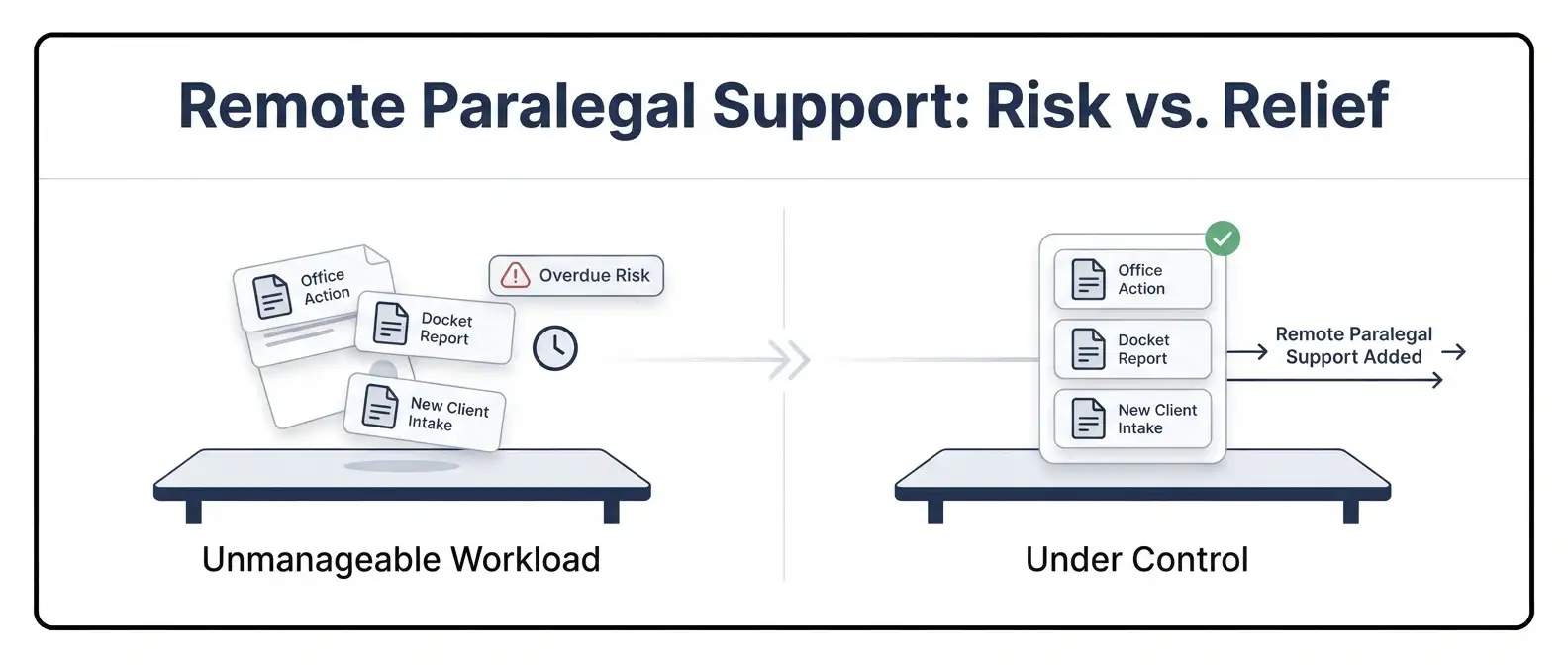
In practical terms, this means:
- A remote paralegal can prepare a draft IDS, format a response shell, or update a docket, but a registered practitioner must review and approve the substance before anything is filed.
- A remote paralegal cannot advise a client on claim strategy, cannot make legal judgment calls about patentability, and cannot sign correspondence to the Office.
- The location of the paralegal, whether in the same city or overseas, is not itself a compliance issue. Supervision and confidentiality controls are what matter.
This distinction between location and function is the single most misunderstood part of the compliance question, and it is worth sitting with for a moment before moving forward.
The Real Question Is Supervision, Not Geography
Attorneys sometimes assume that “remote” automatically means “less compliant,” but that is not how the rules are structured. Whether a paralegal works in-house, in a satellite office, or through a specialized outsourcing firm, the compliance obligation sits with the supervising practitioner, not with the paralegal’s zip code.
The American Bar Association’s Model Rules of Professional Conduct, which most state bars have adopted in some form, address this directly through Rule 5.3 on the supervision of non-lawyer assistants. Under that framework, an attorney remains responsible for the conduct of non-lawyer staff, including remote and outsourced support, as long as the attorney takes reasonable steps to ensure the work is compatible with the lawyer’s professional obligations.
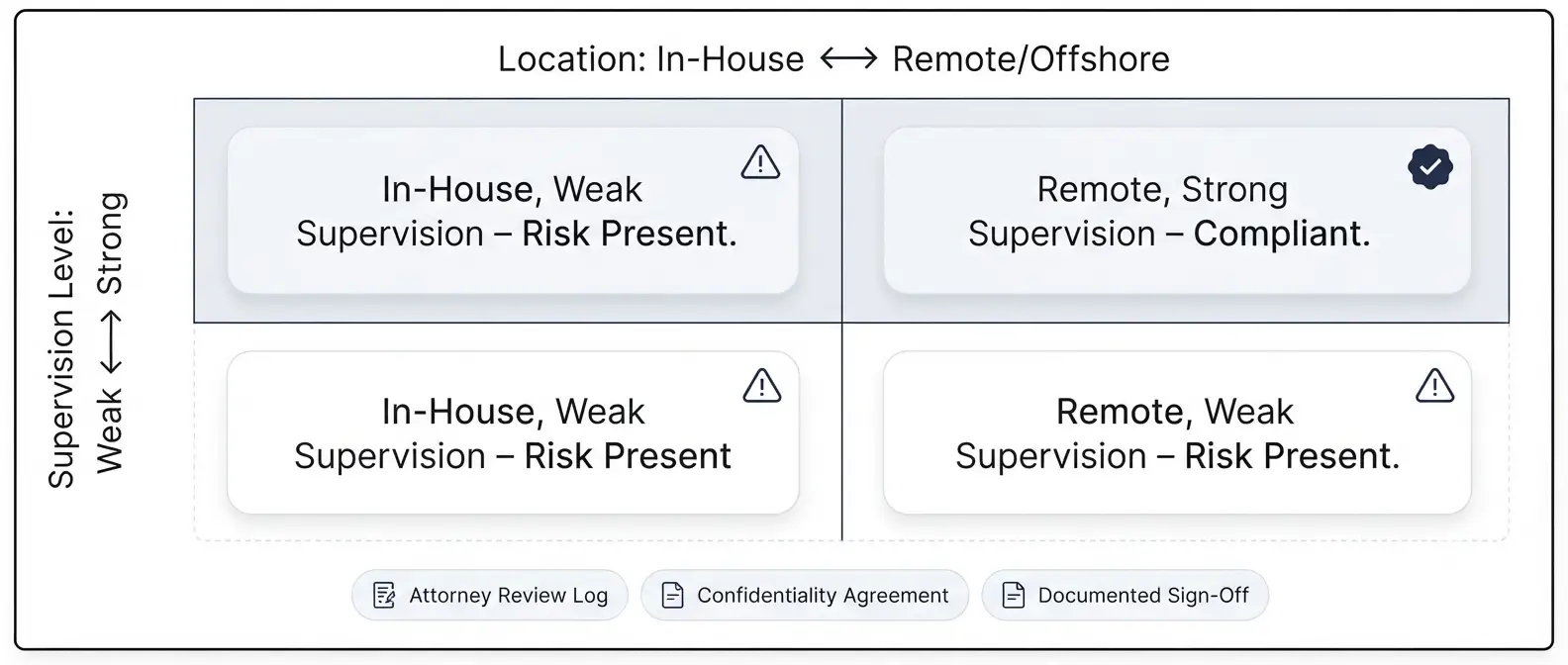
So the real compliance question is not “where is this person located?” It is:
- Does a registered practitioner review and approve every substantive work product before it goes anywhere near the USPTO?
- Does the paralegal service have confidentiality safeguards that match what a law firm would expect from in-house staff?
- Is there a clear paper trail showing that supervision actually happened?
If the answer to all three is yes, remote support does not create a compliance gap. If the answer to any of them is no, the risk exists whether the paralegal sits in the next room or a different time zone.
Tasks a Remote Patent Paralegal Can Handle
Understanding where the line sits is easier with concrete examples. Most solo practitioners and junior associates are surprised by how much procedural work can be safely delegated once proper supervision is in place.
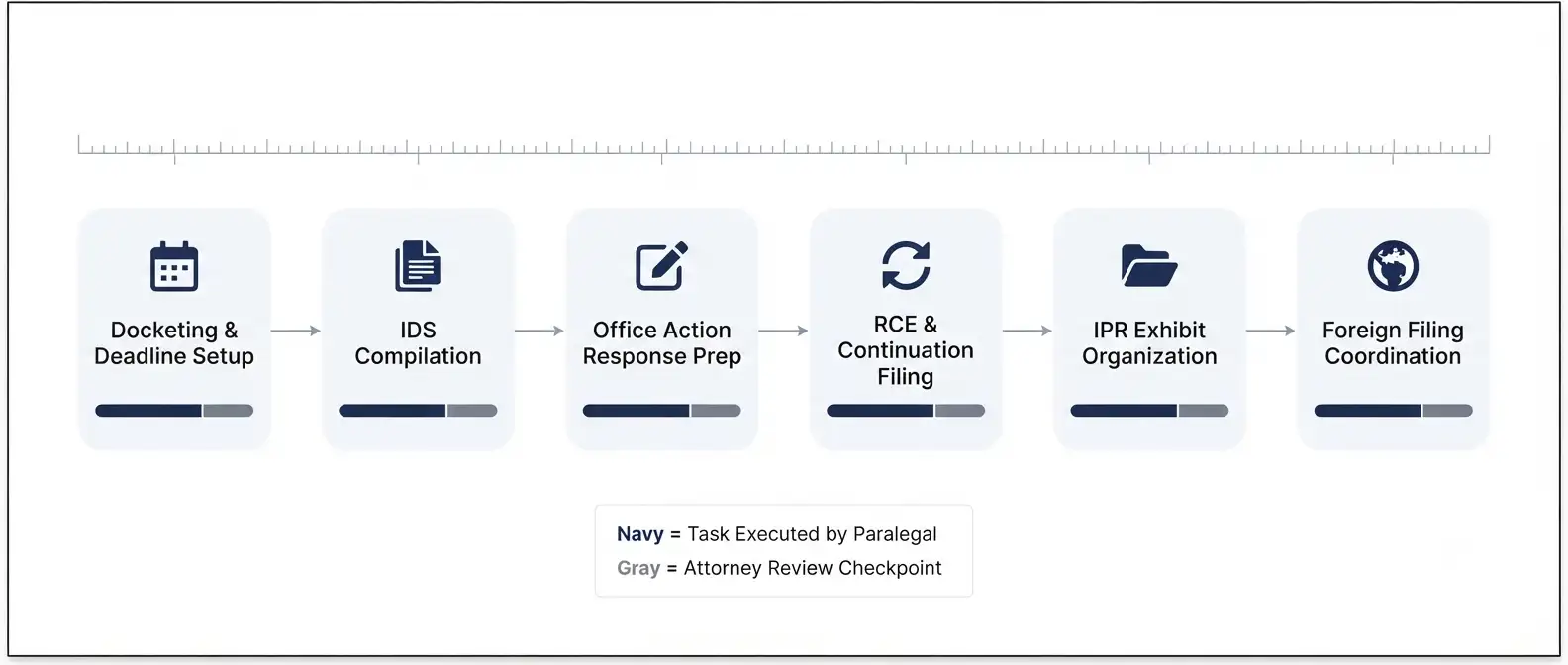
Docketing and Deadline Management
Missed deadlines remain one of the most common sources of malpractice claims in patent practice, and consistent docketing is exactly the kind of repetitive, rules-based task that benefits from dedicated support. A remote paralegal can maintain the docket, flag upcoming statutory and Office deadlines, and build in buffer alerts, all without making a single substantive legal decision. If you want a deeper look at how a layered review process reduces missed-deadline risk, this related guide on the best multi-layered quality control workflow for patent docketing breaks the process down step by step.
Office Action Response Support
When a Final Office Action lands with a running clock, a remote paralegal can prepare the response shell, organize the examiner’s rejections by category, pull the relevant file history, and draft the procedural sections while the attorney focuses on substantive arguments. This division of labor is explored further in this piece on Office Action response support services.
RCE and Continuation Filings
Preparing a Request for Continued Examination involves precise formatting, fee calculations, and form completion, all procedural tasks that a trained remote paralegal can handle under attorney direction. This related walkthrough on how to prepare an RCE form shows exactly which steps fall into procedural territory versus which require attorney sign-off.
IDS Preparation
Compiling and formatting an Information Disclosure Statement, including cross-referencing cited art and confirming proper certification language, is administrative work that remote paralegals routinely handle before the attorney’s final review.
IPR Proceeding Support
Even in the higher-stakes world of Inter Partes Review, there is meaningful room for paralegal support on exhibit organization, deadline tracking, and filing logistics. This guide on the paralegal’s role in an IPR proceeding outlines where that support fits without crossing into legal strategy.
Foreign Filing Coordination
Coordinating correspondence with foreign associates, tracking national phase deadlines, and managing translation logistics are procedural tasks well suited to remote support, as covered in this article on who prepares response correspondence for foreign patent filings.
Tasks a Remote Patent Paralegal Cannot Handle
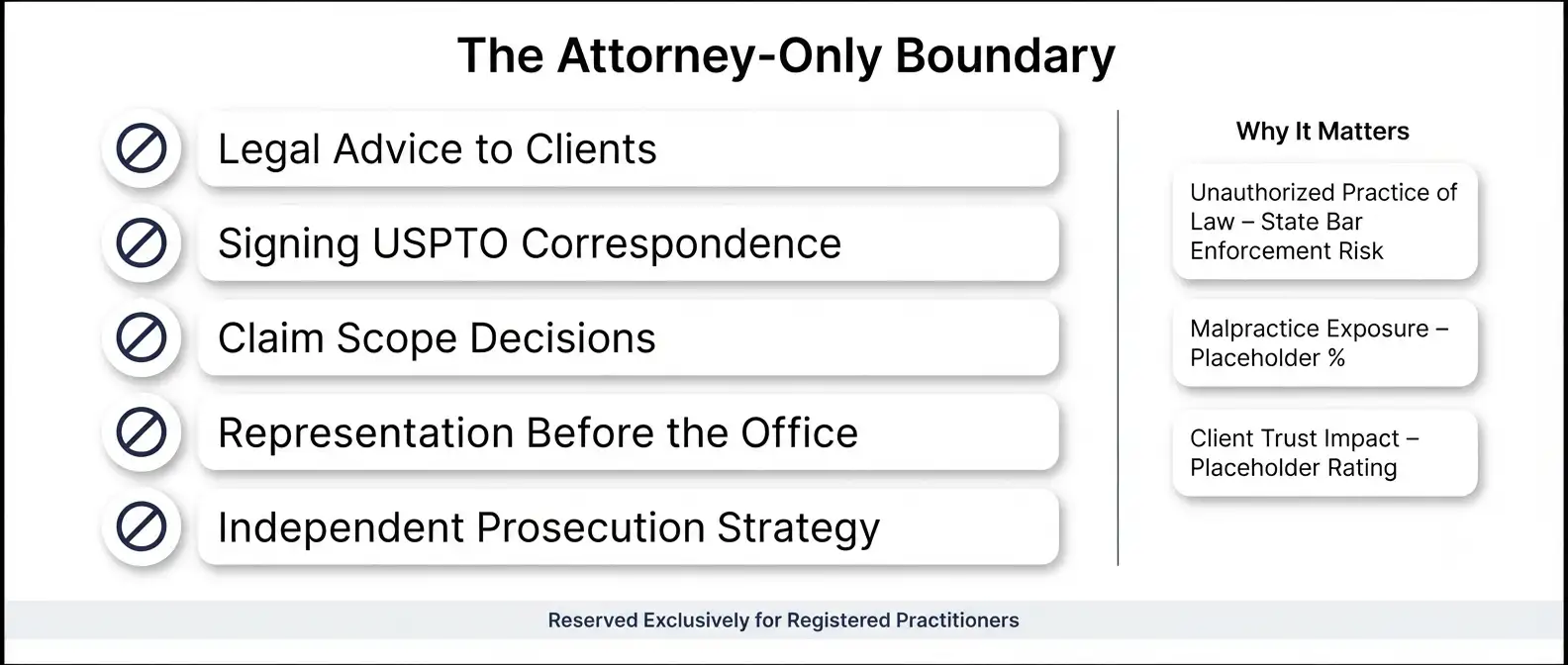
Just as important as knowing what is allowed is knowing where the line sits firmly on the other side.
- Giving legal advice to clients. A paralegal cannot tell a client whether their invention is patentable or recommend a filing strategy.
- Signing USPTO correspondence. Only registered practitioners can sign filings submitted to the Office.
- Making claim scope decisions. Drafting or amending claims requires the substantive judgment of a registered practitioner.
- Appearing or negotiating on the applicant’s behalf. Representation before the Office is reserved for registered attorneys and agents.
- Exercising independent legal judgment on prosecution strategy. Even highly experienced paralegals work under direction, not independently.
Quick-Reference Table: Compliant vs. Non-Compliant Tasks
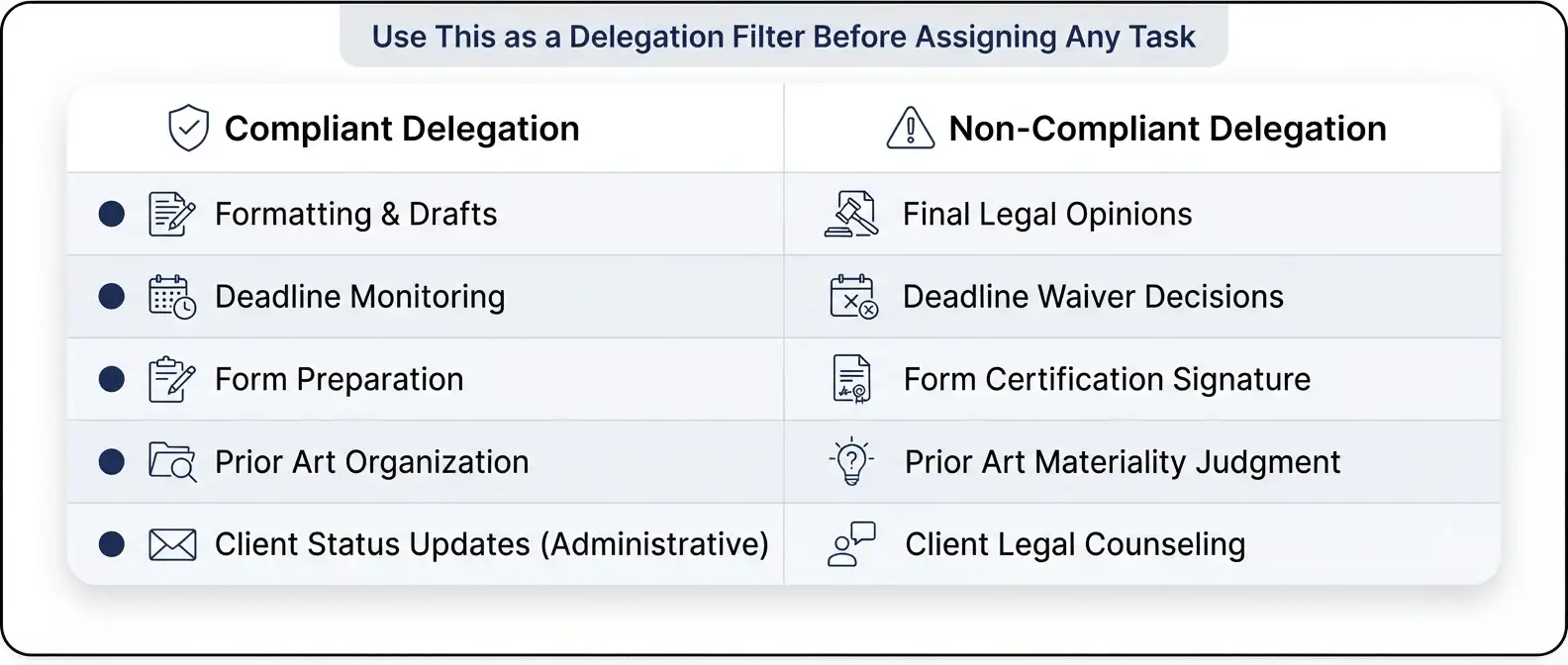
| Task | Can a Remote Paralegal Handle It? | Notes |
|---|---|---|
| Docketing and deadline tracking | Yes | Requires periodic attorney review of critical dates |
| Drafting response shells and formatting | Yes | Substance must be attorney-directed |
| IDS preparation and cross-referencing | Yes | Certification language reviewed by practitioner |
| RCE and continuation form preparation | Yes | Fees and forms checked before filing |
| Signing Office correspondence | No | Reserved for registered practitioners |
| Advising on patentability | No | Constitutes unauthorized practice of law if done by a non-attorney |
| Claim drafting or amendment | No | Requires practitioner’s substantive judgment |
| Client-facing legal strategy discussions | No | Attorney or registered agent only |
Common Mistakes Firms Make With Remote Paralegal Support
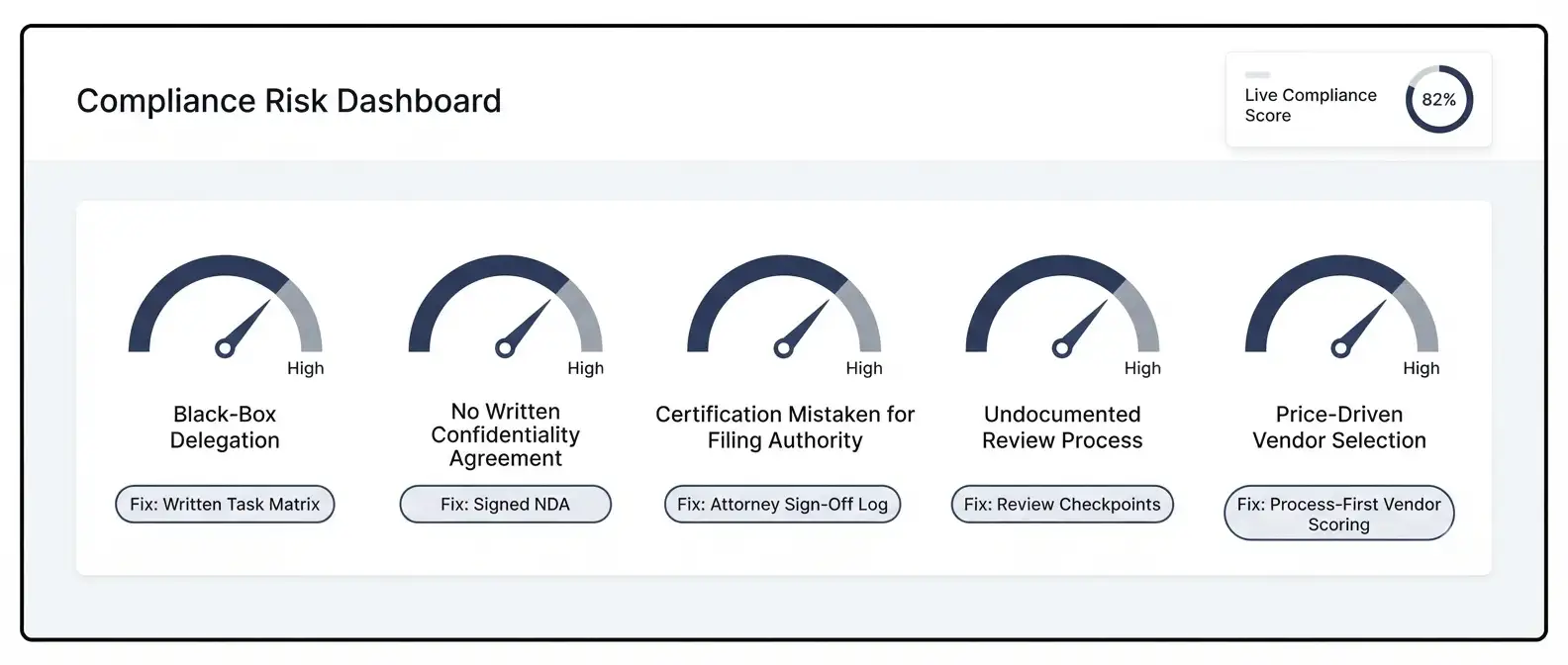
Even well-intentioned firms run into avoidable problems when they bring on remote support without a clear framework. These are the mistakes that show up most often.
- Treating the paralegal service as a black box. Some firms send work over and receive finished documents back without ever reviewing intermediate drafts. That approach removes the supervision layer that keeps the arrangement compliant.
- Skipping a written confidentiality agreement. Verbal assurances are not enough. A documented NDA and data-handling policy protects both the client and the firm.
- Assuming certification equals authority to file. A paralegal certification demonstrates competence, not authority to sign or represent before the USPTO.
- Failing to document the review process. If a bar complaint or malpractice claim ever arises, a firm needs a paper trail showing that a registered practitioner reviewed the work.
- Choosing price over process. The cheapest option is not always the one with proper quality control layers in place, and cutting corners on process tends to cost more later in missed deadlines or rework.
Expert Tips for Staying Compliant While Using Remote Paralegal Support
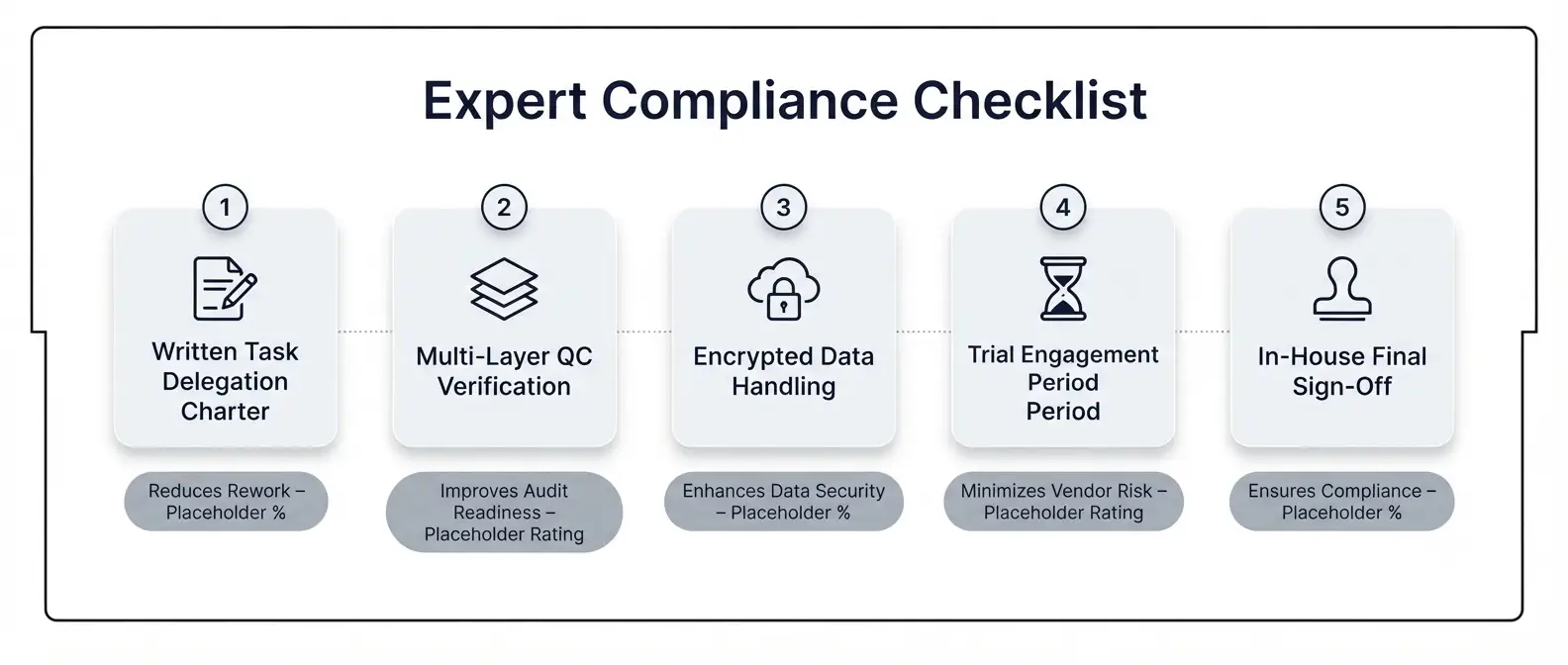
- Put the supervision structure in writing. Define exactly which tasks are delegated and which require sign-off before anything reaches the USPTO.
- Ask providers about their quality control layers. A credible remote paralegal service should be able to describe multiple review checkpoints, not just a single pass.
- Confirm data security practices. Encrypted file transfer, restricted access, and clear data retention policies are non-negotiable for handling client IP.
- Review sample work product before committing. A short trial engagement on a low-risk task reveals a lot about a provider’s attention to detail.
- Keep the final legal judgment in-house. No matter how experienced the remote team is, claim strategy, patentability opinions, and filing decisions stay with the registered practitioner.
If you are also weighing whether outsourcing makes financial sense compared to hiring in-house, this related resource on IP portfolio management outsourcing cost, process, and ROI walks through the numbers in more detail, and boutique and solo practices specifically may find this guide on IP support services for boutique IP law firms useful for structuring the arrangement from day one.
Step-by-Step: How to Vet a Remote Patent Paralegal Service for USPTO Compliance
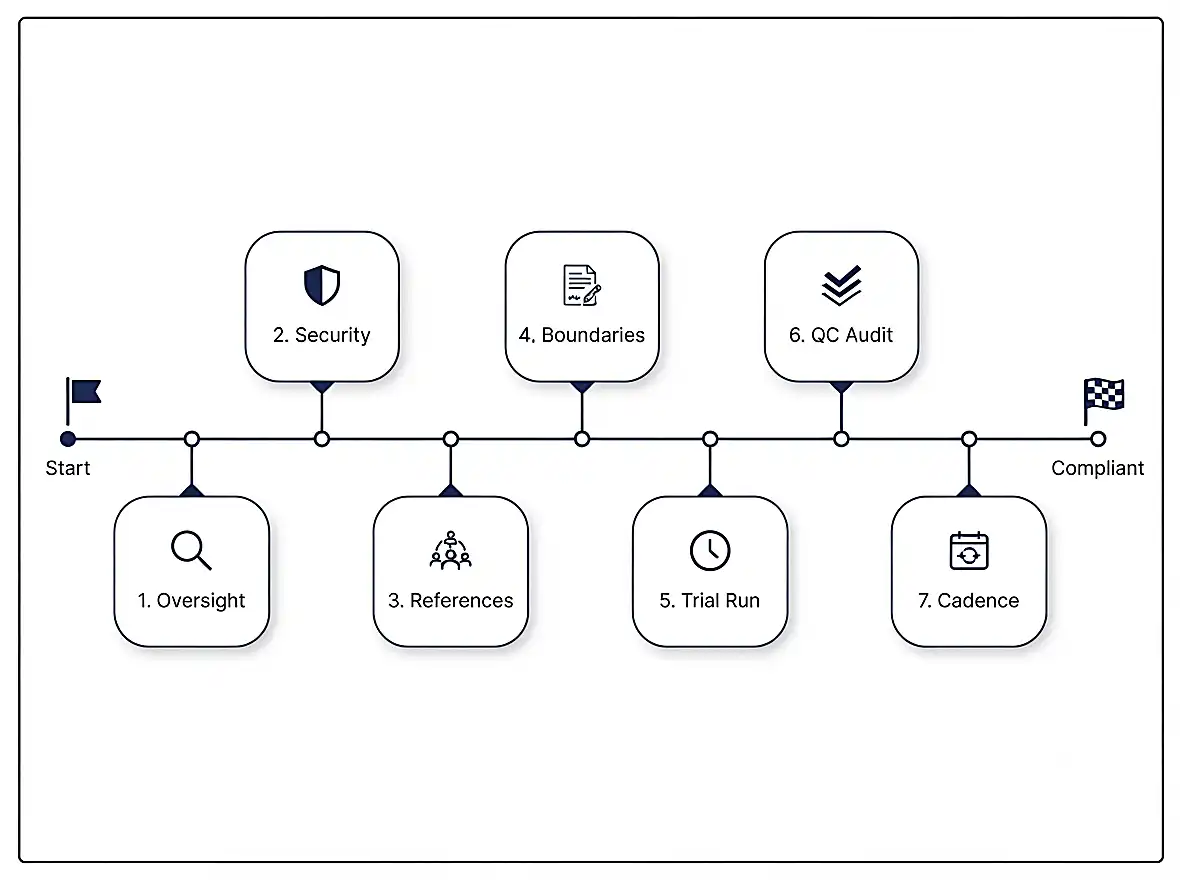
- Confirm attorney oversight in the provider’s own model. Ask whether the service itself is led or reviewed by registered patent attorneys, not just staffed by paralegals working independently.
- Request their confidentiality and data security documentation. This should include encryption standards, access controls, and a signed NDA template.
- Ask for references or case examples. A credible provider can point to firms of a similar size and practice area that they currently support.
- Clarify the division of labor in writing. Get a task list that specifies exactly which activities the paralegal will perform and which remain with your firm.
- Test with a low-stakes engagement first. Start with docketing cleanup or IDS preparation before handing over anything tied to a tight statutory deadline.
- Review their quality control process. Ask how many review checkpoints exist between a first draft and the final deliverable.
- Set a recurring check-in cadence. Even a compliant remote arrangement benefits from regular communication so nothing drifts out of alignment with your supervision expectations.
Frequently Asked Questions
Are remote patent paralegal services compliant with USPTO rules?
Yes, remote patent paralegal services are compliant with USPTO rules as long as a registered patent attorney or agent supervises and reviews all substantive work before it is filed. The USPTO does not restrict where paralegal support is located; it restricts what non-attorneys are permitted to do independently.
Can a remote paralegal sign documents filed with the USPTO?
No. Only registered patent attorneys and patent agents can sign correspondence and filings submitted to the USPTO. A remote paralegal can prepare drafts, but signature authority stays with the practitioner.
Do offshore or international remote paralegal teams create additional compliance risk?
Location alone does not create compliance risk. The relevant factors are supervision, confidentiality safeguards, and documented review, which apply equally whether the team is domestic or international.
What happens if a remote paralegal gives legal advice to a client?
That would constitute unauthorized practice of law, which is a serious compliance violation regardless of where the paralegal is based. Reputable remote paralegal services structure their engagements specifically to avoid this by keeping all client-facing legal advice with the supervising attorney.
How do I know if a remote patent paralegal service is trustworthy?
Look for attorney-led oversight, documented confidentiality practices, transparent quality control processes, and a willingness to start with a smaller trial engagement before handling higher-stakes filings.
Conclusion
The short answer to whether remote patent paralegal services compliant with USPTO rules exist is yes, and they have existed in one form or another for years. The USPTO’s rules focus on supervision, confidentiality, and the boundary between administrative support and the practice of law, not on where the support staff happens to sit. For a junior attorney managing a growing docket or a solo practitioner without the budget for a full-time hire, a well-vetted remote paralegal service can close the procedural gap without introducing new risk, provided the firm keeps final legal judgment, signature authority, and client advice firmly in-house.
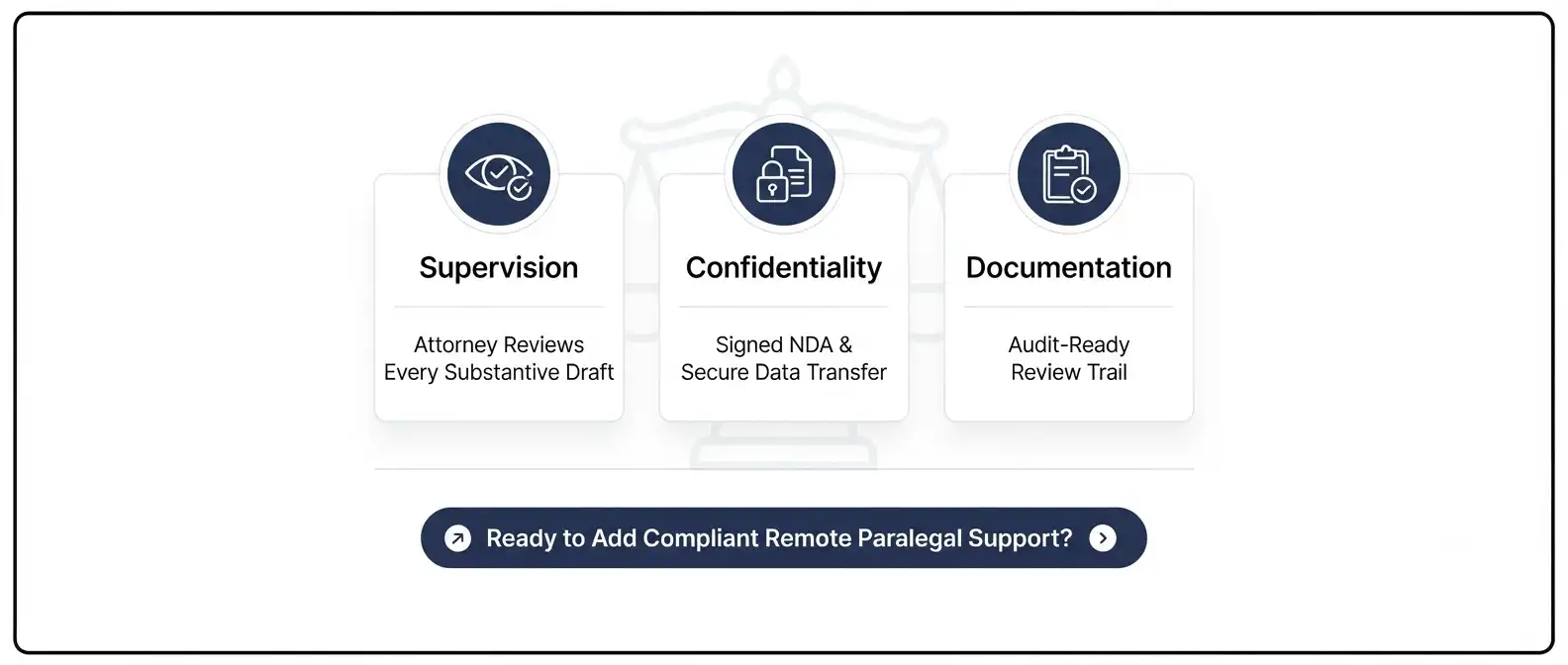
The practices that get this wrong are rarely the ones using remote support. They are the ones skipping supervision, confidentiality documentation, or quality control. Build those three pillars into the relationship from the start, and remote patent paralegal support becomes a compliant, practical extension of your practice rather than a liability.
If you are ready to bring on remote paralegal support that is built around attorney oversight and documented quality control from day one, contact Teak IP Services to talk through your firm’s specific needs.


One Response