
A petition for Inter Partes Review lands on a Friday afternoon, and the clock starts immediately. Exhibits need numbering, a protective order needs tracking, and the Patent Trial and Appeal Board does not grant extensions because your team is short-staffed. If this scenario sounds familiar, you already understand why litigation firms are searching for how to hire a virtual patent paralegal experienced with USPTO post-grant proceedings instead of waiting months to fill a full-time seat.

Post-grant work is unlike standard patent prosecution. IPR, PGR, and CBM proceedings run on compressed statutory deadlines, strict page limits, and exacting formatting rules set by the Patent Trial and Appeal Board that leave almost no room for error. A generalist paralegal, however capable, often needs weeks to get comfortable with mandatory notices, real-party-in-interest disclosures, and the Board’s electronic filing quirks. That is time a litigation team facing an active proceeding simply does not have. In fact, a paralegal’s role in an Inter Partes Review proceeding already differs sharply from routine prosecution support, which is precisely why generalist hires struggle to keep pace.
This guide walks through exactly how to hire a virtual patent paralegal experienced with USPTO post-grant proceedings, what to test for before you commit, which mistakes cost firms the most time and money, and how to structure the engagement so a remote specialist becomes productive within days, not months. Whether you are a boutique litigation boutique with one active IPR or a corporate IP department bracing for a wave of validity challenges, the framework below applies directly to your hiring decision.
What Is a Virtual Patent Paralegal in Post-Grant Proceedings?
A virtual patent paralegal is a remote, credentialed paralegal professional who manages the procedural, docketing, and document-preparation side of patent matters without sitting in your physical office. In the post-grant context, that role expands considerably.
Quick definition: A virtual patent paralegal experienced with USPTO post-grant proceedings is a remote paralegal who manages PTAB filing deadlines, prepares and formats IPR/PGR/CBM petitions and responses, tracks mandatory notices, coordinates exhibit numbering, and ensures every submission complies with 37 C.F.R. Part 42 before it reaches the Board.
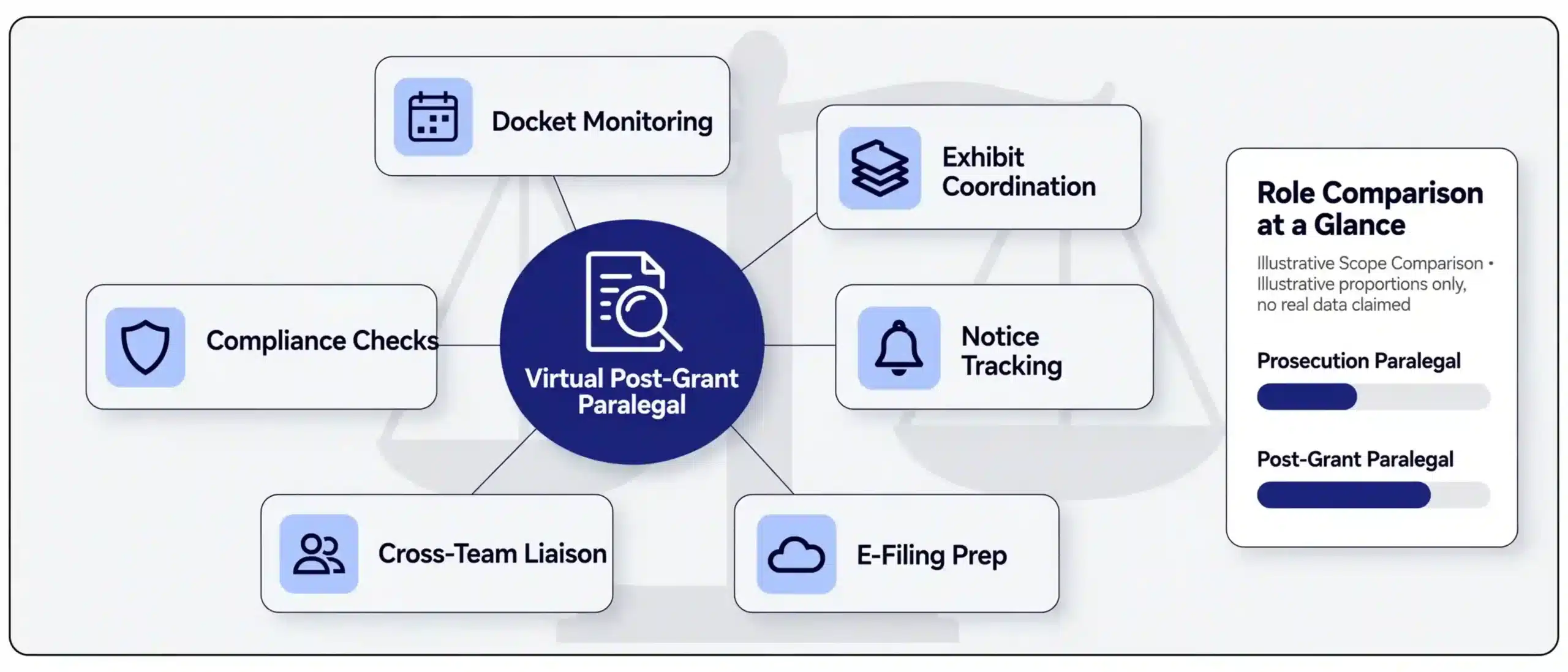
Unlike a standard prosecution paralegal, this specialist typically understands:
- The statutory one-year time bar under 35 U.S.C. § 315(b)
- Institution decision timelines and their downstream docketing effects
- Mandatory notice requirements under 37 C.F.R. § 42.8
- Page limits, word-count certifications, and exhibit numbering conventions
- The Patent Trial and Appeal Board’s e-filing system, PTAB End to End (E2E)
- Coordination between litigation counsel, expert witnesses, and prosecution teams during parallel proceedings
Because post-grant matters frequently overlap with district court litigation, the ideal candidate also grasps how a stay motion, a related district court case, or a co-pending reexamination affects the docketing calendar.
Why Litigation Firms Are Turning to Virtual Patent Paralegals
The shift toward remote specialized staffing is not a trend born from convenience alone. It reflects real operational pressure inside IP litigation practices.
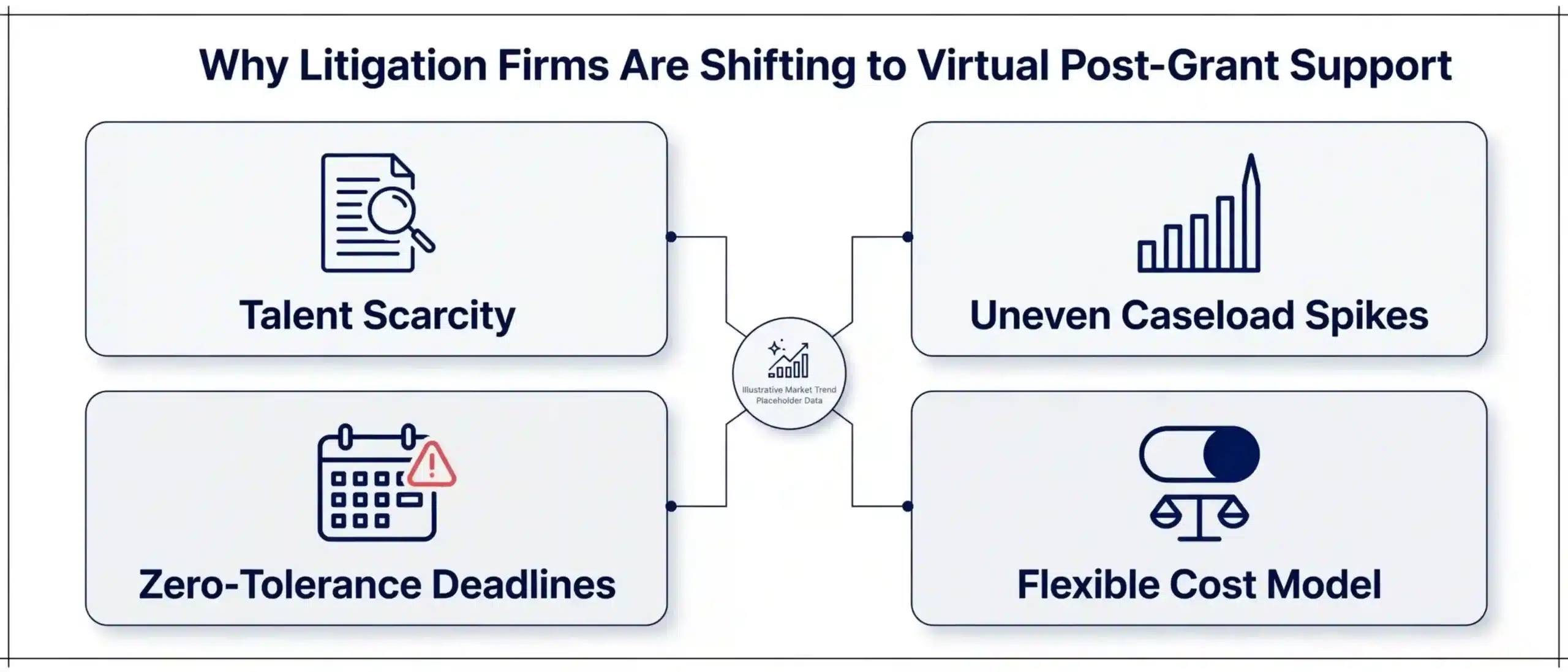
The Talent Gap Is Real
Paralegals with genuine PTAB experience are scarce. Most law schools and paralegal certificate programs do not teach post-grant procedure in depth, so firms end up training generalists on the job, often during an active matter when there is no time to spare.
Caseloads Spike Unevenly
IPR filings rise and fall with litigation cycles, patent portfolio value, and industry-specific enforcement trends. A firm might need three dedicated post-grant paralegals for four months and zero for the following six. This is one of several clear signs a firm needs additional patent paralegal support, and hiring full-time staff for that uneven pattern rarely makes financial sense.
Deadlines Do Not Bend
The PTAB enforces its statutory and regulatory deadlines with very limited flexibility. Consequently, firms cannot afford a paralegal learning curve during an active proceeding. They need someone who can start contributing to docketing and exhibit preparation almost immediately.
Cost Structures Favor Flexibility
A virtual, à la carte staffing model lets firms scale support up during petition season and scale back down afterward, instead of carrying fixed headcount through slow periods.
Key Skills to Look for When You Hire a Virtual Patent Paralegal
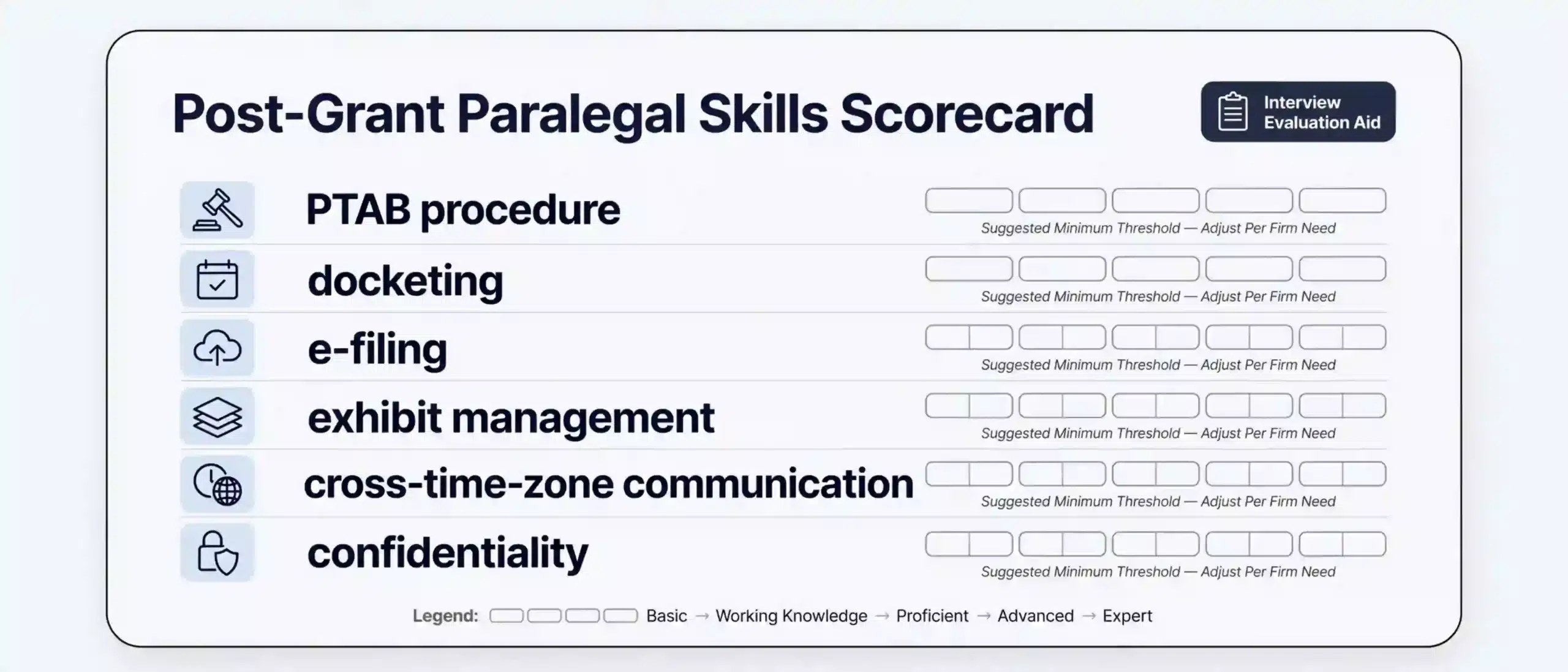
Before posting a job description or contacting a staffing partner, define the specific competencies that separate a true post-grant specialist from a general patent paralegal. Use this checklist during every interview and skills assessment.
1. PTAB Procedural Fluency
Ask candidates to walk through the timeline of a typical IPR from petition filing to final written decision. A specialist should be able to explain, without hesitation:
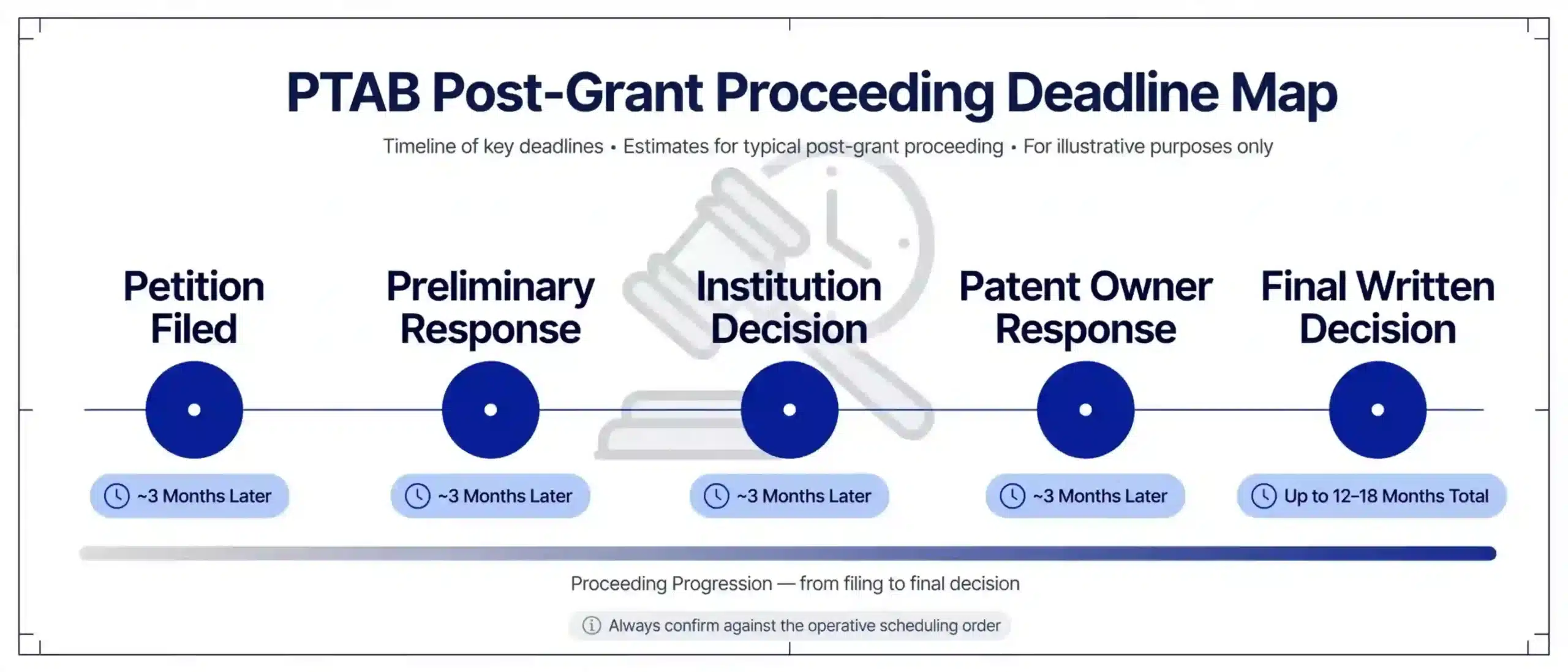
- The 3-month window for a patent owner’s preliminary response
- The Board’s roughly 3-month period to issue an institution decision
- The 12-month statutory deadline (extendable by up to 6 months) from institution to final written decision
- Key intervening deadlines for discovery, motions to amend, and oral hearing requests
2. Docketing and Deadline Management
Post-grant matters generate dense, interdependent deadlines. The right hire should demonstrate hands-on experience with docketing software, calendar cross-checking, and building in internal buffer dates ahead of hard statutory deadlines.
3. Document Formatting and PTAB E2E Filing
Formatting errors, such as incorrect margins, missing certifications of word count, or improperly numbered exhibits, can trigger a Board notice or, worse, a rejected filing. Confirm the candidate has actually filed documents through the PTAB End to End filing system, not simply read about it. This same attention to formatting detail is what separates strong Office Action response support from work that keeps bouncing back for corrections.
4. Exhibit and Evidence Management
Post-grant proceedings often involve dozens or hundreds of exhibits across multiple parties. A qualified virtual paralegal should be comfortable building and maintaining exhibit lists, cross-referencing citations, and coordinating with expert witnesses on declaration exhibits.
5. Communication Across Time Zones
Because many virtual patent paralegals work remotely, including offshore teams, verify that the candidate or staffing partner offers overlapping business hours and a clear escalation process for urgent, same-day deadline issues.
6. Confidentiality and Data Security Awareness
Post-grant matters frequently involve protective orders and highly sensitive technical evidence. Confirm the candidate understands protective order compliance, secure file transfer protocols, and firm-specific confidentiality obligations.
Featured Snippet Summary: The core skills to verify before you hire a virtual patent paralegal experienced with USPTO post-grant proceedings are PTAB procedural knowledge, docketing precision, PTAB E2E filing experience, exhibit management, cross-time-zone communication, and protective order compliance.
Step-by-Step: How to Hire a Virtual Patent Paralegal Experienced With USPTO Post-Grant Proceedings
Follow this sequence to move from a staffing need to a fully onboarded remote specialist without sacrificing quality control.
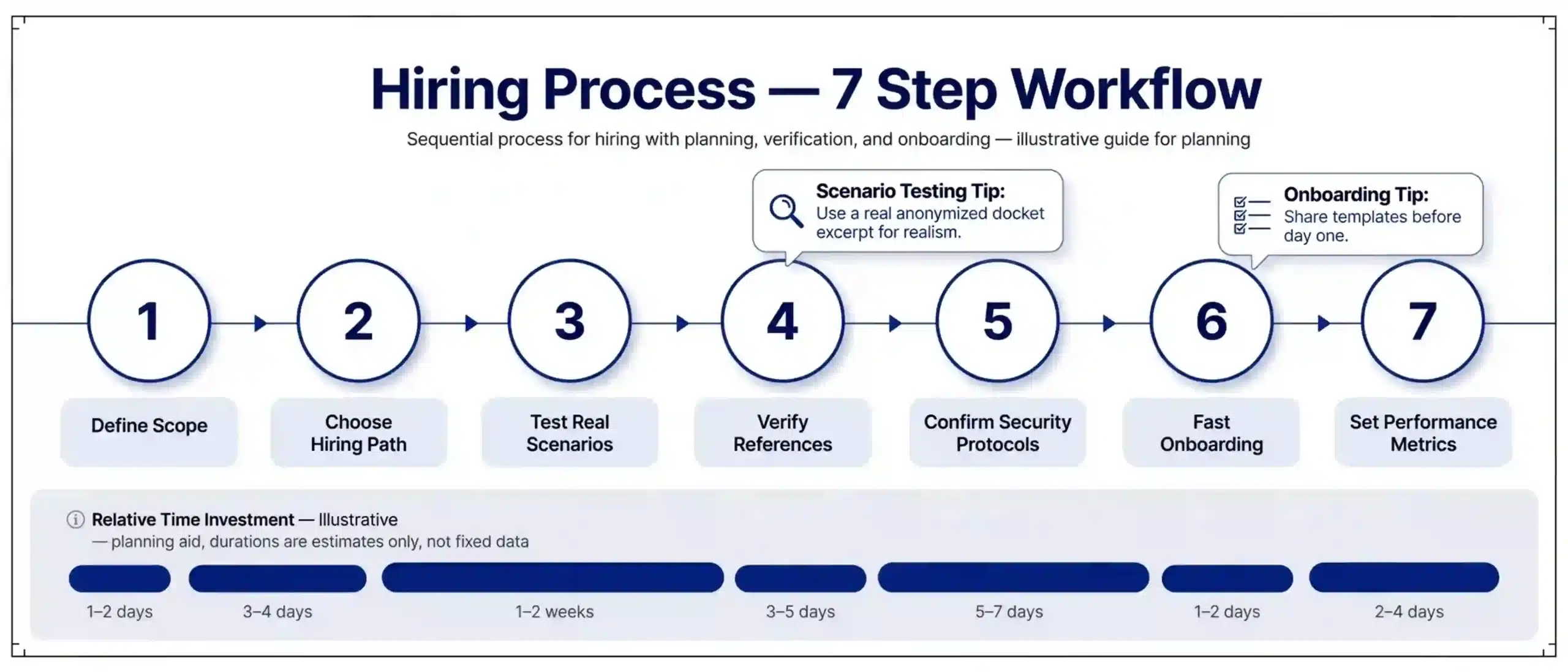
Step 1: Define the Scope Before You Search
Decide whether you need support for a single active IPR, ongoing PTAB caseload management, or broader patent paralegal coverage that includes post-grant work alongside prosecution. Firms that skip this step often end up with a mismatched hire, either overqualified generalist support or a specialist without the bandwidth for adjacent tasks.
Before you finalize scope, it also helps to review a general IP vendor due diligence checklist so security and compliance questions are baked into the process from the start.
Step 2: Choose Between a Direct Hire and a Managed Service
You generally have two paths:
- Direct remote hire: You recruit, interview, and manage an individual virtual paralegal yourself.
- Managed paralegal service: A specialized IP staffing firm provides a vetted paralegal (or team) with built-in quality control, backup coverage, and attorney oversight.
For an immediate, high-stakes post-grant matter, a managed service often gets you to full productivity faster because the vetting, training infrastructure, and backup coverage already exist.
Step 3: Test Real PTAB Scenarios, Not Just Resumes
Resumes rarely reveal true post-grant fluency. Instead, run a practical assessment:
- Provide a sample IPR docket and ask the candidate to identify the next three critical deadlines.
- Share a mock exhibit list with numbering errors and ask them to correct it.
- Ask how they would handle a same-day change to a mandatory notice.
Step 4: Verify References From Litigation-Specific Engagements
General patent prosecution references will not confirm post-grant competence. Request references specifically tied to IPR, PGR, or CBM support, and ask those references about deadline accuracy under pressure.
Step 5: Confirm Security, Confidentiality, and Compliance Protocols
Before granting docket or document access, review:
- Data encryption and secure file-sharing practices
- Protective order handling procedures
- Compliance with unauthorized practice of law boundaries, since paralegals must not provide legal advice or make substantive legal judgments, per the American Bar Association’s guidance on paralegal practice
This vetting step matters just as much for post-grant support as it does when firms evaluate whether remote patent paralegal services are compliant with USPTO rules more broadly.
Step 6: Structure a Fast, Focused Onboarding
Even an experienced virtual patent paralegal needs a short ramp-up period to learn your firm’s docketing system, templates, and internal escalation contacts. Plan for:
- A documented deadline calendar handoff on day one
- Read access to relevant PTAB E2E dockets
- A single point of attorney contact for urgent clarification
Step 7: Set Clear Performance Metrics From Day One
Establish measurable expectations early, such as zero missed internal deadlines, same-day acknowledgment of new Board notices, and weekly docket accuracy audits. A multi-layered quality control workflow built around these metrics catches errors before they ever reach the Board.
Virtual Patent Paralegal vs. In-House Hire vs. Managed Paralegal Service
| Factor | Virtual Direct Hire | Traditional In-House Hire | Managed Paralegal Service |
|---|---|---|---|
| Time to start on active IPR | 2–4 weeks | 6–12+ weeks | Days |
| Post-grant specialization guarantee | Depends on individual | Depends on individual | Vetted specialist pool with attorney oversight |
| Backup coverage during absence | None | None | Built-in team redundancy |
| Cost structure | Salary plus benefits | Salary plus benefits plus overhead | À la carte, pay for hours or scope used |
| Scalability for caseload spikes | Limited | Limited | High |
| Quality control layer | Self-managed | Self-managed | Multi-layered review process |
Core PTAB Post-Grant Deadlines a Virtual Patent Paralegal Must Track
| Milestone | Governing Rule | Typical Timing |
|---|---|---|
| Petition filing deadline (IPR time bar) | 35 U.S.C. § 315(b) | Within 1 year of service of infringement complaint |
| Patent owner preliminary response | 37 C.F.R. § 42.107 | 3 months after petition filing |
| Institution decision | 35 U.S.C. § 314 | Within 3 months of preliminary response |
| Patent owner response | 37 C.F.R. § 42.120 | 3 months after institution (typical) |
| Final written decision | 35 U.S.C. § 316(a)(11) | Within 1 year of institution, extendable up to 6 months |
Note: Exact deadlines vary by case type and Board scheduling order. A qualified virtual patent paralegal should always confirm dates against the operative scheduling order rather than relying on general timelines.
Common Mistakes Firms Make When Hiring for Post-Grant Support
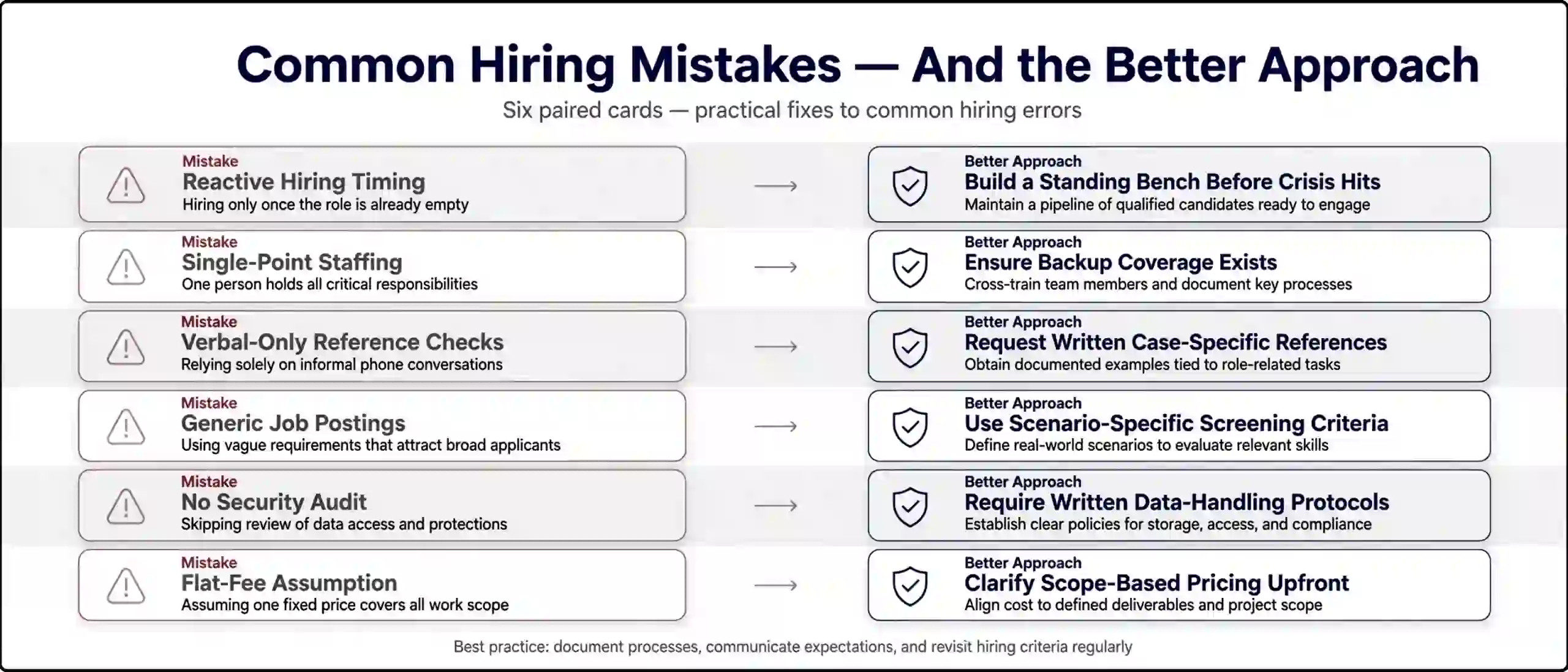
Avoiding these pitfalls saves significant time and reduces the risk of a costly procedural misstep.
- Hiring for prosecution experience only. Prosecution and post-grant litigation support require different muscle memory. A strong prosecution paralegal is not automatically post-grant ready.
- Skipping a practical skills test. Interviews alone rarely expose gaps in PTAB E2E filing experience or exhibit management precision.
- Underestimating onboarding time pressure. Waiting until a deadline crisis to bring on support leaves no room for a proper docket handoff.
- Ignoring backup coverage. A single virtual hire with no backup creates a single point of failure if they are unavailable during a critical filing week.
- Overlooking confidentiality infrastructure. Post-grant matters often involve protective orders; firms that do not vet data security practices expose themselves to unnecessary risk.
- Treating cost as the only factor. The cheapest option is rarely the fastest to full productivity on a live PTAB matter.
Expert Tips for a Smooth Hiring and Onboarding Process
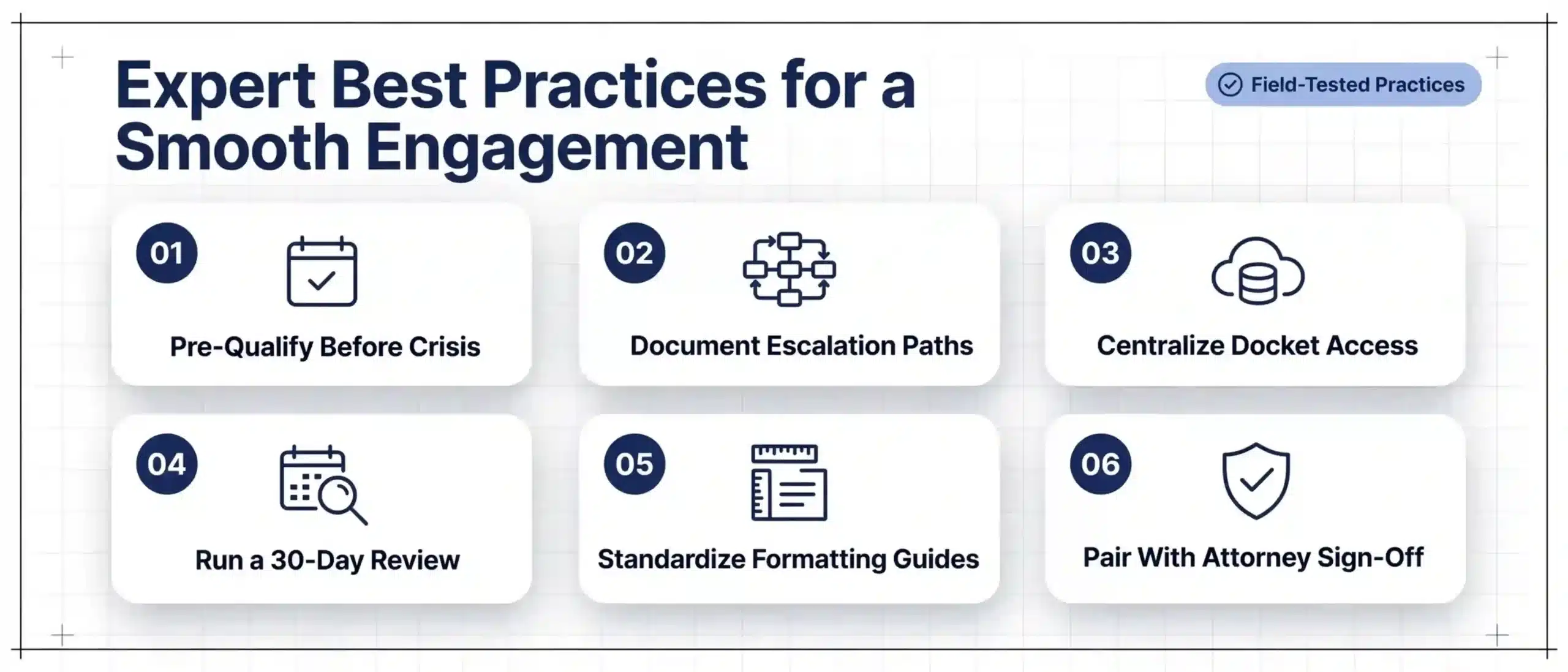
Consider the following practices, drawn from firms that have successfully integrated remote post-grant support:
- Start the search before the deadline crunch. If your firm regularly handles post-grant matters, build a relationship with a vetted virtual paralegal or staffing partner before an urgent need arises.
- Provide a written escalation protocol. Clearly define who the virtual paralegal contacts for urgent clarification outside normal business hours.
- Use a shared, cloud-based docketing system. This reduces the friction of handing off deadline tracking to a remote team member.
- Run a 30-day check-in. Even after onboarding, schedule a short review to confirm the paralegal’s grasp of your firm’s specific PTAB workflows.
- Document firm-specific formatting preferences. Small style differences in exhibit labeling or caption formatting matter to Board reviewers and to your own internal consistency.
- Pair the virtual paralegal with attorney oversight. Even highly experienced paralegals benefit from a defined review layer before final submission, both for quality control and for compliance with unauthorized practice of law boundaries.
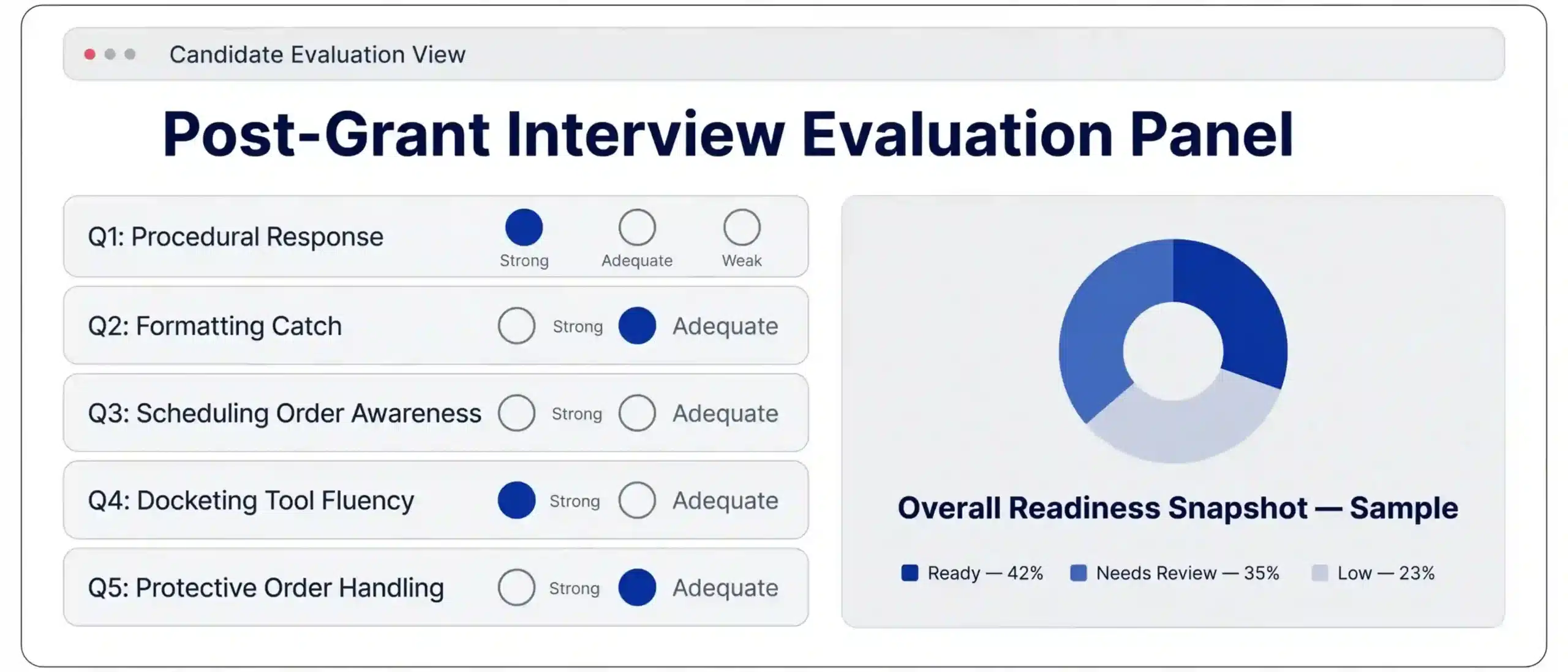
Sample Interview Questions to Ask Before You Hire
Because resumes can overstate experience, structure your interview around scenario-based questions rather than yes-or-no confirmations. Consider asking:
- “Walk me through what happens the day a petition for IPR is filed against one of our patents.” A strong candidate will immediately mention the one-year time bar, mandatory notice requirements, and the need to confirm the real party in interest.
- “Describe a time you caught a formatting error before a filing went out.” This reveals whether the candidate has hands-on submission experience or only theoretical knowledge.
- “How would you handle a scheduling order that shortens a standard deadline?” Post-grant scheduling orders frequently deviate from default timelines, and a specialist should know to treat the scheduling order as controlling, not the general statute.
- “What tools have you used to track PTAB deadlines across multiple concurrent proceedings?” Listen for specific docketing software names and a described process, not a generic answer.
- “How do you handle a document under a protective order when coordinating with outside experts?” This tests both procedural knowledge and confidentiality discipline.
Additionally, ask every candidate or staffing partner for two or three references tied specifically to post-grant matters, and follow up with those references about deadline accuracy, responsiveness during crunch periods, and communication quality across time zones.
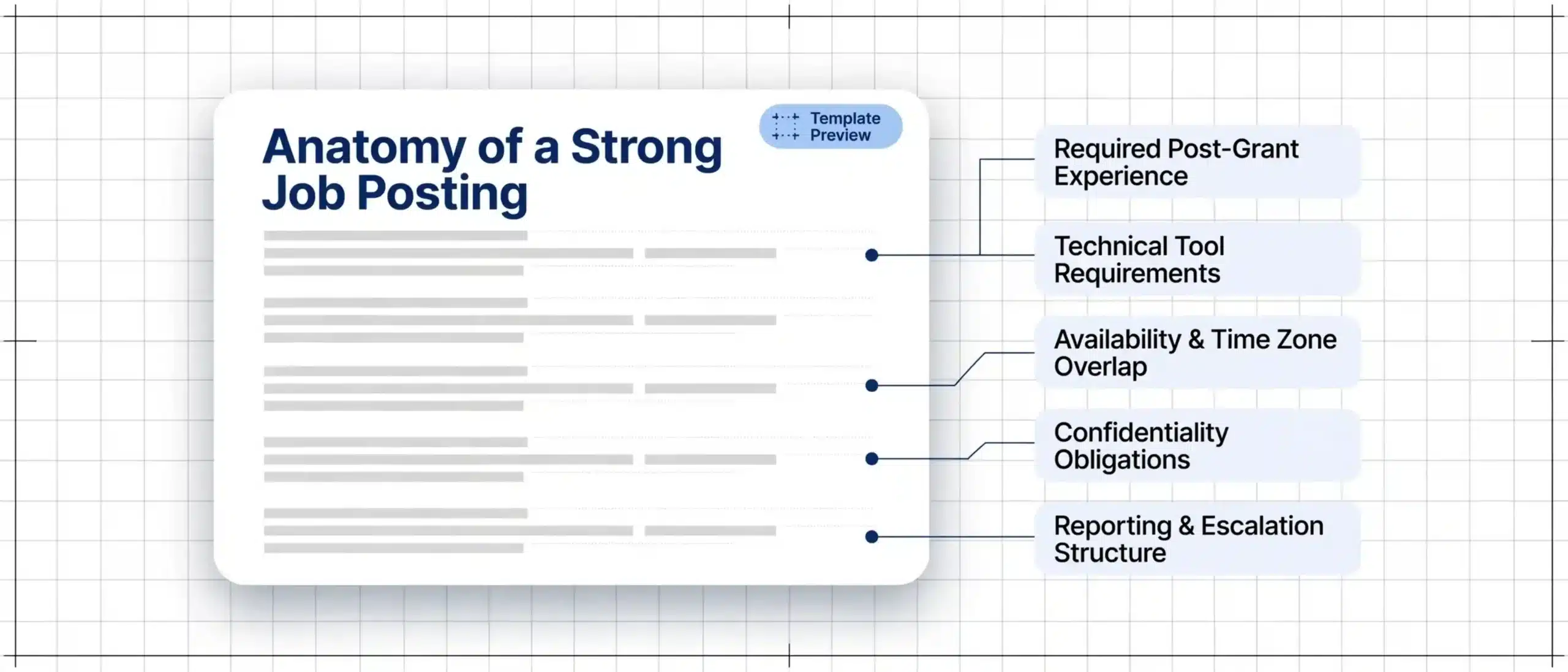
What a Strong Virtual Patent Paralegal Job Description Should Include
If you are posting an open role rather than working with a managed service, a precise job description filters out unqualified applicants before the interview stage. At minimum, include:
- Required experience: A minimum number of years supporting IPR, PGR, or CBM matters, stated explicitly rather than folded into general “patent litigation support.”
- Technical requirements: Direct experience with PTAB End to End filing, plus familiarity with common docketing platforms.
- Availability expectations: Clear working hours with meaningful overlap with your firm’s core business hours, even if the paralegal is based in a different time zone.
- Confidentiality obligations: A statement referencing protective order compliance and secure document handling, since candidates should self-select based on their comfort with this requirement.
- Reporting structure: Who the paralegal reports to, and how urgent, same-day issues get escalated.
A vague job posting invites a flood of generalist applicants. A specific one, by contrast, tends to attract candidates who can genuinely speak to post-grant procedure in an interview.
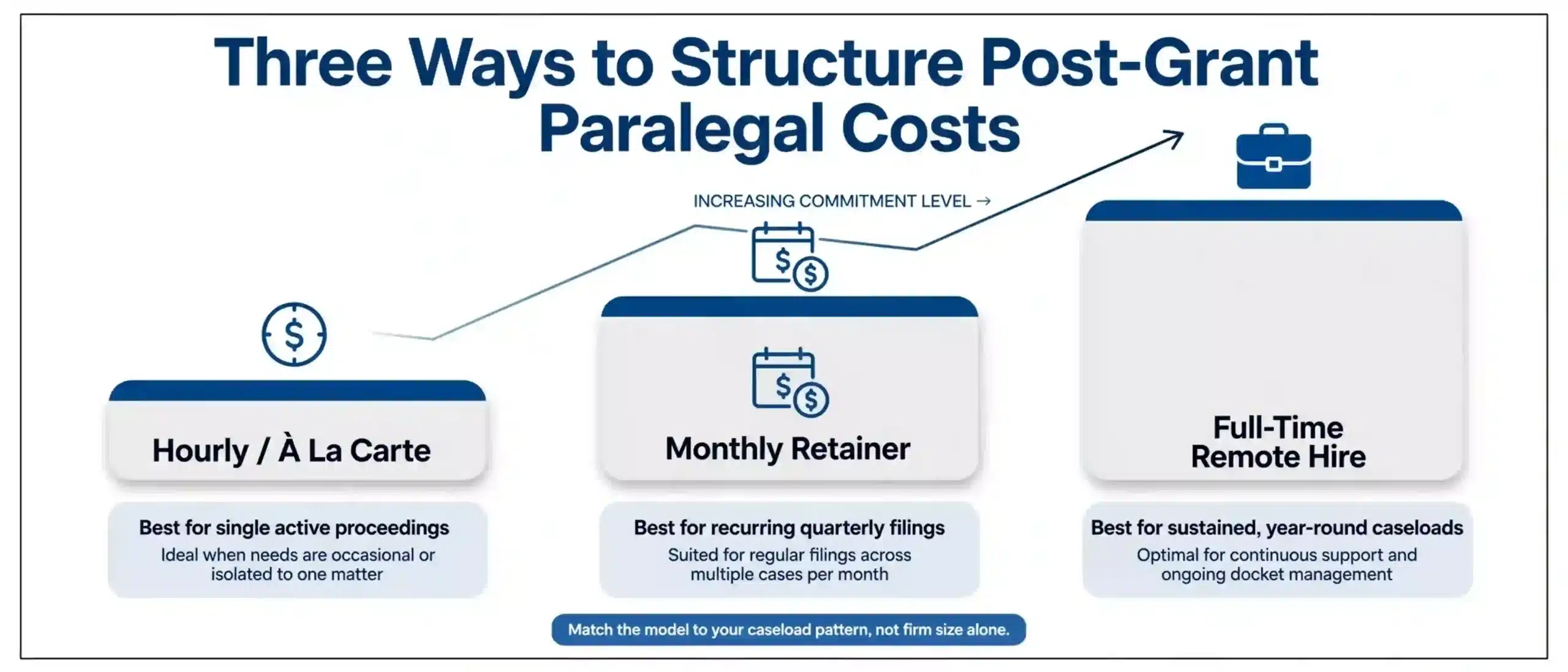
Cost Considerations When You Hire a Virtual Patent Paralegal
Pricing models for virtual patent paralegal support generally fall into three categories, and each suits a different firm situation.
- Hourly, à la carte billing: Best for firms with a single active matter or unpredictable caseload, since you pay only for hours actually worked on the proceeding.
- Monthly retainer: Suited to firms with a steady, ongoing volume of post-grant work who want guaranteed capacity without a full-time salary commitment.
- Full-time remote employee: Makes sense once caseload volume becomes consistent enough to justify dedicated headcount, complete with benefits and long-term retention costs.
For most litigation firms facing an immediate, high-value proceeding, à la carte or managed-service pricing offers the fastest path to support without a long-term financial commitment. It also avoids the sunk cost of training an in-house hire who may not have sustained post-grant work once the current matter resolves.
Practical Insights: What High-Value Litigation Firms Should Prioritize
For a litigation firm with an immediate, high-stakes post-grant project, speed and reliability matter more than almost anything else. When evaluating how to hire a virtual patent paralegal experienced with USPTO post-grant proceedings under time pressure, prioritize:
- Proven track record on active IPR or PGR matters, not just training certificates
- Immediate availability, since a two-week notice period may not align with your filing calendar
- A firm-backed quality control layer, so the work is checked before it reaches your desk
- Transparent, à la carte pricing, so you pay for the scope of the active matter rather than committing to long-term headcount
A managed IP paralegal service that already maintains a bench of PTAB-experienced professionals, backed by attorney review, typically resolves all four priorities faster than an independent direct hire search.
It is also worth building redundancy into the arrangement from the outset. If your primary virtual paralegal is unavailable during a critical filing week, due to illness, a family emergency, or simply a conflicting deadline on another matter, a managed service can usually shift a second qualified professional onto the docket with minimal disruption. An independent direct hire, by contrast, leaves you exposed to a single point of failure precisely when the stakes are highest.
Firms should also weigh how post-grant support fits into their broader back-office strategy. A litigation team juggling an active IPR alongside routine prosecution deadlines, trademark renewals, and general docketing often benefits more from a single IP services partner who can flex across all of these functions, rather than piecing together separate vendors for each specialty. This reduces onboarding friction and keeps confidentiality protocols consistent across every engagement.
How Teak IP Services Supports Post-Grant Proceedings
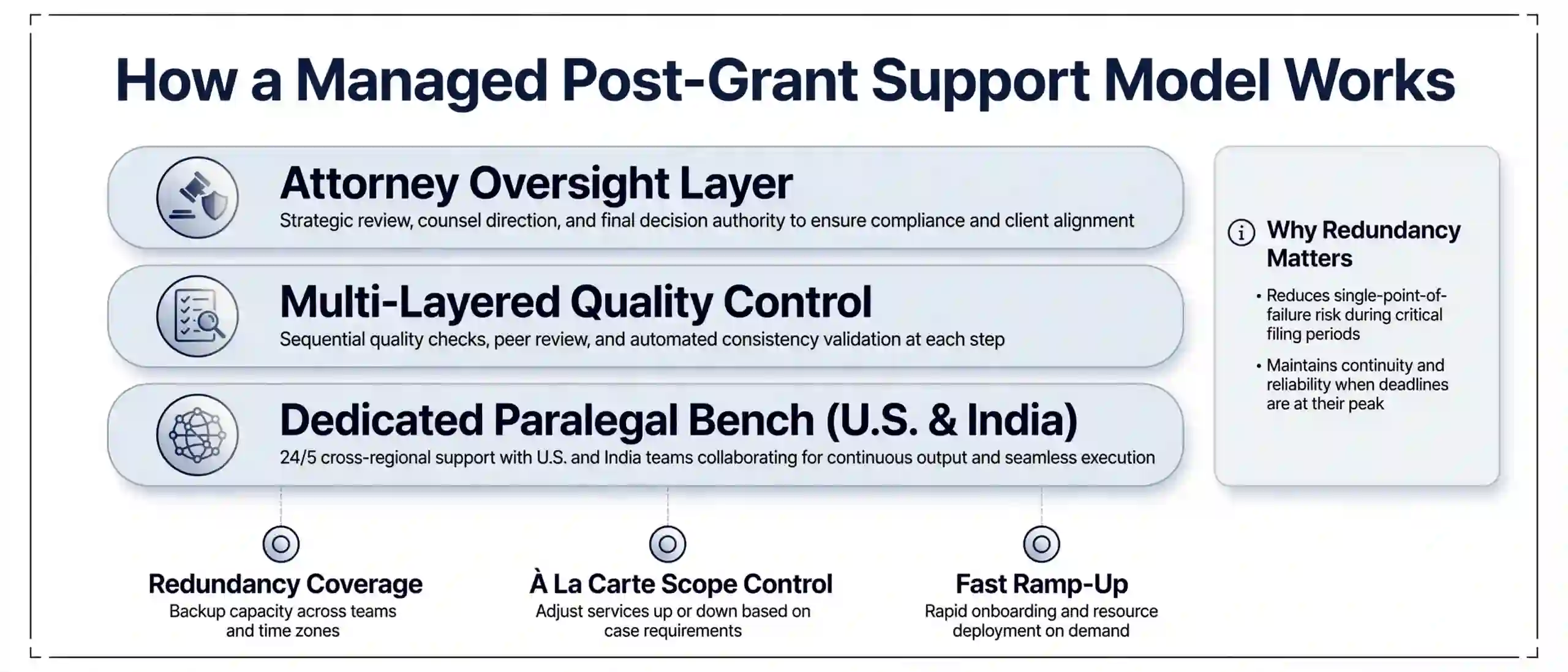
Teak IP Services combines U.S. attorney oversight with experienced paralegal teams across the United States and India to deliver exactly the kind of fast, reliable post-grant support litigation firms need. Every deliverable passes through a multi-layered quality control process before it reaches your desk, and the à la carte pricing model means you only pay for the scope of work your active matter requires, without committing to long-term headcount. For firms weighing how to hire a virtual patent paralegal experienced with USPTO post-grant proceedings on a tight timeline, this structure removes the recruitment delay entirely, since vetted specialists are already available to step into an active docket.
Frequently Asked Questions
How do I hire a virtual patent paralegal experienced with USPTO post-grant proceedings quickly?
The fastest path is partnering with a managed IP paralegal service that already has vetted, PTAB-experienced staff available, rather than running a full independent recruitment cycle, which can take six to twelve weeks.
What certifications should a post-grant virtual patent paralegal have?
There is no single mandatory certification for post-grant work, but relevant credentials include paralegal certificate programs with an IP litigation concentration, along with documented, hands-on experience filing through PTAB E2E on active IPR, PGR, or CBM matters.
Can a virtual patent paralegal file documents directly with the PTAB?
A virtual patent paralegal can prepare, format, and submit filings through PTAB E2E under attorney supervision, but they cannot provide legal advice or make independent legal judgments, since that would constitute the unauthorized practice of law.
How much does it cost to hire a virtual patent paralegal for post-grant support?
Costs vary based on scope, experience level, and whether you choose a direct hire or a managed service, but à la carte managed services typically let firms pay only for the hours or matters actively worked, avoiding the fixed overhead of a full-time salaried position.
What is the difference between a patent paralegal and a post-grant patent paralegal?
A general patent paralegal typically supports prosecution tasks like filing applications and responding to Office Actions, while a post-grant patent paralegal specializes in the compressed, litigation-style deadlines and formatting rules governing IPR, PGR, and CBM proceedings before the Patent Trial and Appeal Board.
How long does onboarding take for a virtual patent paralegal on an active IPR?
With a proper docket handoff, read access to the relevant PTAB E2E docket, and a defined attorney point of contact, an experienced virtual patent paralegal can typically become productive within a few days rather than weeks.
Is it safe to share protective-order documents with a remote or offshore paralegal team?
Yes, provided the team follows documented security protocols, including encrypted file transfer, restricted access controls, and signed confidentiality agreements; firms should confirm these safeguards in writing before granting access to any protected material, regardless of whether the paralegal works domestically or offshore.
Conclusion
Post-grant proceedings do not leave room for a slow ramp-up or a mismatched hire. Knowing how to hire a virtual patent paralegal experienced with USPTO post-grant proceedings means looking past a generic resume and testing for real PTAB fluency: deadline precision, PTAB E2E filing experience, exhibit management, and airtight confidentiality practices. Firms that define their scope clearly, test candidates against real scenarios, and build in attorney-backed quality control consistently onboard faster and file with fewer errors.
For litigation firms facing an immediate, high-value post-grant matter, a managed paralegal service with a ready bench of vetted, PTAB-experienced professionals often delivers the fastest, most reliable path from staffing gap to fully supported docket. Contact Teak IP Services to discuss immediate virtual patent paralegal support for your active post-grant proceedin

