
You have a name you love. The logo is sketched, the domain is booked, and your first batch of packaging is about to go to print. Then a single question stops everything: is anyone else already using this name?
That question is the reason trademark searches exist. Yet founders often ask the wrong follow-up: “Do I need a search at all?” The better question is which search fits your risk level. The choice of knockout search vs full clearance search decides how much you spend now and how much you risk later.

In this guide, you will learn what each search covers, where each one fails, and how to match the right option to your brand. You will also get a decision framework, a comparison table, common mistakes, and expert tips drawn from how trademark professionals actually work.
Quick answer: A knockout search is a fast, low-cost check that screens a name against a limited set of sources, usually exact and near-identical matches in official registers. A full clearance search is a deep, multi-source investigation that covers registers, unregistered (common law) use, phonetic and visual variants, domains, and business names, followed by a legal risk opinion. Use a knockout search to eliminate weak names early. Use a full clearance search before you commit to a name.
What is a Trademark Search, and Why Does It Matter?
A trademark search is a structured check that tells you whether a name, logo, or slogan conflicts with marks that other parties already own or use. It is the first line of defense against refusal, opposition, and infringement claims.
The risk is real. A mark can be refused at examination because it resembles an earlier mark. A rival can oppose it after publication. Worst of all, an owner of earlier rights can demand that you stop using a brand you have already built.
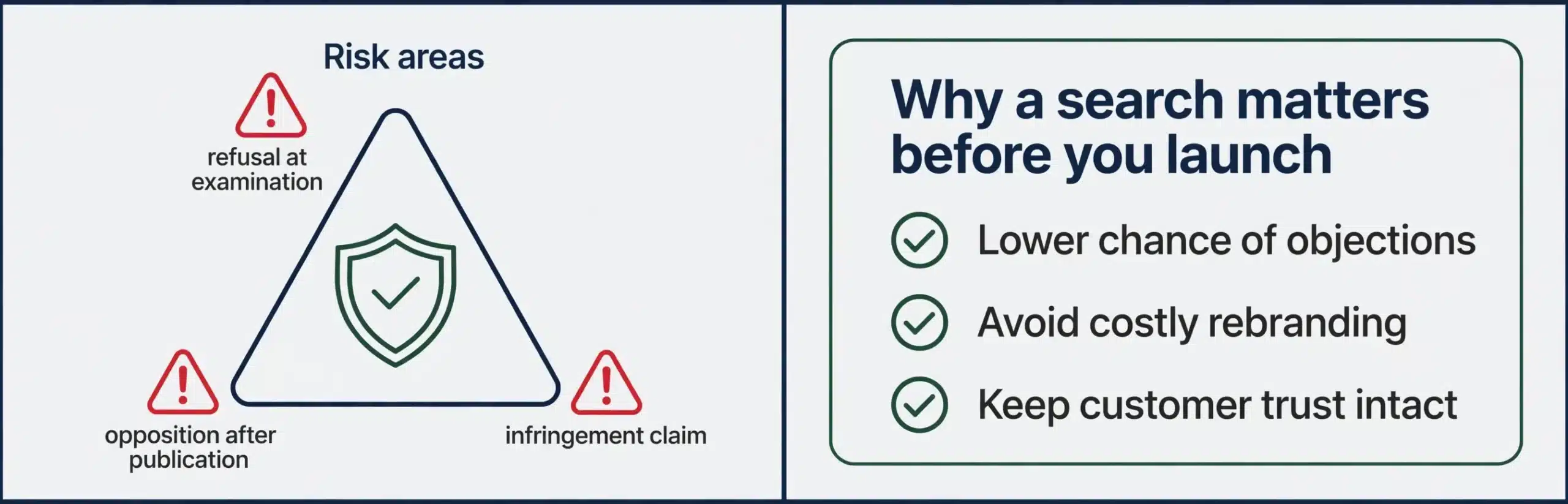
Consequently, a search protects three things:
- Your registration: It lowers the chance of objections and oppositions.
- Your budget: Rebranding after launch costs far more than checking before it.
- Your reputation: Customers lose trust when a brand disappears or loses a legal dispute.
Searches fall on a spectrum. At one end sits the quick knockout check. At the other sits the comprehensive clearance report. Understanding the gap between them is the heart of this article.
What is a Knockout Search?
Definition
A knockout search is a preliminary trademark check that screens a proposed name against a narrow set of sources to find obvious, fatal conflicts. The goal is simple: “knock out” names that clearly cannot work, so you do not waste time or money on them.
What a Knockout Search Usually Covers
Most knockout searches focus on official register data. They typically include:
- Exact matches in the relevant trademark register
- Near-identical spellings and obvious plural or singular forms
- Identical or closely related goods and services classes
- Live status checks to separate active marks from dead or abandoned ones
Some providers add a quick web check or a domain lookup. However, the core remains shallow by design.
What a Knockout Search Usually Misses
A knockout search does not dig deep. As a result, it often skips:
- Phonetic equivalents (for example, names that sound alike but spell differently)
- Translations and transliterations into other languages
- Common law users who never registered
- Business names, trade names, and company registries
- Marketplace listings, app stores, and social handles
- Design elements of logos
- A written legal opinion on risk
Who Uses It
Founders, marketers, and naming agencies use knockout searches during the brainstorming stage. At that point, you may have twenty candidate names. Running a deep search on each one would be slow and expensive. A knockout search trims the list to a handful of survivors.
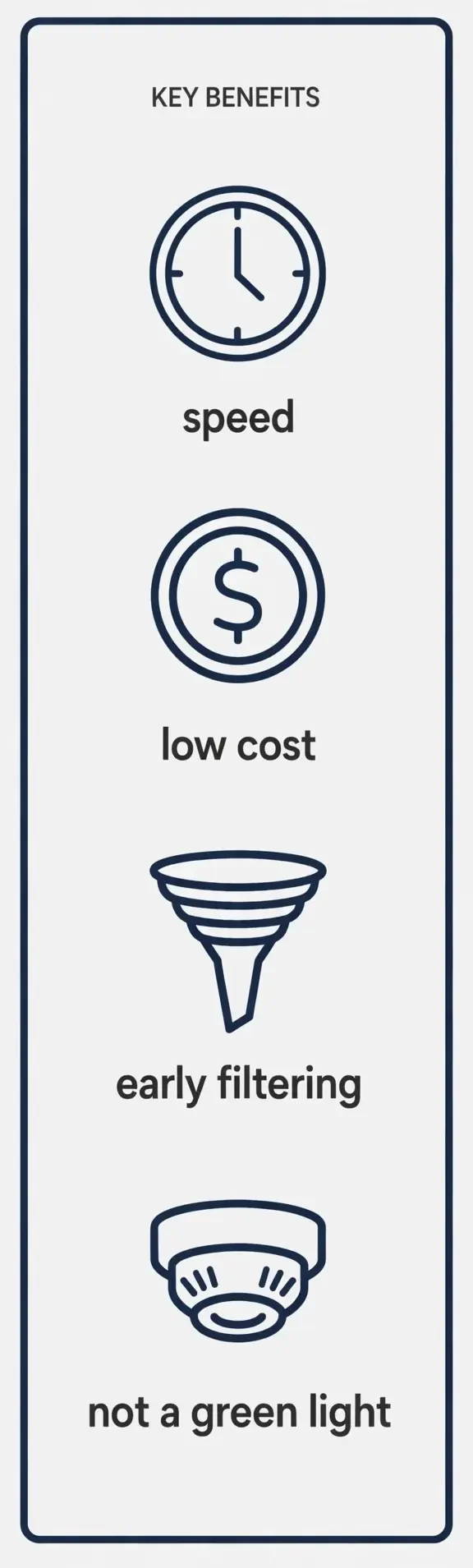
Key Benefits
- Speed: Results often arrive within hours or a day or two.
- Low cost: It costs a fraction of a full report.
- Early filtering: It removes dead-end names before you fall in love with them.
Key Limits
A clear knockout result is not a green light. It only tells you that nothing obvious blocks the name. Think of it as a smoke detector, not a fire inspection.

What is a Full Clearance Search?
Definition
A full clearance search is a comprehensive investigation that checks whether a proposed mark is available to use and register. It reviews official registers, unregistered rights, and commercial sources, then ends with an expert analysis of the likelihood of confusion.
The United States Patent and Trademark Office explains that a comprehensive clearance search means checking a variety of resources to determine whether your mark conflicts with existing marks. It also notes that an attorney can run the search and interpret the results for you.
What a Full Clearance Search Usually Covers
A thorough clearance search normally includes:
- Official registers: National trademark offices, plus international databases where relevant.
- Phonetic and visual variants: Sound-alikes, spelling changes, prefixes, suffixes, and compound forms.
- Translations and equivalents: Meanings of the name in major languages, especially local ones.
- Common law use: Unregistered brands found through web, directory, and marketplace research.
- Business and company names: Registries of companies, firms, and trade names.
- Domain names and social handles: Signals of real-world use.
- Design and logo elements: Visual searches using design classification codes.
- Pending applications: Filings that could become earlier rights.
- Legal analysis: A written opinion that rates the risk and suggests next steps.
The Value of the Legal Opinion
The report is only half the product. The other half is judgment. Raw search hits do not tell you what to do. A trademark professional reads them, weighs similarity of marks and goods, and explains the practical risk in plain language.
Who Uses It
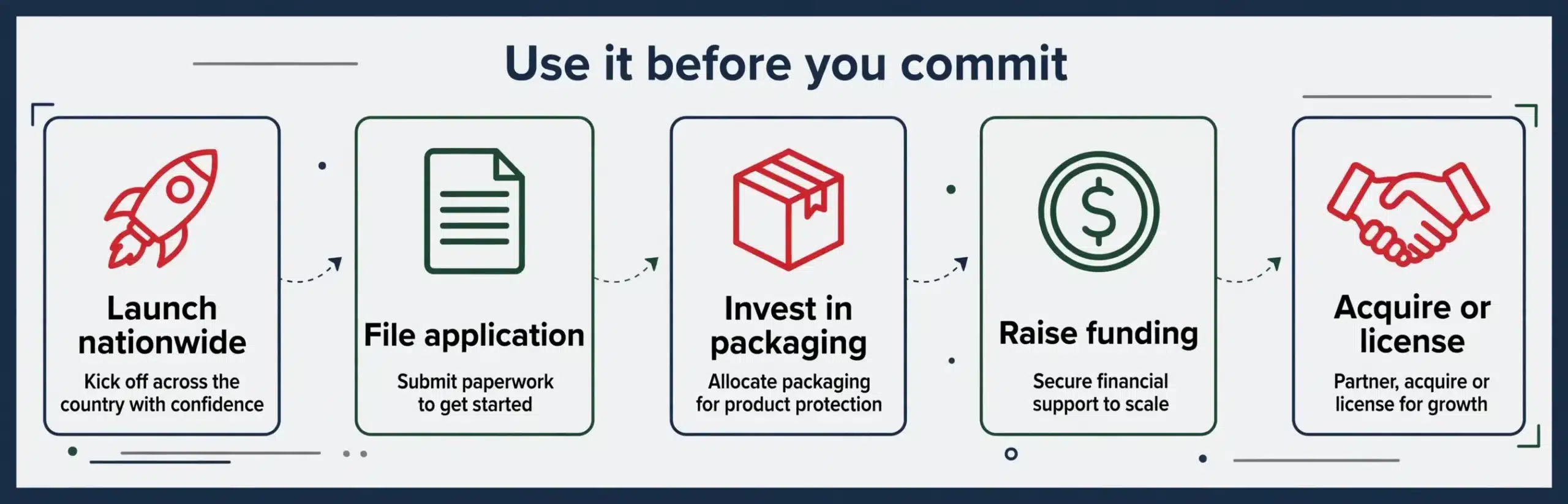
Businesses use full clearance searches before they:
- Launch a brand nationwide or globally
- File a trademark application
- Invest heavily in packaging, advertising, or product development
- Raise funding or sign distribution deals
- Acquire or license a brand
Key Benefits
- Depth: It surfaces conflicts that a quick check cannot see.
- Risk clarity: You get a reasoned view of whether to proceed.
- Stronger filings: Applications built on solid searches face fewer surprises.
Key Limits
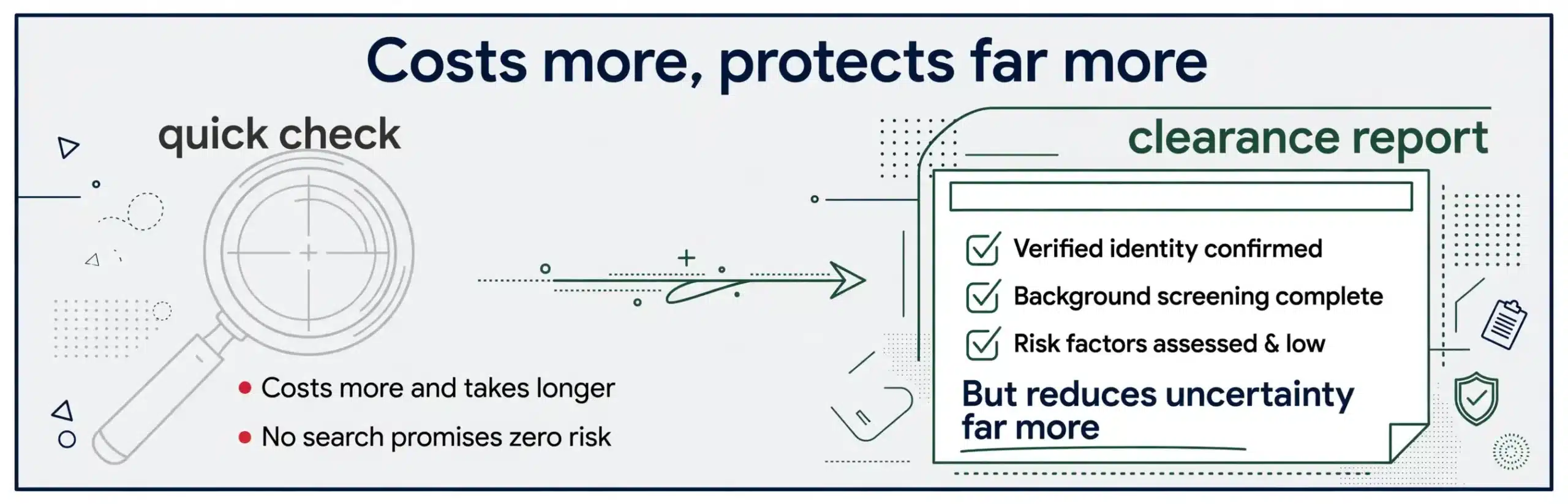
A full clearance search costs more and takes longer. Also, no search can promise zero risk, because unregistered or very recent filings may still appear later. Even so, it reduces uncertainty far more than any shortcut.
Knockout Search vs Full Clearance Search: Side-by-Side Comparison
The table below compares the two options across the factors that matter most.
| Factor | Knockout Search | Full Clearance Search |
|---|---|---|
| Main purpose | Quickly eliminate obviously conflicting names | Confirm a name is safe to use and register |
| Depth | Shallow and narrow | Deep and wide |
| Sources checked | Mainly official register data | Registers, common law, business names, domains, marketplaces, designs |
| Match types | Exact and near-identical | Exact, phonetic, visual, conceptual, translated |
| Common law research | Rarely included | Standard component |
| Legal opinion | Usually none | Typically included |
| Typical turnaround | Hours to a couple of days | Several days to a few weeks |
| Relative cost | Low | Moderate to high |
| Best stage | Brainstorming and shortlisting | Before filing, launch, or major investment |
| Risk reduction | Low to moderate | High |
| Main risk | False sense of safety | Higher upfront cost |

How to Read This Table
The two searches are not rivals. They answer different questions. The knockout search asks, “Is there an obvious problem?” The full clearance search asks, “Is this name genuinely safe for my business, in my markets?”
How Each Search Works, Step by Step
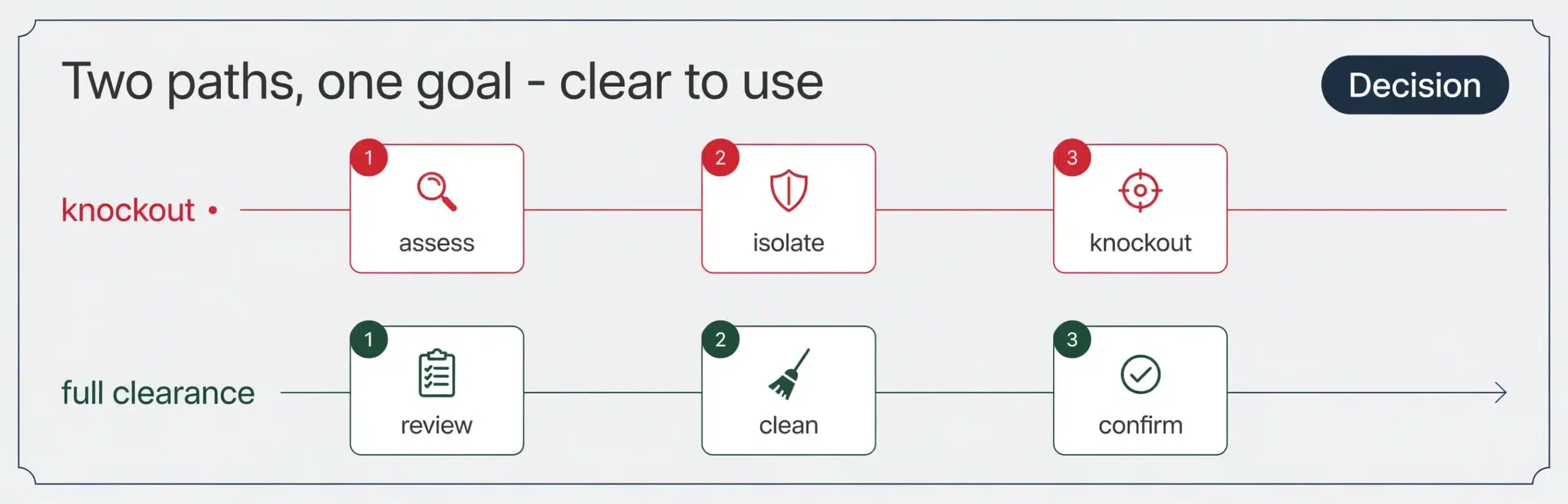
Step-by-Step: A Typical Knockout Search
- List your candidate names. Include spelling variations you might use.
- Define your goods or services. Trademark rights depend on the classes you operate in.
- Search the official register. Start with exact matches, then try close variations.
- Filter for live marks. Dead or abandoned marks rarely block you, so confirm status.
- Check related classes. Conflicts can arise in similar fields, not only identical ones.
- Run a quick web and domain check. Look for obvious real-world users.
- Rank your names. Keep the clear ones and drop the risky ones.
Step-by-Step: A Typical Full Clearance Search
- Brief the search team. Share the mark, logo, goods, services, and target countries.
- Choose search scope. Decide which registers and regions to cover.
- Search registers deeply. Include phonetic, visual, and conceptual variants.
- Add common law research. Examine websites, directories, marketplaces, and app stores.
- Check business and company names. Identify trading entities that use similar names.
- Review logo elements. Search design codes where the logo matters.
- Analyze results. A professional compares the marks, goods, and trade channels.
- Receive a written opinion. The report rates risk and recommends action.
- Decide and act. Proceed, adjust the mark, seek consent, or choose a new name.
A Note on Official Tools
The USPTO publishes guidance on federal trademark searching. It advises searching exact wording first, then strong words separately and in combination. It also recommends filtering out dead marks, since only live applications and registrations can block your mark.
For India, the Trade Marks Registry offers a public trademark search portal maintained by the Government of India. It lets you look up registered and pending marks. For a global overview, the WIPO Global Brand Database pulls together records from many national and international sources.
These free tools are excellent starting points. Nevertheless, they do not replace professional judgment, and they do not cover unregistered use.
When a Knockout Search Is Enough
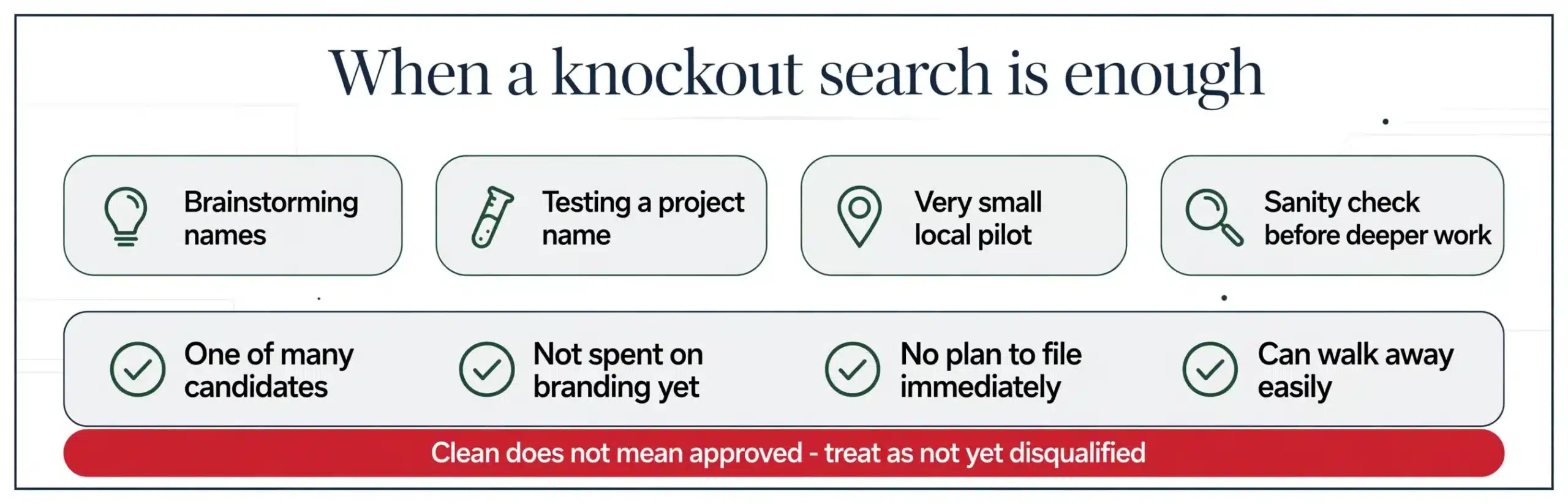
A knockout search is a smart choice in a few specific situations. Use it when the stakes are low and the goal is to screen quickly.
Good Use Cases
- You are brainstorming names. You have many options and need to cut the list.
- You are testing a project name. The name is internal or temporary.
- You are running a very small local pilot. You have no plans to register or scale yet.
- You want a sanity check. You are comparing names before paying for deeper work.
A Practical Checklist
Choose a knockout search if you can answer “yes” to most of these:
- [ ] The name is one of many candidates
- [ ] You have not spent money on branding yet
- [ ] You do not plan to file a trademark immediately
- [ ] You can walk away from the name easily
The Hidden Catch
A knockout search is a screening tool. If it returns a clean result, do not treat the name as approved. Instead, treat it as “not yet disqualified.” That small shift in mindset prevents many expensive surprises.
When You Need a Full Clearance Search
Some situations call for a full investigation. In each case, the cost of a mistake far outweighs the cost of the search.
Strong Signals You Need a Full Clearance Search
- You are about to file a trademark application. A deep search improves your odds at examination.
- You are building real brand equity. Packaging, signage, ads, and websites all cost money to redo.
- You plan to sell nationally or internationally. Rights differ by country, so conflicts multiply.
- You are in a crowded industry. Fashion, food, technology, pharma, and finance see heavy filing activity.
- Investors or partners will review your IP. Due diligence teams often ask about clearance.
- Your name is a common word or a coined variant. Similar names are more likely to exist.
- You are acquiring or licensing a brand. You need confidence in what you are buying.
Decision Checklist
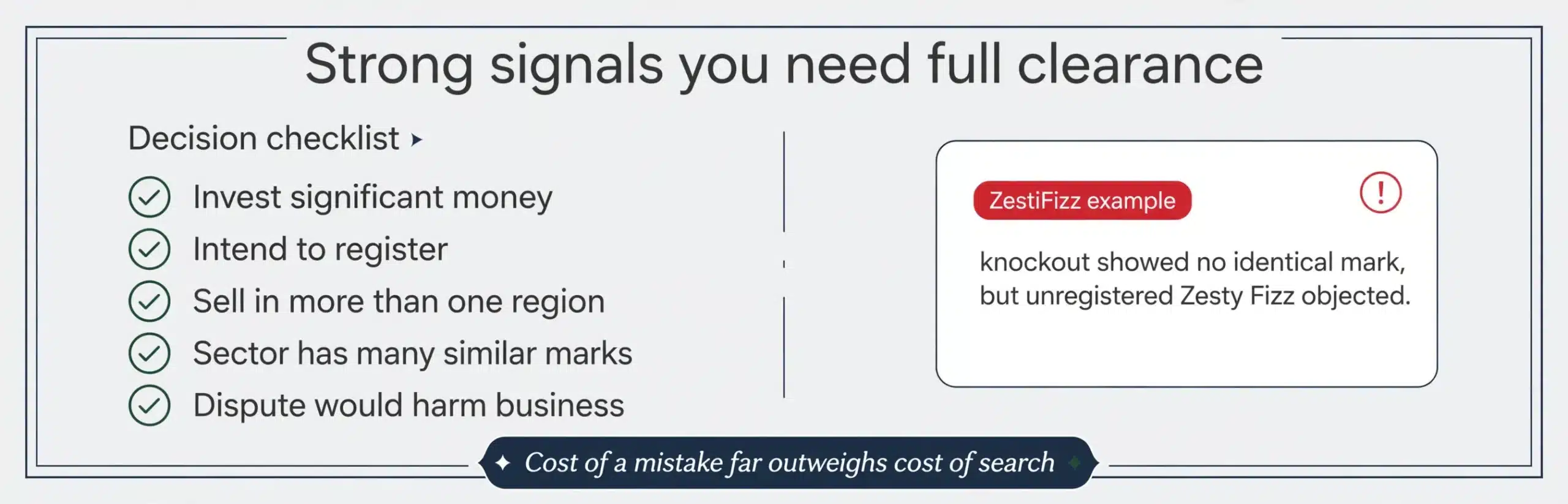
Choose a full clearance search if any of the following is true:
- You will invest significant money in this brand.
- You intend to register the mark.
- You will sell in more than one region.
- Your sector has many similar marks.
- A dispute would seriously harm your business.
Real-World Illustration (Hypothetical)
Imagine a beverage startup that tests the name “ZestiFizz.” A knockout search shows no identical registration. The team prints thousands of labels. Later, a regional producer with unregistered but long-standing use of “Zesty Fizz” objects. A full clearance search would likely have surfaced that producer through common law research. The startup now faces relabeling costs and possible legal exposure.
This scenario is illustrative, but the pattern is common. Registers show registered rights. Markets show used rights. A full search checks both.
The Smart Workflow: Use Both in Sequence
Most successful brands do not choose one search forever. They use both at different stages.
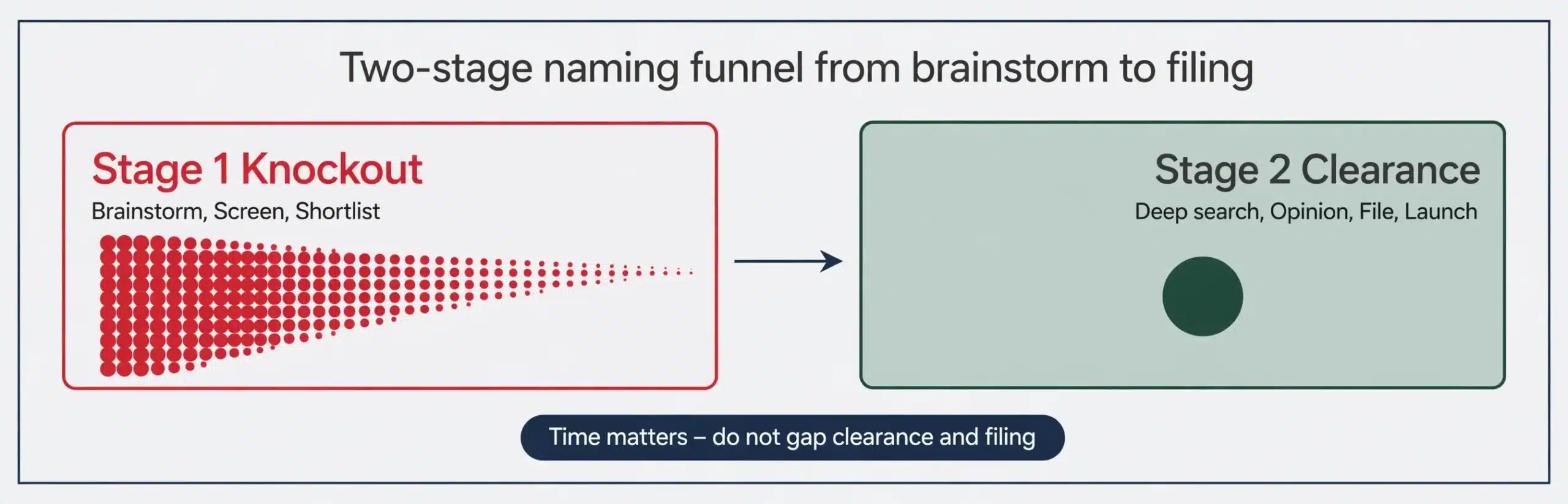
The Two-Stage Naming Funnel
- Brainstorm widely. Generate 15 to 30 name ideas.
- Run knockout searches. Remove names with obvious conflicts.
- Shortlist 2 to 4 names. Pick those you genuinely like.
- Check domains and handles. Confirm digital availability.
- Order a full clearance search on your top choice. Go deep on the front-runner.
- Review the legal opinion. Decide whether to proceed.
- File your trademark application. Lock in your priority date as soon as the name is cleared.
- Launch with confidence.
Why This Funnel Works
- It spends little money on weak names.
- It spends serious money only on strong candidates.
- It protects you from two opposite errors: skipping searches and over-searching every idea.
Time Matters
Another party can file for a similar mark while you wait. Therefore, do not let a long gap open between clearance and filing. Move promptly once you have a clear result.
Cost, Timeline, and Return on Investment
What Drives the Price
Exact fees vary by provider, region, and scope. In general, these factors move the cost:
- Number of countries or registers searched
- Number of classes covered
- Whether common law research is included
- Whether a logo or design search is added
- Whether a written legal opinion is included
- Turnaround speed
Typical Timeline Comparison
| Stage | Knockout Search | Full Clearance Search |
|---|---|---|
| Intake and briefing | Minutes | Same day to a few days |
| Register research | Hours | Days |
| Common law research | Usually skipped | Days |
| Analysis and report | Brief summary | Detailed written opinion |
| Overall | Hours to 1–2 days | Several days to a few weeks |
Think in Terms of Total Cost of Ownership
A cheaper search is not always cheaper overall. Consider what a failed brand really costs:
- Application fees that you may lose if the mark is refused
- Professional fees for responding to objections and oppositions
- Printing and packaging that you must scrap
- Marketing spend that builds equity in a name you cannot keep
- Legal costs if a rights holder pursues you
- Lost momentum while you rebuild a brand
Compared with those figures, a full clearance search is often a small, sensible insurance premium for a brand you plan to keep for years.
A Simple Rule of Thumb
- If you can discard the name tomorrow at almost no loss, start with a knockout search.
- If discarding the name would hurt, invest in a full clearance search.
Common Mistakes Brands Make
Avoid these errors. Each one shows up repeatedly in trademark practice.
1. Treating a Clean Knockout Result as Approval
A knockout search finds obvious problems only. It cannot prove that a name is safe. Many brands stop here and later face conflicts that a deeper search would have caught.
2. Searching Only for Exact Matches
Conflicts rarely involve identical names. They involve names that look, sound, or mean something similar. Search for variants, not just the exact string.
3. Ignoring Phonetic and Translation Conflicts
A name can sound like an existing brand even when the spelling differs. It can also carry a conflicting meaning in another language. Check both.
4. Forgetting About Unregistered Rights
In many legal systems, a business that uses a mark in trade can hold rights even without registration. India, for example, recognizes passing off, which protects goodwill built through actual use. Registers alone will not reveal those users.
5. Searching the Wrong Classes
Marks can conflict across related goods and services. Searching only your exact class leaves gaps. Review neighboring classes too.
6. Skipping Logo and Design Checks
If your logo matters, its visual elements may resemble earlier designs. A word-only search will not catch that.
7. Searching Only Your Home Country
If you plan to expand, rights in other countries matter. Plan your search territory around your future markets, not only your current one.
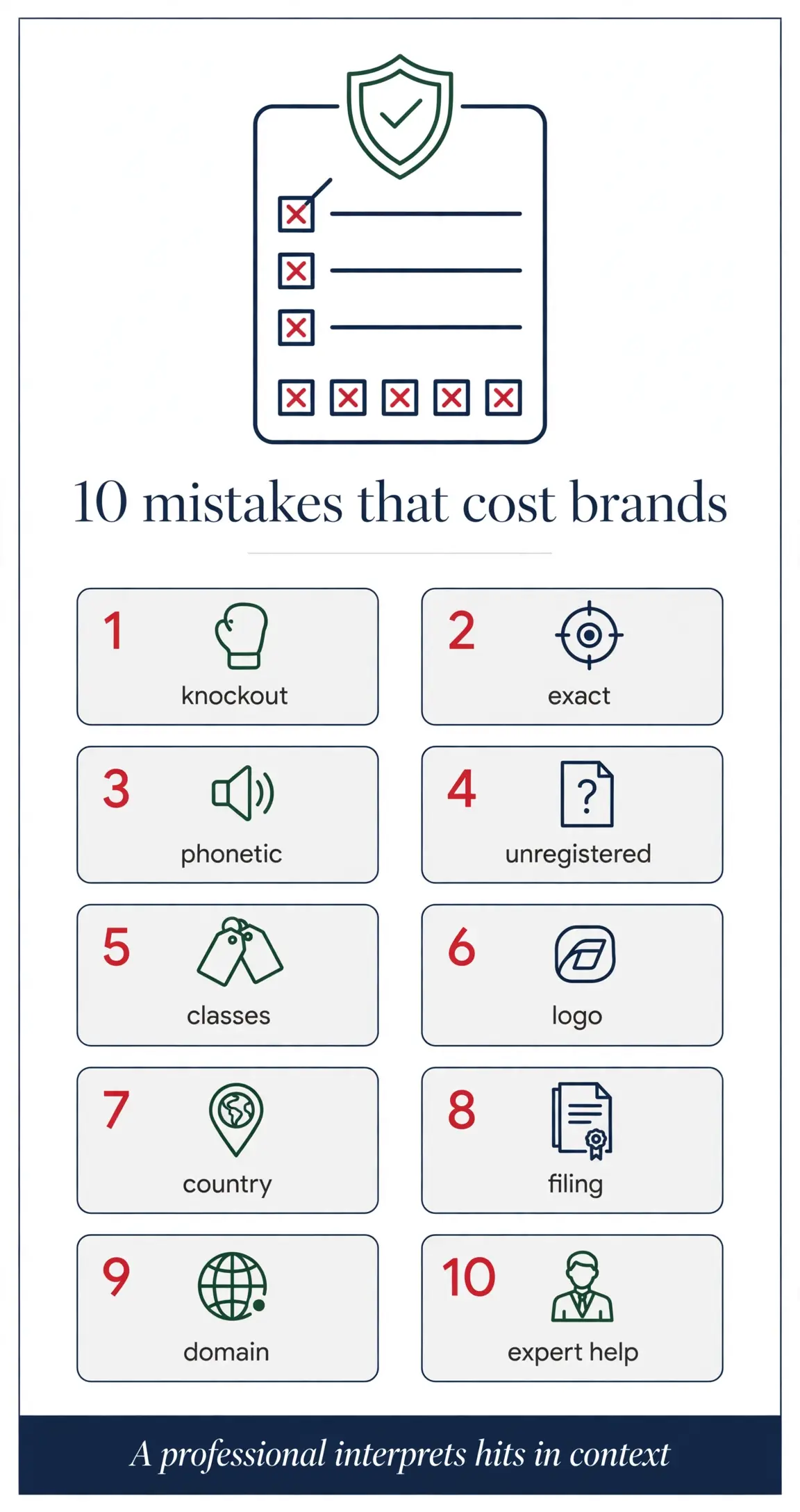
8. Waiting Too Long to File
A clear search result can go stale. New filings appear every day. File promptly after clearance.
9. Relying on Domain Availability
An available domain does not mean an available trademark. Domains and trademarks follow different rules.
10. Reading Results Without Expert Help
Raw search hits can mislead. Some hits are harmless, and some seemingly small ones are dangerous. A professional interprets them in context.
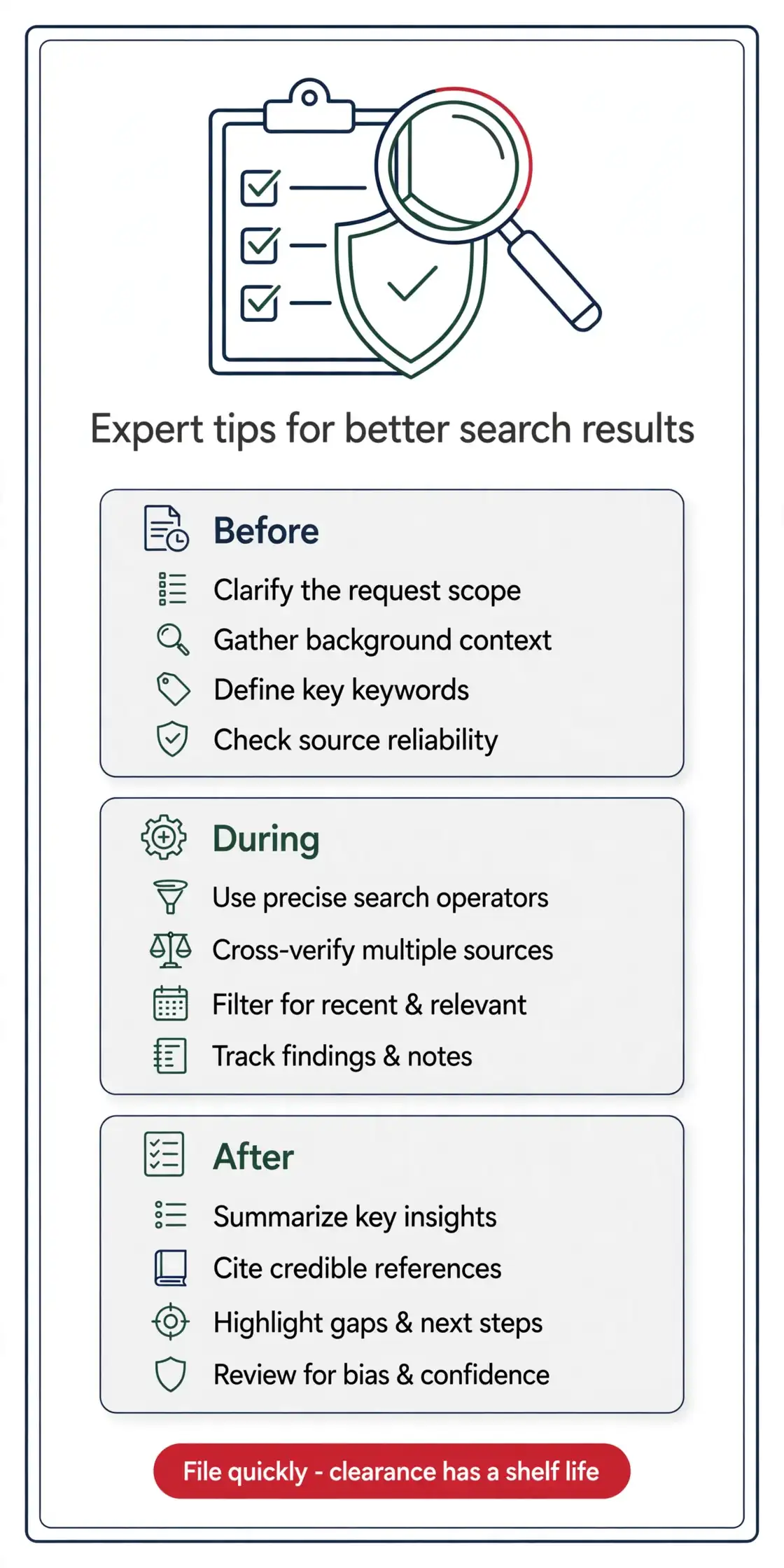
Expert Tips for Better Search Results
These practical tips help you get more value from either type of search.
Before You Search
- Define your goods and services clearly. Specific descriptions help produce more relevant search results.
- List all forms of the mark. Include the brand name, logo, tagline, and common abbreviations.
- Identify your target territories. Consider both current and potential future markets.
- Keep backup names ready. Having alternatives helps you avoid unnecessary risks if your preferred name faces conflicts.
During the Search
- Think like an examiner. Evaluate trademarks the way an examiner or consumer would by comparing their appearance, pronunciation, meaning, and overall commercial impression.
- Search distinctive terms separately. Identify the most unique part of your brand name and search for it both independently and in combination with other words.
- Verify trademark status. Check whether similar marks are active, pending, expired, or abandoned. Do not dismiss a potentially relevant mark without reviewing its current status and history.
- Explore beyond trademark databases. Search the wider internet, including business websites, online marketplaces, app stores, and social media, to identify similar names already being used in the market.
After the Search
- Rank risk honestly. Separate “low,” “moderate,” and “high” conflicts.
- Ask about mitigation. Options include modifying the mark, narrowing the goods, seeking consent, or choosing a new name.
- Document everything. Keep a dated record of your search and your decision.
- File quickly. Clearance has a shelf life.
A Note on AI and Automated Tools
AI and automated tools can make initial trademark screening faster and more efficient by identifying similar names, potential conflicts, and relevant records. However, these tools may miss important legal details or misunderstand the context of a trademark. They cannot replace professional judgment when evaluating the likelihood of confusion, market overlap, or registration risks. Use AI-generated results as a starting point and always verify important findings with a qualified trademark professional before making a final decision.
Quick Reference: Which Search Fits Your Situation?
| Your Situation | Recommended Search |
|---|---|
| Brainstorming 20 possible names | Knockout search |
| Choosing between 3 finalists | Knockout, then full clearance on the winner |
| About to file a trademark application | Full clearance search |
| Launching a product with new packaging | Full clearance search |
| Entering a new country | Full clearance search for that country |
| Naming an internal project | Knockout search |
| Preparing for investor due diligence | Full clearance search |
| Acquiring a brand | Full clearance search plus ownership checks |
Decision flowchart for choosing knockout search vs full clearance search
Indian and Global Considerations
Why Territory Matters
Trademark rights are generally territorial. A mark that is free in one country may be blocked in another. If you operate in India, you work under the Trade Marks Act, 1999, which governs registration and protection. If you sell abroad, you must consider each destination.
Indian Context
Indian trademark practice has several features worth remembering:
- Class-based filing: Applications cover specific classes of goods and services under the Nice Classification.
- Relative grounds for refusal: Marks identical or similar to earlier marks can face refusal.
- Prior user rights: Businesses with established use may enforce rights through passing off, even without registration.
- Linguistic diversity: Names in Hindi and other regional languages, and transliterations into English, create extra conflict risk.
Because of that last point, a full clearance search for an Indian brand should consider phonetic and transliteration variants across languages. A quick register check will rarely capture them.
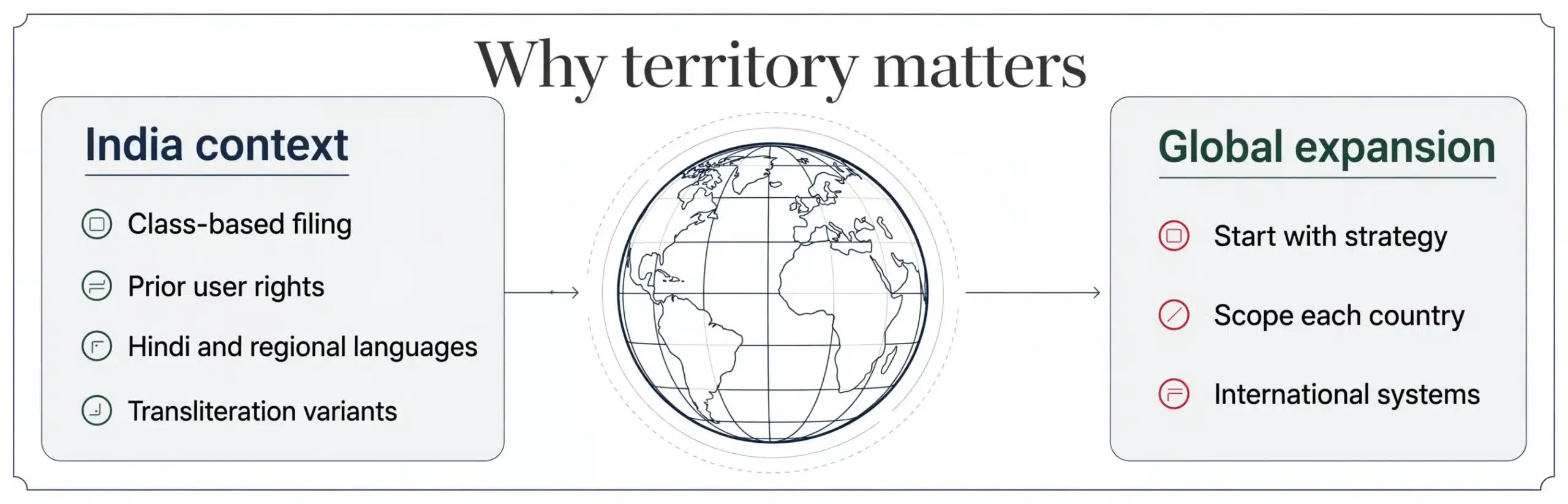
Global Expansion
If you plan to file internationally, remember:
- National searches do not cover other countries.
- International systems exist, but each has its own rules and risks.
- A conflict in one key market can derail a global rollout.
For multi-country plans, start with a strategy conversation, then scope the search by territory and priority markets. You can explore related topics in the Teak IP Services blog as you plan.
Practical Insights From the Search Desk
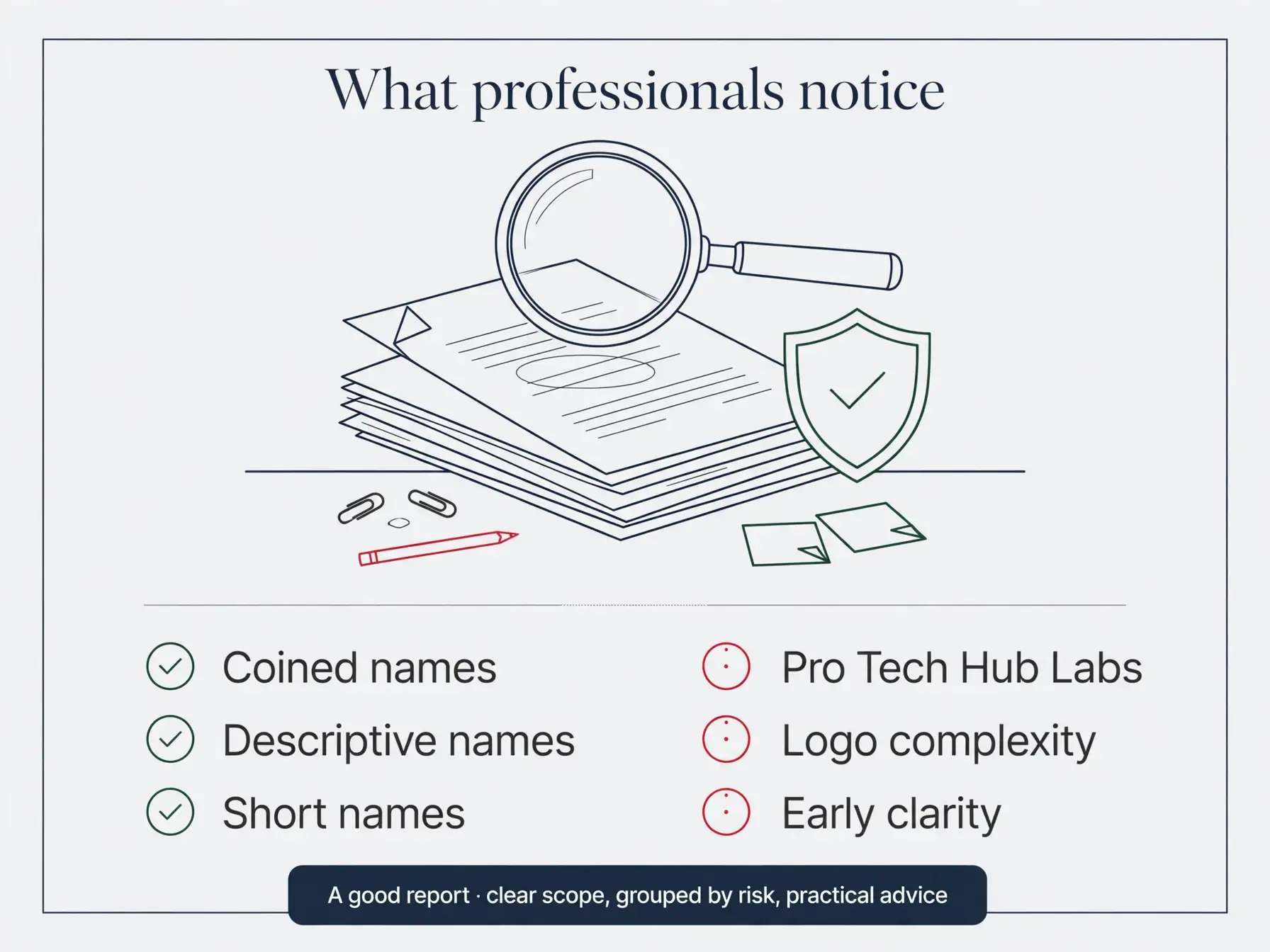
Trademark professionals often notice the same patterns across projects. These insights can sharpen your own decisions.
- Coined and fanciful names carry fewer conflicts, but not zero. Invented words feel safe, yet similar invented words appear often.
- Descriptive names invite conflict and weak protection. The more a name describes the product, the more others use similar words.
- Short names collide more. Two-syllable names are crowded in almost every sector.
- Prefixes and suffixes create look-alikes. Adding “Pro,” “Tech,” “Hub,” or “Labs” rarely makes a name distinct enough.
- Logos add complexity. A distinctive logo helps, yet the word element is usually what drives conflicts.
- Early clarity saves the most. The earlier you learn about a conflict, the cheaper the fix.
What a Good Report Looks Like
When reviewing a trademark clearance report, look for these key qualities:
- Clear Search Scope: What was searched and what was excluded.
- Risk-Based Results: Findings grouped into high, medium, and low-risk categories.
- Conflict Analysis: Clear explanations of why potential conflicts matter.
- Practical Recommendations: Actionable next steps to address identified risks.
- Business Relevance: Consideration of your actual goods, services, and target markets.
If a report only lists raw search results without analysis, ask for a clear interpretation.per analysis and interpretation before making a decision.
Frequently Asked Questions
What is the main difference in knockout search vs full clearance search?
The main difference is depth. A knockout search screens a name against limited sources to catch obvious conflicts. A full clearance search investigates registers, unregistered use, and variants, then delivers a legal opinion on risk. Use the first to filter names and the second to confirm your final choice.
Is a knockout search enough to file a trademark?
Usually not. A knockout search only finds obvious problems. Before you file, a full clearance search gives you a much clearer view of refusal and opposition risk. If the brand matters to your business, deeper research is the safer path.
How much does a full clearance search cost compared with a knockout search?
A full clearance search costs more because it covers more sources and includes expert analysis. The exact price depends on the provider, the countries, the classes, and the scope. Compare it with the cost of rebranding or defending a dispute, and the investment usually looks modest.
How long does each type of search take?
A knockout search often takes hours to a couple of days. A full clearance search typically takes several days to a few weeks, depending on scope and the number of territories. Faster turnaround may be possible, usually at higher cost.
Can I do a trademark search myself for free?
Yes, you can start with free official databases such as the USPTO search system, the Indian Trade Marks Registry portal, and the WIPO Global Brand Database. These are useful for a basic knockout-style check. However, they do not capture unregistered use or deliver a legal opinion.
Does a clear search guarantee my trademark will be approved?
No. No search can guarantee approval. Examiners and opposing parties may still raise issues, and new filings can appear after your search. A thorough clearance search simply lowers the risk and helps you prepare.
What is a common law trademark search?
A common law search looks for unregistered marks that businesses use in trade. It reviews websites, directories, marketplaces, business names, and social media. It matters because unregistered users can sometimes enforce rights against newcomers.
Should I run a knockout search before a full clearance search?
Yes, when you have several candidate names. Start with knockout searches to remove obvious conflicts, then order a full clearance search on your top choice. This approach controls cost while protecting your final decision.
What happens if my search finds a similar mark?
Do not panic. First, assess how similar the marks are and how related the goods are. Then consider options: adjust your mark, narrow your goods, seek consent from the owner, or choose a different name. A professional can guide you toward the safest practical option.
Do I need a full clearance search for every country?
You need clearance for each territory where you plan to use or register your mark. Rights are generally territorial. Prioritize your main and near-term markets first, and expand the search as your plans grow.
Is a full clearance search worth it for a small business?
Often, yes. Small businesses feel the cost of a forced rebrand more sharply than large ones. If your name is central to your plans, a full clearance search is a sound protective step.
Conclusion: Choose the Right Search Before You Commit
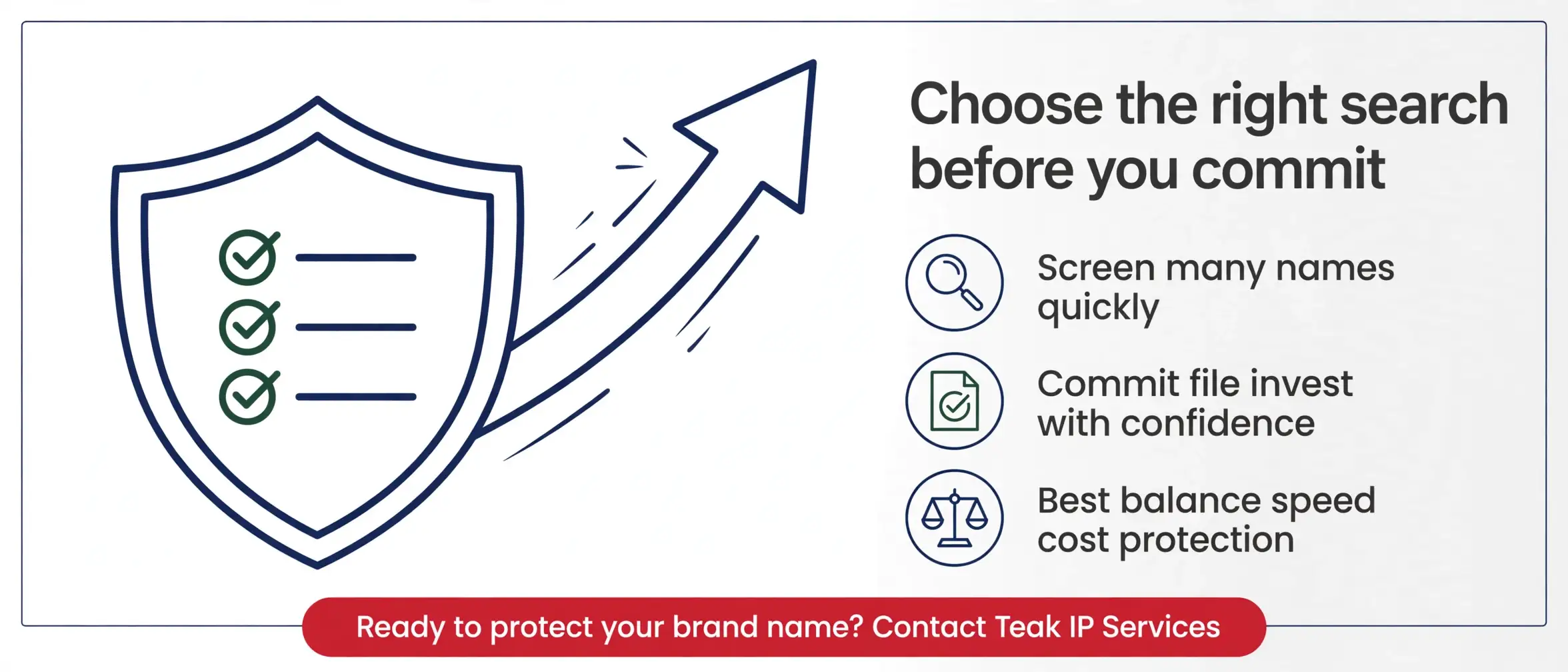
The choice between knockout search vs full clearance search comes down to one question: how much would it hurt to lose this name?
- Use a knockout search to screen many names quickly and cheaply.
- Use a full clearance search when you are ready to commit, file, or invest.
- Use both in sequence for the best balance of speed, cost, and protection.
Names are not just labels. They carry your reputation, your marketing spend, and your future growth. Checking them properly is one of the cheapest forms of brand insurance available.
If you want expert help, the team at Teak IP Services can guide you through search scope, result analysis, and the next steps toward registration. Visit the Teak IP Services blog and resources for more practical guides, then reach out to discuss your brand.
Ready to protect your brand name? Contact Teak IP Services today for a clearance strategy that fits your goals and budget.
Ready to Protect Your Brand Name?
Use a knockout search to screen many names quickly and cheaply. Use a full clearance search when you are ready to commit, file, or invest. Talk to Teak IP Services for a clearance strategy that fits your goals and budget, plus help with search scope, result analysis, and next steps toward registration.
Knockout & Full Clearance Search | For law firms, in-house teams & businesses

