Patents

Do Patent Paralegals Need Certification? What Firms Actually Require
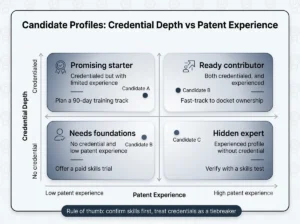
A partner posts a job for a patent paralegal and receives forty applications. Half list a national certification. The other half list five years of

 Patents were essential to our founding fathers. They included the right to a patent in the Constitution. Before becoming the 4th US president, James Madison wrote in the Constitution, “[The Congress shall have power] “To promote the progress of science and useful arts, by securing for limited times to authors and inventors the exclusive right to their respective writings and discoveries,” thereby protecting patents and copyrights. But how many US Presidents have gone through the process to actually patent something?
Surprisingly, only one! Abraham Lincoln was quite mechanically minded and was often studying farm equipment and other machinery. He once said, “Man is not the only animal who labors, but he is the only one who improves his workmanship.”
Driven by the desire to improve conditions around him, Lincoln saw a need to improve navigation on the United States’ rivers, having been personally caught in some precarious situations. On May 22, 1849, Lincoln successfully patented a device to lift boats over shoals (a sandbar). Patent number 6469. The patent reads in part, “Be it known that I, Abraham Lincoln, of Springfield, in the county of Sangamon, in the state of Illinois, have invented a new and improved manner of combining adjustable buoyant air chambers with a steamboat or other vessel for the purpose of enabling their draught of water to be readily lessened to enable them to pass over bars, or through shallow water, without discharging their cargoes…”
While a new and useful idea, unfortunately, it was never manufactured. Despite that, Lincoln was a strong advocate for patent rights, praising them for “add[ing] the fuel of interest to the first of genius in discovering and producing new and useful things.”
A partner posts a job for a patent paralegal and receives forty applications. Half list a national certification. The other half list five years of

Quick answer: If you are asking what is in a trademark search report, the short answer is this: a list of every identical and similar

A perfectly drafted patent application can still stall over a margin that is a few millimeters too narrow. It happens more often than most applicants
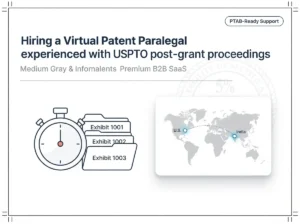
A petition for Inter Partes Review lands on a Friday afternoon, and the clock starts immediately. Exhibits need numbering, a protective order needs tracking, and
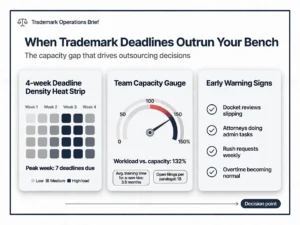
A trademark deadline never cares how busy your team is. An Office Action arrives, a Section 8 window opens, and a TTAB schedule shifts, all
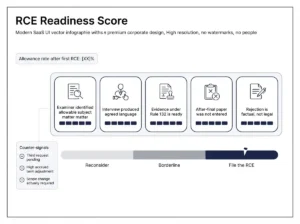
A final rejection lands on a Tuesday. The claims are close, but not close enough. Somewhere in your docketing system a three-month clock has already

