
A federal trademark registration is not a “set it and forget it” asset. Even after the USPTO approves your mark, you must continue to prove that you are using it in commerce, or you risk losing everything you worked for. This is exactly why so many brand owners search for guidance on when to file a trademark section 8 and 15 affidavit and what happens if they miss the window.

If you have ever wondered whether your registration is at risk, or you are simply trying to plan ahead for post-registration maintenance, this guide walks through every deadline, cost, and requirement you need to know. We will also cover common mistakes, expert tips, and a full FAQ so you can confidently manage this critical filing.
Quick Answer: When Must You File?
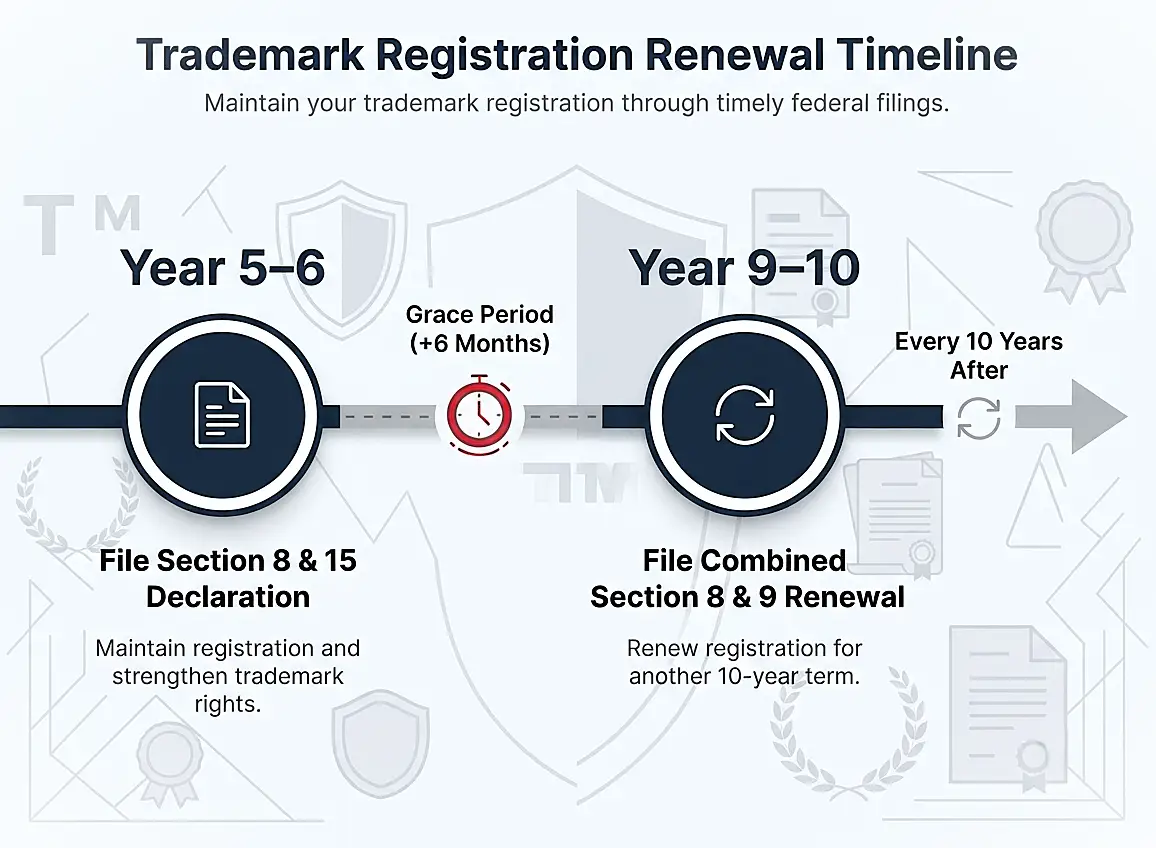
In short, you must file a trademark section 8 and 15 affidavit between the fifth and sixth anniversaries of your registration date, or within the six-month grace period that follows. A second Section 8 declaration (this time combined with a Section 9 renewal) is then due between the ninth and tenth anniversaries, and every ten years after that. Missing these windows entirely results in cancellation of your registration.
That is the short version. Now let’s unpack every detail, because the consequences of getting this wrong are severe.
What is a Section 8 Declaration of Use?
A Section 8 Declaration of Use is a sworn statement filed with the United States Patent and Trademark Office confirming that your registered trademark is still being used in commerce for the goods or services listed in your registration. It gets its name from Section 8 of the Trademark Act (15 U.S.C. § 1058).
Unlike the application process, which only proves that you were using the mark at the time of registration, the Section 8 declaration proves continued use. Consequently, the USPTO uses it to weed out registrations for marks that businesses have abandoned, allowing other companies to potentially claim those marks in the future.
To satisfy the Section 8 requirement, you must submit:
- A verified statement confirming the mark remains in use in commerce (or an acceptable claim of excusable nonuse)
- At least one specimen of use per class of goods or services
- The applicable government filing fee
If your mark is registered under Section 66(a) through the Madrid Protocol, you will file a Section 71 declaration instead, which follows a nearly identical process.
What is a Section 15 Declaration of Incontestability?
A Section 15 Declaration of Incontestability, authorized under Section 15 of the Trademark Act, is an optional filing that strengthens your trademark rights once your mark has been used continuously in commerce for five consecutive years. Once accepted, incontestability status makes it significantly harder for a third party to challenge your registration on certain grounds, such as claims that the mark is merely descriptive or that someone else has superior common law rights.
Filing under Section 15 does not eliminate every possible challenge. Grounds like genericness, fraud, or abandonment can still be raised. Still, incontestability meaningfully raises the bar for anyone attempting to cancel your registration, which is why so many trademark owners choose to file it alongside their first Section 8 declaration.
Why File the Section 8 and 15 Declarations Together?
Because the five-year use requirement for Section 15 lines up neatly with the Section 8 filing window, most trademark owners combine both into a single submission called the Combined Declaration of Use and Incontestability Under Sections 8 and 15, filed using USPTO Form 1583 through the Trademark Electronic Application System (TEAS).
Filing them together offers several practical advantages:
- Efficiency: One submission, one specimen set, one trip through the USPTO’s Trademark Center.
- Cost savings: You avoid the administrative overhead of two separate filings and, in many cases, reduce legal fees.
- Stronger protection: Incontestability adds a durable layer of legal defense to your brand.
- Simplified docketing: Your IP team or outside counsel only needs to track one combined deadline rather than two overlapping ones.
That said, combining the filings is optional. You can file a standalone Section 8 declaration now and add a Section 15 declaration later, as long as you still meet the five-year continuous use requirement.
| Feature | Section 8 📄 | Section 15 🛡️ | Section 9 🔄 |
|---|---|---|---|
| Purpose | Verify mark in use | Incontestability | Renew registration |
| Mandatory? | ✅ Mandatory | ➖ Optional | ✅ Mandatory |
| First Due | 5th-6th year | After 5 years | 9th-10th year |
| Recurring? | Yes, 10 years | No (One-time) | Yes, 10 years |
Who Actually Needs to File This Declaration?
Not every trademark owner faces an identical set of obligations, so it helps to clarify who this requirement applies to before diving into deadlines.
- Owners of marks registered under Section 1(a) or Section 44(e). These registrations require the standard Section 8 declaration, and Section 15 is available once the five-year use requirement is met.
- Owners of marks registered under Section 66(a) (Madrid Protocol extensions). These owners file a Section 71 declaration instead of Section 8, though the timing and consequences are nearly identical.
- Businesses that have changed ownership since registration. If a mark has been assigned to a new owner, that owner (not the original registrant) is responsible for filing, and the USPTO database should reflect the change of ownership at the time of filing.
- Foreign-domiciled applicants. If you live outside the United States, you are required to have a U.S.-licensed attorney file on your behalf; self-filing is not permitted for foreign-domiciled trademark owners.
- Multi-class registrations. If your registration spans several international classes, you must demonstrate use (or excusable nonuse) separately for each class, and fees are charged per class.
Essentially, if you hold an active federal trademark registration, you are on the hook for this filing, regardless of company size or industry. The USPTO does not distinguish between a solo entrepreneur and a multinational corporation when it comes to enforcing these deadlines.
When Do You Need to File a Trademark Section 8 and 15 Affidavit? (Full Timeline)
This is the heart of the matter, and it deserves a detailed breakdown because missing a single date can unravel years of brand-building work.
First Filing Window: Years 5 and 6
You must file a trademark section 8 and 15 affidavit on a date that falls between the fifth and sixth anniversaries of your registration date. For example, if your mark registered on March 10, 2021, your filing window opens March 10, 2026, and closes March 10, 2027.
Grace Period: Six Extra Months
If you miss the primary window, the USPTO grants a six-month grace period after the sixth anniversary date. Using the same example above, you would have until September 10, 2027, to file, though you will owe an additional grace-period fee per class.
Second Filing Window: Years 9 and 10 (Combined with Section 9 Renewal)
Because Section 15 incontestability applies only once, the second post-registration filing is a combined Section 8 and Section 9 submission, not Section 8 and 15 again. This filing is due between the ninth and tenth anniversaries of registration and renews your registration for another ten years.
Every Ten Years Thereafter
Following the ten-year renewal, you must file the combined Section 8 and Section 9 declaration again every subsequent decade for as long as you want to keep the registration alive.
The table below summarizes the entire maintenance timeline at a glance.
| Filing Milestone | Filing Window | What’s Required | Grace Period |
|---|---|---|---|
| First Section 8 (often combined with Section 15) | Between year 5 and year 6 | Verified use statement, specimen, fee, incontestability affidavit (optional) | 6 months after year 6, extra fee applies |
| Combined Section 8 and Section 9 | Between year 9 and year 10 | Verified use statement, specimen, renewal request, fee | 6 months after year 10, extra fee applies |
| Combined Section 8 and Section 9 | Every 10 years thereafter | Same as above | 6 months, extra fee applies |
If any of these deadlines feel unfamiliar or difficult to track alongside other IP obligations, it may help to review how trademark docketing systems can prevent exactly this kind of missed deadline.
Step-by-Step: How to File a Trademark Section 8 and 15 Affidavit
Filing the combined declaration is a structured process. Here is how it typically unfolds.
- Confirm eligibility. Verify that your mark is registered on the Principal Register (Section 15 does not apply to the Supplemental Register) and that you have used it continuously for five years.
- Gather your specimen of use. Collect current evidence showing the mark in commerce for each class listed in your registration, such as product packaging, labels, or website screenshots showing the mark next to the goods or services.
- Create or confirm your USPTO.gov account. You will need a verified account with two-step authentication to access Trademark Center or TEAS.
- Complete Form 1583. This is the official Combined Declaration of Use and Incontestability form. It requires the registration number, owner information, a sworn statement of continued use, and, where applicable, a Section 15 incontestability statement.
- Upload your specimen and pay the fee. Submit your evidence electronically and pay the per-class government fee.
- Sign and submit. An authorized signatory (owner, officer, or attorney of record) must sign and verify the declaration under penalty of perjury.
- Monitor your status. After submission, track your filing through the Trademark Status & Document Retrieval (TSDR) system for a Notice of Acceptance or a possible Office Action.
How to File a Trademark Section 8 and 15 Affidavit
Confirm Eligibility
Gather Specimen
Create USPTO Account
Complete Form 1583
Upload & Pay Fee
Sign & Submit
Monitor via TSDR
If your firm manages a large portfolio, this process becomes far more manageable with a dedicated system for tracking and executing filings, similar to the approach outlined in our guide on how to manage an international trademark portfolio.
Form example
USPTO Filing Fees for Section 8 and Section 15
USPTO fees are revised periodically, so always confirm the current amount before filing. As of the current USPTO fee schedule, the electronic filing fees are as follows.
Fees are charged per international class, so a registration covering three classes of goods will require three times the base fee. For a complete breakdown of every USPTO cost you might encounter across the life of a trademark, our USPTO trademark fee schedule guide covers filing, maintenance, and renewal costs in detail.
USPTO Filing Fees at a Glance
| Filing Type | Standard Fee (Per Class) | Grace Period Fee |
|---|---|---|
| Section 8 Declaration | $325 | +$100 |
| Section 15 Declaration | Included | N/A |
| Section 9 Renewal | $325 | +$100 |
| Combined Section 8 & 9 | $650 | +$200 |
What Happens If You Miss the Deadline?
The consequences of a missed filing are unforgiving. If you fail to file a trademark section 8 and 15 affidavit (or the standalone Section 8) within the required window and the subsequent six-month grace period, the USPTO will cancel your registration. There is no further extension and no appeal process for a missed statutory deadline.
Once cancellation occurs:
- You lose the legal presumptions that come with federal registration, including nationwide priority and the exclusive right to use the mark.
- You can no longer use the ® symbol for that registration.
- You lose standing to bring a federal infringement lawsuit based on that registration.
- Your only path back to registered protection is filing an entirely new application and starting the examination process over, with no guarantee of the same outcome.
Your trademark rights are not entirely erased, however. Common law rights and any applicable state registration protections may continue to apply in the geographic areas where you have actually used the mark. That said, these protections are far narrower than the nationwide rights a federal registration provides.
Excusable Nonuse: What If You Are Not Currently Using the Mark?
Businesses sometimes pause production, change product lines, or face disruptions like natural disasters or supply chain issues. If your mark is not in active use when your filing window opens, you may still be able to maintain your registration by filing a Declaration of Excusable Nonuse instead of a standard use declaration.
To qualify, you generally must show:
- The nonuse is due to circumstances beyond your control, not a business decision to abandon the mark
- You intend to resume use once the situation is resolved
- You can provide the specific facts and dates surrounding the interruption
The USPTO evaluates these claims carefully, so vague or unsupported excuses are frequently rejected. If nonuse continues for an extended period, examiners become increasingly skeptical that you genuinely intend to resume use.
Common Mistakes to Avoid
Even experienced trademark owners stumble on this filing. Here are the errors we see most often.
⚠️ Common Mistakes to Avoid
- Assuming the USPTO will send a reminder. The USPTO does send courtesy emails, but they are not guaranteed, and relying on them alone is risky, especially if your contact information has changed.
- Submitting an outdated specimen. Your specimen must reflect current use, not a screenshot or photo from years earlier.
- Filing for goods or services no longer offered. If you have stopped selling certain items listed in your registration, you must either continue using the mark for them or delete those goods/services from your declaration; falsely claiming use can constitute fraud on the USPTO.
- Missing the incontestability window. Section 15 can only be filed once your mark has genuinely been in continuous use for five years; filing prematurely will result in rejection of that portion of the declaration.
- Letting powers of attorney lapse. The USPTO considers a power of attorney to end once a post-registration filing is accepted or denied, so many businesses mistakenly assume their original attorney is still monitoring deadlines.
- Waiting until the grace period. Filing late means paying extra fees and leaves zero room for correcting errors before the final cutoff.
Expert Tips for a Smooth Filing
- Calendar your deadlines the moment your mark registers. Set alerts for the opening of your filing window, not just the deadline itself, giving your team time to gather specimens.
- Audit your goods and services list annually. This makes the Section 8 filing far less stressful because you already know exactly what is in active use.
- Use professional docketing support. A missed date is rarely due to a lack of knowledge; it is usually a breakdown in tracking. Structured docketing removes that risk.
- File early in your window rather than waiting. Filing as soon as you enter the fifth year gives you a full year of buffer time to fix any specimen issues before the grace period fees kick in.
- Keep specimens organized by class. If your registration covers multiple classes, maintain a labeled folder system so you are never scrambling before a deadline.
A Practical Example: How the Timeline Plays Out
Consider a mid-sized software company that registered its trademark on June 15, 2021. Here is how its filing obligations would unfold in practice.
- June 15, 2026 – March 15, 2027: The company’s first Section 8 filing window opens. Because the mark has been in continuous use for five years, the company also files a Section 15 declaration alongside it, achieving incontestability.
- March 15, 2027 – September 15, 2027: If the company had missed the window above, this would be its six-month grace period, requiring an additional per-class fee.
- June 15, 2030 – June 15, 2031: The company’s second post-registration filing window opens. This time, it files a combined Section 8 and Section 9 declaration to renew the registration for another decade.
- Every 10 years after 2031: The combined Section 8 and Section 9 filing repeats indefinitely, as long as the company wants to keep the registration active.
This example illustrates why calendaring the registration date immediately is so valuable. Every future deadline flows directly from that single anchor date, so a simple docketing entry made on day one can prevent a costly mistake five years later.
Why the USPTO Takes This Requirement So Seriously
The Section 8 and 15 filing requirement exists because a trademark registry that included every mark ever registered, whether or not it was still in use, would become cluttered and unreliable. Businesses could theoretically register hundreds of marks defensively without ever intending to use most of them, blocking legitimate applicants from securing marks they genuinely need.
By requiring proof of continued use at regular intervals, the USPTO keeps the federal register an accurate reflection of marks that are actually active in the marketplace. This benefits everyone: it protects your exclusive rights while ensuring that other businesses can register marks that have genuinely fallen out of use. Understanding this underlying policy goal also explains why the USPTO is strict about specimens; a stale or fabricated specimen undermines the entire purpose of the requirement.
Section 8 vs. Section 15 vs. Section 9: A Quick Comparison
Because these sections are so often mentioned together, it helps to see them side by side.
| Feature | Section 8 | Section 15 | Section 9 |
|---|---|---|---|
| Purpose | Prove continued use | Establish incontestability | Renew registration |
| Mandatory? | Yes | No, optional | Yes |
| First due | Years 5-6 | With first Section 8 (if eligible) | N/A until year 10 |
| Recurring? | Every 10 years | One-time | Every 10 years |
| Failure consequence | Cancellation | Loss of enhanced protection only | Expiration of registration |
Coordinating This Filing With Your Broader IP Strategy
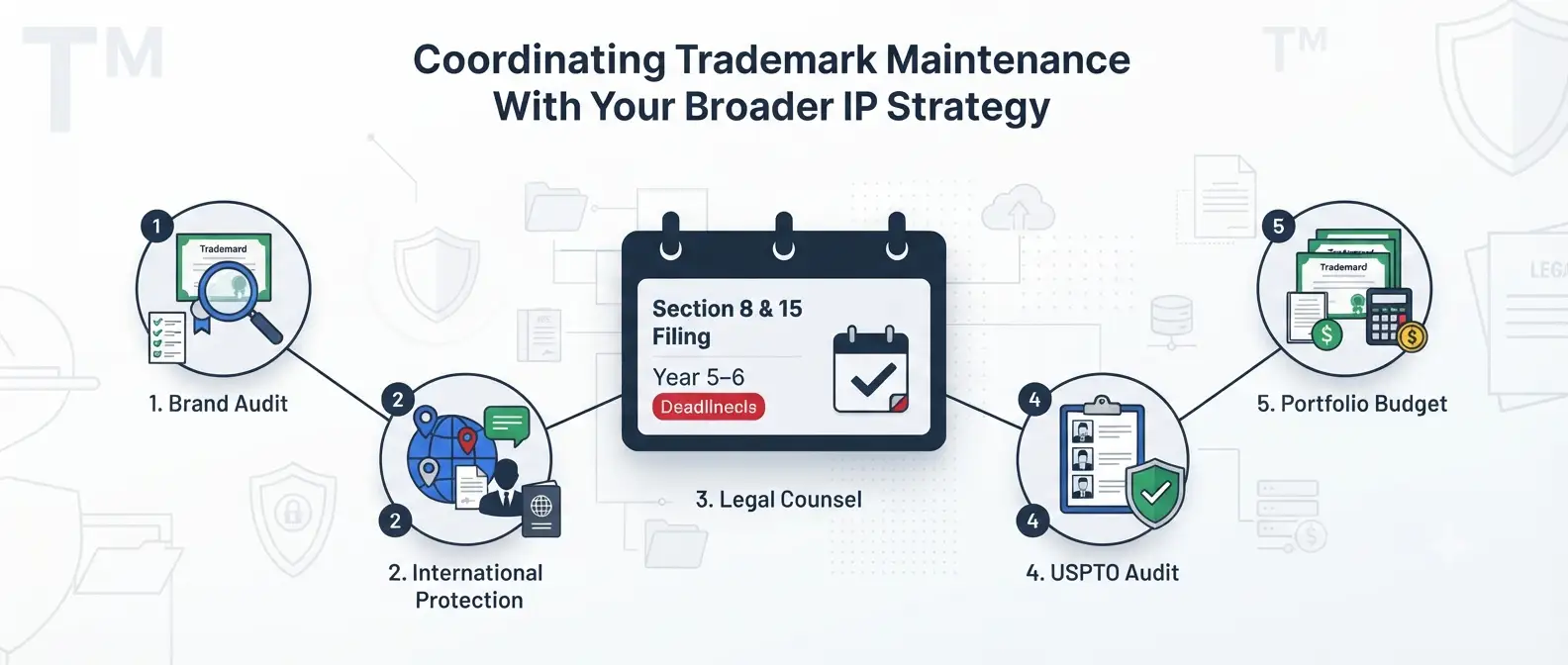
Trademark maintenance rarely happens in isolation. Larger companies, IP firms, and growing startups often manage dozens or even hundreds of marks across multiple jurisdictions, and the Section 8 and 15 deadline is only one piece of a much larger docketing puzzle.
A few strategic considerations worth keeping in mind:
- Align maintenance filings with brand audits. Use the five-year mark as an opportunity to review whether your registration still accurately reflects the goods and services you offer, rather than treating it as a purely administrative task.
- Coordinate with international filings. If you also hold registrations abroad or an international registration through the Madrid Protocol, remember that the U.S. Section 8 (or Section 71) deadline runs independently from renewal deadlines with the World Intellectual Property Organization, so tracking both calendars separately is essential.
- Loop in outside counsel early. If you work with a law firm or IP services provider, share your registration certificate and key dates as soon as your mark registers rather than waiting until the filing window opens. This gives your team time to gather specimens and address any usage gaps well in advance.
- Watch for post-registration audits. The USPTO periodically audits Section 8 filings by requesting additional specimens for a random sample of goods or services listed in a registration. Keeping organized, dated evidence of use for every class reduces the stress of responding to an audit request.
- Budget for fees across your entire portfolio. If you manage multiple marks, per-class fees can add up quickly, so building maintenance costs into your annual IP budget avoids unpleasant surprises.
Coordinating Trademark Maintenance With Your Broader IP Strategy
Treating this filing as part of an ongoing strategy, rather than an isolated compliance task, helps ensure your trademark portfolio continues to support your business goals long after the initial registration is secured.
If you would rather have experienced professionals track these deadlines, prepare your specimens, and manage the entire filing on your behalf, Teak IP Services offers dedicated trademark maintenance support so nothing slips through the cracks. For related guidance on keeping your broader IP portfolio organized, take a look at our intellectual property management guide and our overview of the difference between an IP paralegal and a trademark paralegal to see how the right support team can keep every filing on schedule.
Frequently Asked Questions
When do you need to file a trademark section 8 and 15 affidavit?
You need to file it between the fifth and sixth anniversaries of your trademark’s registration date, or within the six-month grace period immediately after, provided you have used the mark continuously in commerce for five years.
Can I file a Section 8 declaration without Section 15?
Yes. Section 15 is entirely optional. Many trademark owners file a standalone Section 8 declaration and choose not to pursue incontestability, though combining them is common because it is efficient and cost-effective.
What happens if I file a trademark section 8 and 15 affidavit late?
You may still file within the six-month grace period following the sixth anniversary, but you will owe an additional government fee per class. If you miss the grace period entirely, your registration will be cancelled.
Do I need a lawyer to file the Section 8 and 15 declaration?
It is not legally required for U.S.-domiciled applicants, but errors in specimens, class descriptions, or eligibility claims are common and can jeopardize your registration, so many businesses rely on trademark counsel or paralegal support.
Is the Section 8 and 15 filing the same as a trademark renewal?
No. The Section 8 declaration proves continued use, while renewal happens under Section 9 and is first due between years nine and ten, typically combined with a second Section 8 filing.
What specimens are acceptable for a Section 8 declaration?
Acceptable specimens generally include product packaging, tags or labels, website screenshots showing the mark next to purchasable goods, or advertising materials for services, as long as they reflect current, genuine use in commerce.
What is the difference between excusable nonuse and abandonment?
Excusable nonuse means you have a valid, temporary reason for not using the mark and a genuine intent to resume, while abandonment means you have stopped using the mark with no intent to resume, which can result in loss of rights regardless of registration status.
Can I still sell or license my trademark after filing the Section 8 and 15 declaration?
Yes. Filing the declaration does not restrict your ability to sell, license, or assign your trademark; it simply confirms your registration remains active and, where applicable, incontestable.
How long does the USPTO take to process a Section 8 and 15 filing?
Processing times vary, but many combined declarations are reviewed within a few months. If the USPTO identifies deficiencies, it will issue an Office Action requiring a response within a set deadline before the filing is finalized.
Final Thoughts
Understanding exactly when to file a trademark section 8 and 15 affidavit is one of the most important post-registration responsibilities any brand owner faces. The rules are unforgiving: miss the window and the grace period, and your federal protection disappears, regardless of how long you have used the mark or how much brand equity you have built.
The good news is that this filing is entirely predictable. Once you know your registration date, you know exactly when your obligations begin. Combine that predictability with careful docketing, accurate specimens, and a clear understanding of the fees involved, and this becomes a routine part of protecting your brand rather than a source of last-minute stress.

