
PCT and European Patent Applications EPO Route provide a streamlined pathway for innovators navigating international patent protection. The PCT-EPO route offers an efficient system for securing European patent coverage. This guide explores how the Patent Cooperation Treaty integrates with the European Patent Office system, helping you understand the advantages, costs, timelines, and critical considerations for protecting your intellectual property across Europe.

Innovators planning to pursue European protection through the PCT-EPO route can benefit from our PCT application filing services to ensure their international application meets all EPO requirements and is positioned for efficient examination.
1. Understanding the PCT-EPO Relationship
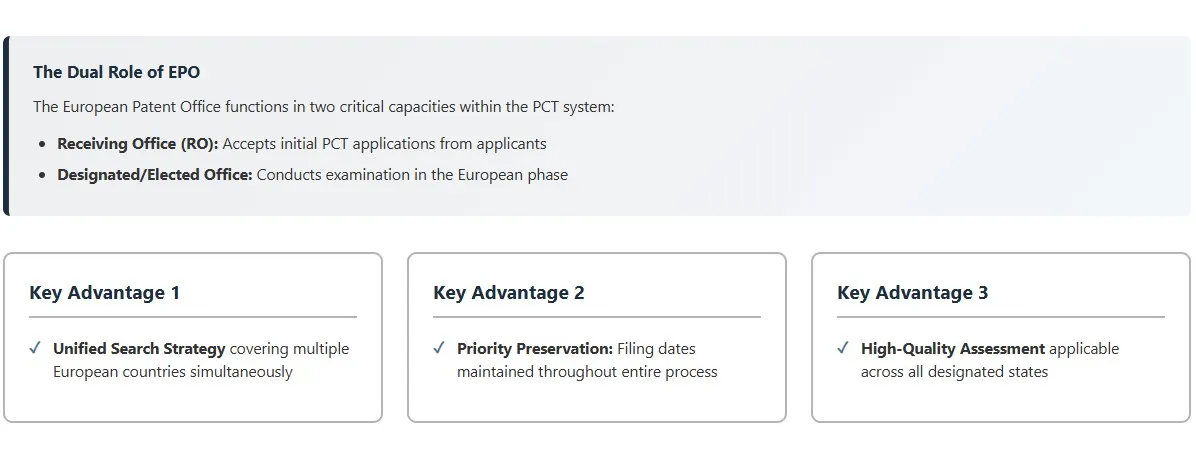
The relationship between the Patent Cooperation Treaty (PCT) and the European Patent Office (EPO) forms a powerful framework for international patent protection. The EPO functions as both a receiving office for initial PCT filings and a designated/elected office for entering the European phase.
Key aspects of this relationship include:
- The EPO accepts PCT applications through its receiving office status, processing them according to international standards
- Applications benefit from a unified search strategy covering multiple European countries simultaneously
- Priority dates are preserved throughout the entire process, protecting your filing advantage
- EPO examination reports provide high-quality assessment applicable across designated European states
Euro-PCT Route: What It Means for PCT and European Patent Applications EPO Route
The Euro-PCT route refers to filing a PCT application with the EPO as the designated or elected office, allowing you to pursue patent protection across European Patent Office member states through a single application process. This term emphasizes the convenience of combining the international PCT system with European patent coverage.
What makes the Euro-PCT application (or PCT EPO route) distinctive:
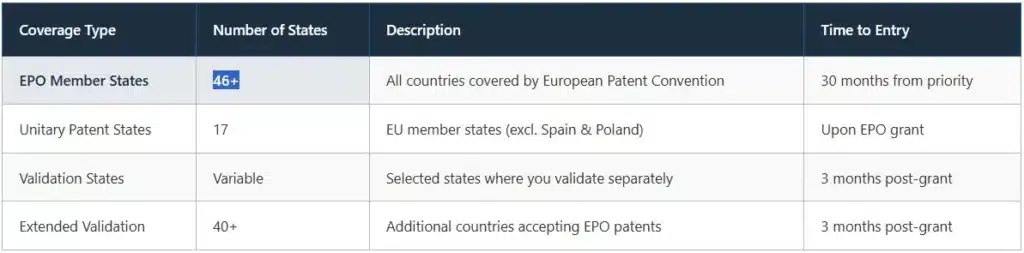
- Single filing covers up to 46 EPO member states and the designating effect extends across the European region
- Flexible timing allows 30 months from priority date to enter the European phase
- Lower initial costs compared to filing separate national applications in multiple countries
- Streamlined examination process based on international preliminary examination reports
- Potential for unitary patent coverage in participating European countries
3. Entering European Phase from PCT
Entering the European phase is a critical milestone in the PCT EPO application process. This transition moves your application from international PCT proceedings into substantive examination at the European Patent Office.
Timeline for European Phase Entry
The applicant must enter the European phase within 30 months from the priority date. This extended timeline provides valuable opportunities to assess market potential and refine your patent strategy before committing to European examination expenses.
Entry Requirements and Formalities
- Submit a request for entry into the European phase
- Pay the European search fee and designation fee
- Provide translation of the application in English (or other acceptable language depending on filing language)
- Identify the specific EPO member states where protection is sought
- Confirm representation by a European patent attorney if required
Strategic advantages of careful phase entry planning include maintaining quality standards during translation, selecting optimal member states for business priorities, and managing examination costs effectively.
Also, Read: PCT National Phase Deadlines: Complete Timeline Guide
4. EPO as Designated/Elected Office under the PCT and European Patent Applications EPO Route
When you file a PCT application and designate or elect the European Patent Office, it becomes the responsible examining authority for your patent claims within the European region. This dual role demonstrates the EPO’s central importance in the euro-pct application process.
Designation vs. Election
Designated Office: Automatically included when filing the PCT application initially
Elected Office: Can be selected separately if pursuing international preliminary examination, allowing examination during the international phase before entering national stages
EPO’s Examination Responsibilities
- Conducts formal examination of application formalities
- Performs substantive examination of patentability
- Generates comprehensive search and examination reports
- Manages prosecution correspondence and office actions
- Issues final grant or refusal decisions affecting all designated states
5. EPO Search and Examination Reports
EPO search and examination reports provide crucial guidance throughout the patent application lifecycle. These comprehensive documents influence prosecution strategy and final patentability determinations for PCT EPO applications.
International Search Report (ISR)
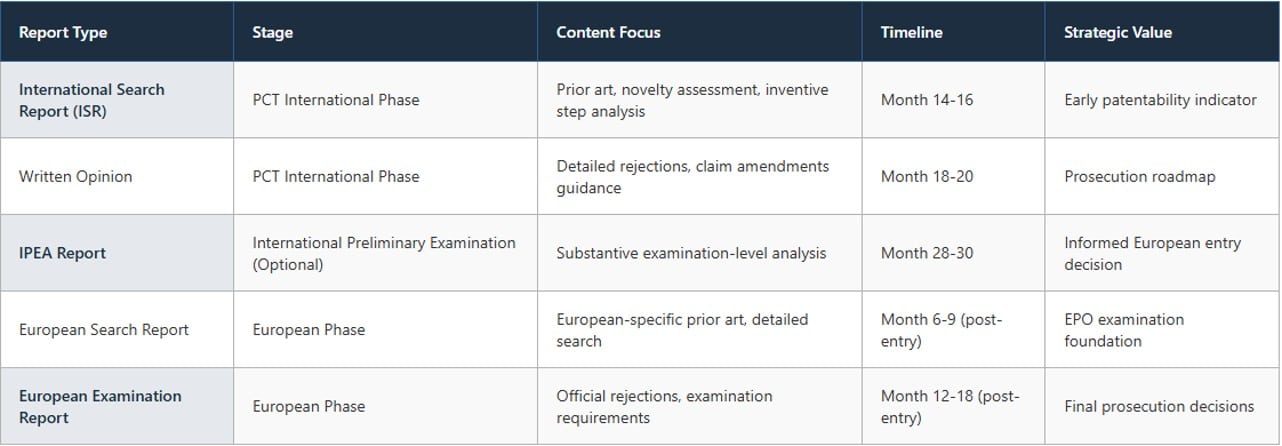
The International Search Report, prepared by the EPO in its capacity as an International Searching Authority, identifies relevant prior art documents and assesses inventive step. This report provides preliminary guidance on patentability prospects before committing to European phase entry.
- Includes novelty and inventive step assessments
- Lists cited documents from global patent and technical literature databases
- Influences claim amendments and prosecution approach before European phase entry
Written Opinion and International Preliminary Examination Report
These reports provide detailed patentability analysis comparable to first office actions in examination. When applicants elect the EPO as an International Preliminary Examining Authority, they receive in-depth feedback on claim scope, specification support, and prior art rejections.
- Provides substantive examination-level analysis during PCT international phase
- Allows response and amendment opportunities before European phase entry
- Creates record that facilitates smoother European examination
European Search Report and Examination
- Generates European-specific search results during European phase examination
- Identifies additional prior art not covered in international search
- Forms basis for European office actions and prosecution decisions
Also, Read: National Phase Entry Patent Filing Process, Deadline and Strategy
6. Cost Comparison: PCT-EPO vs. Direct EPO Filing
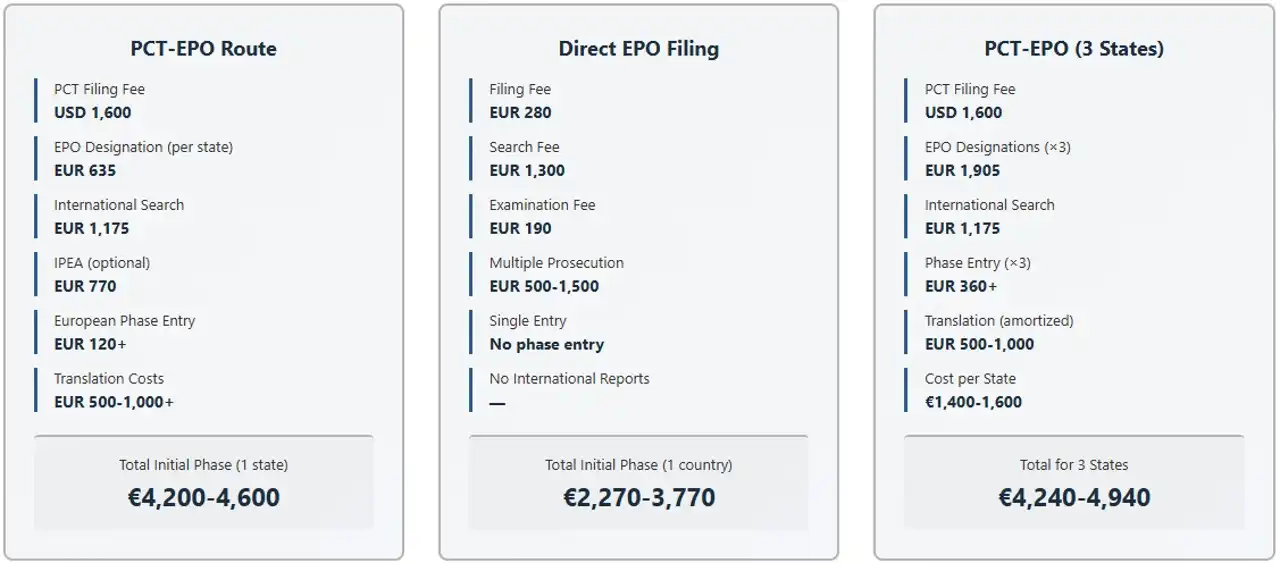
Understanding the cost implications of the euro-pct application route versus direct European Patent Office filing helps optimize your patent budget. While the PCT path involves more steps, the overall costs often balance favorably when considering multiple country coverage.
PCT Route Costs (When Designating EPO)
- PCT Filing Fee: USD 1,600 (basic fee shared across all designations)
- Designation Fee (EPO): EUR 635 per designated state
- International Search Fee: EUR 1,175 (when EPO is ISA)
- IPEA Fee (optional): EUR 770 if electing EPO as International Preliminary Examining Authority
- European Phase Entry: EUR 120 examination fee plus additional designee fees
- Translation Costs: EUR 200-1,000+ depending on specification length (translation during prosecution adds additional costs)
Direct EPO Filing Costs
- Filing Fee: EUR 280
- Search Fee: EUR 1,300
- Examination Fee: EUR 190
- Total Initial Costs: Approximately EUR 1,770 (plus prosecution, translation, and validation costs)
Cost-Benefit Analysis for PCT-EPO Route
The PCT-EPO route proves more economical when seeking protection in multiple countries. Key advantages include:
- Single application covers all designated states simultaneously
- Delayed cost commitment provides time to assess commercial viability before incurring full European prosecution expenses
- International search and examination reduce later European prosecution time
- Amortizing costs across multiple countries typically results in lower per-country fees
Also, Read: PCT Filing Costs and Fees: Complete Breakdown
7. Language Considerations for European Phase
Language requirements significantly impact both costs and timelines for euro-pct applications. The EPO’s multilingual environment requires strategic planning to ensure compliance while managing expenses.
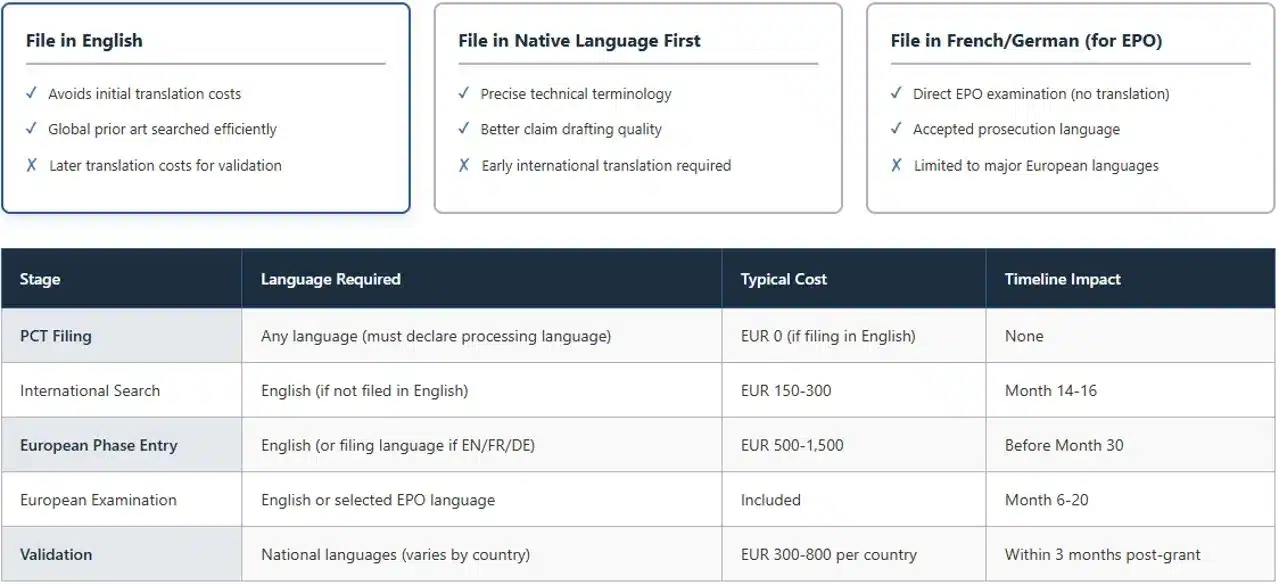
Language of Filing and Translation Requirements
- PCT applications can be filed in any language acceptable to the receiving office
- Translation into English is required before entering European phase (cost varies USD 1,500-3,000+ depending on specification length)
- The EPO conducts examination in English, French, or German depending on filing language selection
- Amendments must be filed in the language of examination
International Phase Language Strategy
- Filing in English avoids initial translation costs during PCT international phase
- Filing in your native language first, then translating for international stages, allows careful terminology review
- Filing in French or German (for EPO) allows direct prosecution without translation until later validation stages
Professional Translation Importance
Professional patent translation is critical for PCT EPO applications. Poor translations can create claim ambiguities, inadvertent amendments, or scope inconsistencies that compromise your patent position. Invest in experienced patent translators familiar with terminology in your technical field.
8. Unitary Patent and PCT Applications in the PCT and European Patent Applications EPO Route
The Unitary Patent represents a revolutionary development in European patent law, offering significant advantages for PCT applicants seeking efficient, cost-effective European protection. This modern tool has transformed the euro-pct application landscape.
What is Unitary Patent Protection?
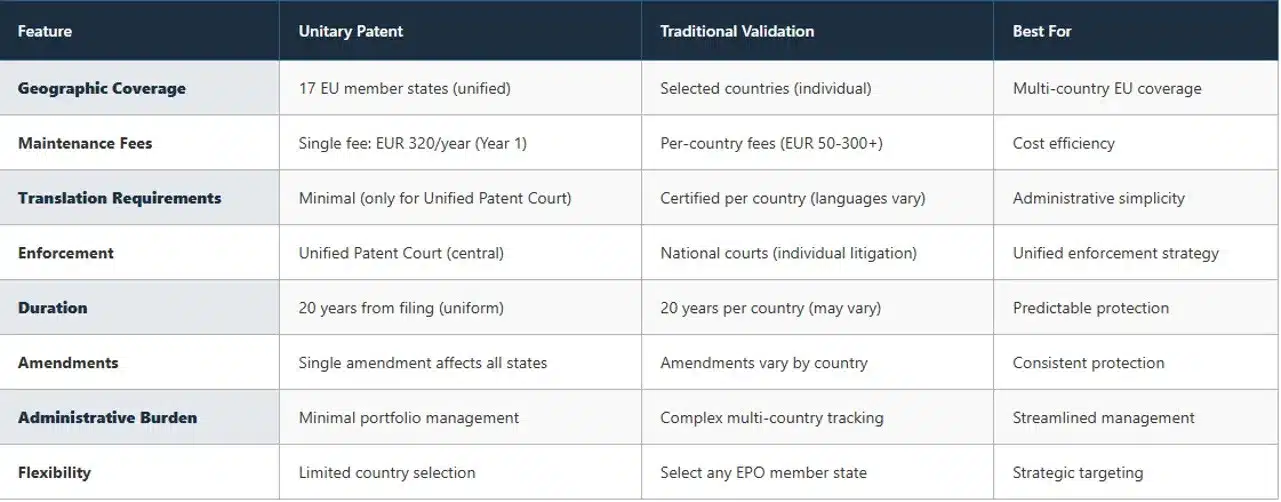
The Unitary Patent provides patent protection covering 17 EU member states (excluding Spain and Poland) through a single European patent granted by the EPO. Following the grant of an EPO patent, applicants can opt into unitary patent protection, transforming multiple national rights into unified protection.
Key Advantages of Unitary Patents for PCT Applicants
- Single maintenance fee (EUR 320 first year, increasing over time) covers all designated unitary patent states
- Unified infringement and validity rules managed by the Unified Patent Court
- No validation fees or national prosecution costs for participating states
- Centralized enforcement through Unified Patent Court reduces litigation complexity
- Simplified management of patent portfolio administration
Combining PCT Route with Unitary Patent Strategy
- File PCT application with EPO designation to obtain European patent
- Upon EPO grant, opt into unitary patent protection for maximum cost efficiency
- Simultaneously maintain traditional national patents in non-participating states (Spain, Poland) through separate validation
- Create hybrid portfolio combining unitary patent with country-specific protection where commercially justified
Also, Read: Comprehensive PCT Guide: Mastering International Patent Applications
9. Validation in European Countries
Validation is the process of converting a granted European patent into national property rights in designated member states. For PCT applicants not using unitary patents, validation remains essential for obtaining enforceable protection.
Understanding Validation Requirements
- Becomes possible immediately after EPO grant (patent not yet published)
- Applicants have three months from EPO grant announcement to file validation requests
- Translation requirements vary by country; some states require certified translations into official language
- Fees charged by each national patent office where validation is sought
Validation Timeline and Process
- Monitor for EPO grant announcement in European Patent Bulletin
- Prepare certified translations for target countries requiring translation
- File validation requests with each national patent office within three-month window
- Pay validation fees per country
- Confirmation of national patent registration typically within weeks to months depending on jurisdiction
Strategic Validation Planning
Smart validation strategy balances patent protection needs with portfolio costs. Consider:
- Market importance of each country to your commercial interests
- Competitor activity and enforcement priorities in specific jurisdictions
- Cost-benefit analysis for low-priority countries
- Potential for consolidating validation in key markets (UK, Germany, France, etc.) while validating selectively in others
Also, Read: ePCT Filing Guide using Online PCT Application System Guide
10. Strategic Timing for European Entry
Timing decisions regarding European entry profoundly impact patent strategy effectiveness and overall portfolio management. The PCT system’s inherent flexibility allows sophisticated timing optimization for euro-pct applications.
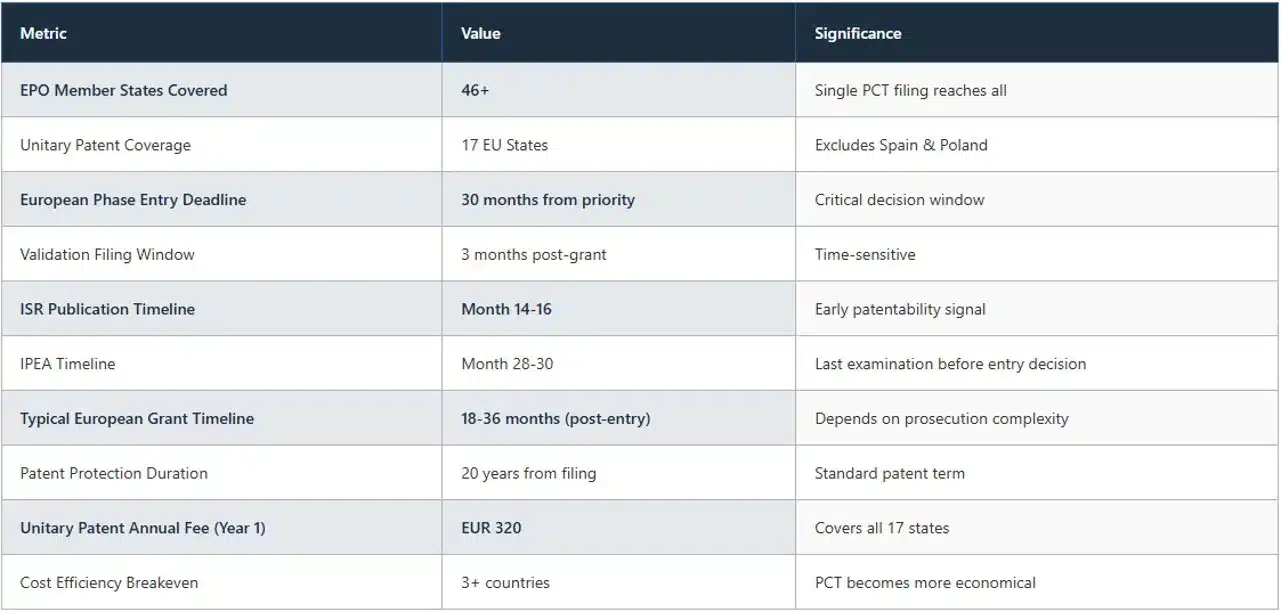
Critical Decision Points in the PCT Timeline
- Month 12 Priority: File domestic application if seeking early priority establishment
- Month 12-13 PCT Filing: File international application claiming priority from earlier filings
- Month 16 ISR Publication: International Search Report becomes available; assess patentability prospects
- Month 22 IPEA Election Decision: Decide whether to elect EPO for International Preliminary Examination
- Month 30 European Entry Deadline: File request for European phase entry or allow application to be deemed withdrawn from EPO
Factors Influencing Entry Timing Decisions
- Market launch readiness and commercial viability assessments
- International Search Report and Written Opinion feedback on patentability
- Competitive landscape changes and prior art discoveries
- Budget availability and portfolio prioritization needs
- Technology maturity and likelihood of substantial revisions
Optimizing Entry with International Preliminary Examination
Electing the EPO as International Preliminary Examining Authority provides substantial advantages for European entry planning. This optional stage generates examination-quality reports before European phase commitment, enabling informed decision-making:
- Receives detailed patentability analysis comparable to European substantive examination
- Identifies specific claim amendments likely to overcome rejections
- Demonstrates commitment to European protection, signaling credibility to business partners
- Extends decision deadline slightly while providing substantially improved entry readiness
Key Takeaways: Mastering the Euro-PCT Application Process
- The PCT-EPO route provides cost-effective, strategically flexible international patent protection covering 46+ states simultaneously
- High-quality EPO search and examination reports enable informed decisions before committing to European phase entry
- The 30-month window for European phase entry provides valuable time to assess commercial viability and market conditions
- Unitary patents represent an efficient, modern alternative to traditional validation, covering 17 EU states with simplified maintenance
- Professional translation and language planning are critical investments preventing costly claim ambiguities
- Strategic validation timing and country selection directly impact portfolio ROI
- Working with experienced patent counsel ensures optimal utilization of the PCT-EPO system for your specific innovation and business objectives
Also, Read: Why Choose PCT Filing? 5 Key Reasons
Conclusion: Navigating the PCT and European Patent Applications EPO Route
The PCT-EPO route represents a sophisticated, strategic approach to European patent protection. By understanding the complex relationship between international and European systems, applicants can navigate timelines effectively, manage costs prudently, and position their intellectual property portfolios for maximum competitive advantage. Whether pursuing traditional validation across multiple states or leveraging modern unitary patent protection, the flexibility and expertise embedded in the euro-pct application process empower innovators to protect their inventions precisely as their business strategy demands. Strategic engagement with qualified patent professionals ensures your European patent portfolio achieves optimal outcomes in this multifaceted legal landscape.
Visit our services page for “Professional PCT Applications and Filing Services“

