

With more than 150 member states in the PCT, administered by WIPO, the treaty enables access to key global markets. This guide outlines PCT countries and international coverage, identifies the most strategically important jurisdictions, and sets out practical steps to strengthen your worldwide patent protection.
1. Complete List of PCT Member Countries Current (PCT Countries and International Coverage)
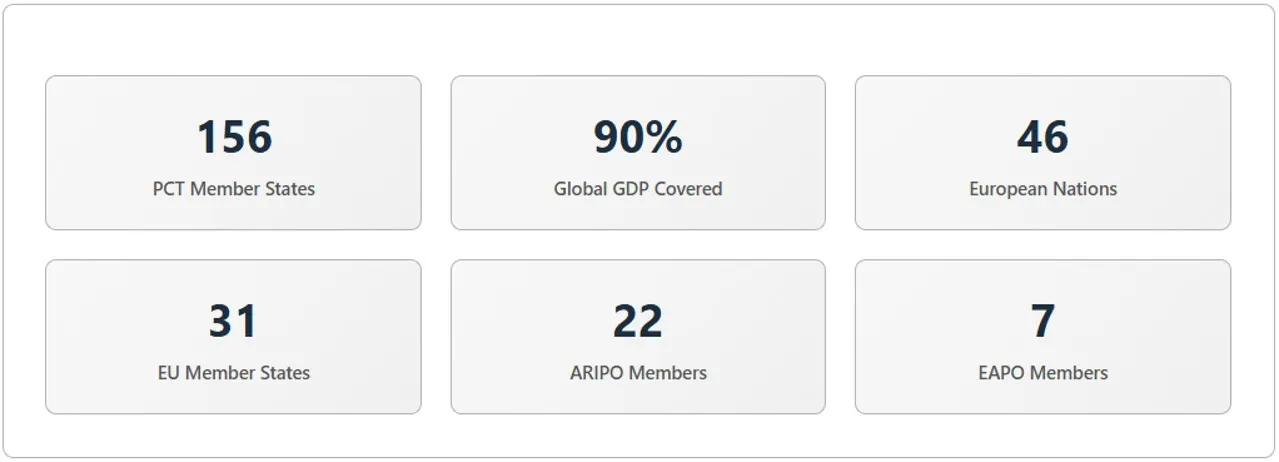
The number of patent cooperation treaty countries continues to grow, with WIPO regularly welcoming new members. As of the latest updates, the PCT has 156 member states-Frepresenting over 90% of global GDP and providing access to virtually all major economic zones and emerging markets.
PCT Countries and International Coverage
Major Developed Nations ((PCT Countries and International Coverage))
- United States of America – PCT member since 1970
- United Kingdom – Major patent market with strong IP enforcement
- Germany – Central European patent hub
- France – Key EU member with robust patent system
- Japan – Leading Asian patent market
- South Korea – Growing tech patent hub
- Canada – North American market expansion
- Australia – Asia-Pacific regional leader
- Singapore – Strategic Asian gateway
European Union Member States (PCT Countries and International Coverage)
Thirty-one European countries are PCT members, representing the world’s largest unified patent system through the European Patent Office. Filing a PCT application allows designation of any or all EU members, providing strategic flexibility for European expansion.
- Austria, Belgium, Bulgaria, Croatia, Cyprus, Czech Republic
- Denmark, Estonia, Finland, Greece, Hungary, Ireland
- Italy, Latvia, Lithuania, Luxembourg, Malta, Netherlands
- Poland, Portugal, Romania, Slovakia, Slovenia, Spain
- Sweden, Switzerland, and more via the European Patent Organization
WIPO PCT Countries & Coverage Quick Facts
- 156 total PCT member states as of 2024
- Covers all G7 and G20 nations
- Includes 36 least-developed countries providing emerging market access
- New members are regularly added, expanding coverage options
- Each member state maintains its own patent examination and granting procedures
2. Geographic Coverage: What the PCT Offers
The geographic scope of PCT protection extends far beyond traditional patent markets. By filing a single international application, you gain access to designate protection in virtually every region of the world, from established patent offices to rapidly emerging technology hubs.
Geographic Coverage: What the PCT Offers (PCT Countries and International Coverage)
Regional Coverage Breakdown
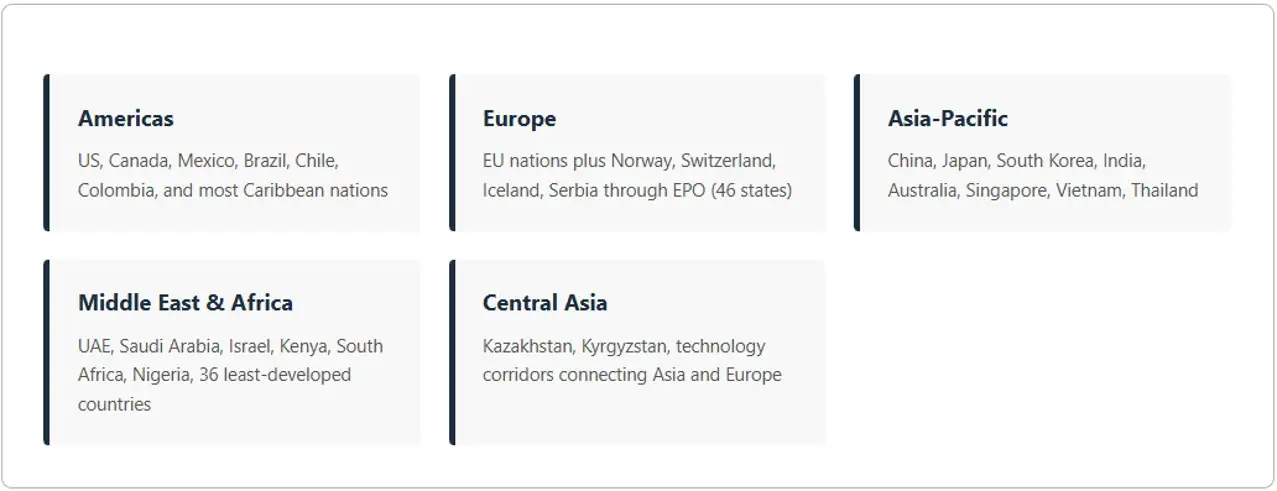
Americas – Complete coverage includes the US, Canada, Mexico, Brazil, Chile, Colombia, and most Caribbean nations through patent cooperation treaty countries.
Europe – Full coverage of EU nations plus non-EU members like Norway, Switzerland, Iceland, and Serbia. The European Patent Office facilitates protection across 46 states with a single designation.
Asia-Pacific – China, Japan, South Korea, India, Australia, and Southeast Asian nations like Singapore, Thailand, Vietnam, Malaysia, and Indonesia are PCT members, covering the world’s fastest-growing markets.
Middle East & Africa – Includes important markets like the United Arab Emirates, Saudi Arabia, Israel, Kenya, South Africa, and Nigeria-enabling access to emerging economies and resource-rich regions.
Central Asia – Countries like Kazakhstan and Kyrgyzstan provide strategic coverage for technology corridors connecting Asia and Europe.
Strategic Advantages of PCT Geographic Coverage
- Single application covers 156 countries simultaneously (with selective designation)
- International Patent Preliminary Examination reduces rejection risk before national filing
- Standardized filing requirements across all patent pct countries
- Extended timeline (30-31 months) allows cost-effective market assessment before committing to expensive national prosecution
- Access to major markets (US, EU, Japan, China) with one filing
3. Major Markets Covered by PCT
While all 156 patent cooperation treaty countries represent potential markets, certain nations stand out as critical designations for most patent strategies due to their economic importance, market size, manufacturing capacity, and innovation leadership.
Top Tier PCT Markets (Essential Designations)
Secondary Growth Markets
For technology companies and manufacturers, secondary markets warrant consideration based on industry sector and product type:
- Brazil – Largest Latin American economy, growing tech sector, 212 million population market
- India – Rising tech innovation hub, 1.4 billion population, pharmaceutical manufacturing leader
- Mexico – USMCA member, strategic nearshoring location, manufacturing hub
- Vietnam – Electronics and manufacturing center, rapidly growing IP enforcement
- Indonesia – Emerging consumer market, growing e-commerce and tech adoption
- Russia – Significant IP filing activity despite geopolitical considerations
- Saudi Arabia – Diversifying economy with Vision 2030 innovation initiatives
Strategic Designation Selection
The international PCT system allows you to strategically select which countries to designate based on your business priorities. Many patent applicants follow this phased approach:
- Phase 1: Designate US, Japan, EU, and China – covers 80% of global patent filing activity
- Phase 2: Add secondary markets based on industry sector and competitive landscape
- Phase 3: Evaluate emerging markets and growth regions after initial market assessment
- Phase 4: Leverage PCT flexibility to add new designations or focus resources where market traction develops
4. Alternative Strategies for Countries Outside PCT Coverage
Despite the PCT’s extensive reach with 156 member states, a small number of countries remain outside the system. Understanding these gaps and implementing alternative strategies ensures complete global patent protection for valuable innovations.
Non-PCT Countries and International Coverage: Alternative Strategies
Countries Outside the Patent Cooperation Treaty
Notably, only a handful of nations maintain independent patent systems without PCT membership. These include some smaller economies and nations with alternative patent frameworks. While non-PCT status suggests smaller markets, certain sectors may find value in protection even in these jurisdictions.
- Eritrea – East African nation with limited patent infrastructure
- Certain Pacific Island nations – Limited commercial patent markets
- Some Caribbean jurisdictions – Regional patent coordination via OAPI or ARIPO systems
Alternative Patent Protection for Non-PCT Countries and International
When PCT designation is unavailable, multiple protective strategies exist:
- Direct national patent filing – File directly in non-PCT countries’ patent offices
- Regional patent systems – African Regional Intellectual Property Organization (ARIPO) and Organisation Africaine de la Propriété Intellectuelle (OAPI) provide multi-country coverage
- Trade secret protection – Where patent registration isn’t feasible, confidentiality agreements and trade secret protection provide security
- Enforcement through sales channels – Restrict distribution to prevent unauthorized access in non-PCT jurisdictions
- International trademark coordination – Complement patent protection with strong trademark registration
Practical Consideration
Key Point: The market size and commercial significance of non-PCT countries is minimal compared to the 156 PCT member states. Most businesses achieve sufficient global coverage by focusing on available patent cooperation treaty countries, reducing costs while maximizing market protection.
Aslo, Read: ePCT Filing Guide using Online PCT Application System Guide
5. Regional Patent Systems and PCT
Beyond individual national patent offices, regional patent systems operate alongside the PCT, offering cost-effective multi-country protection within geographic regions. Understanding how regional systems integrate with PCT strategy amplifies international coverage efficiency.
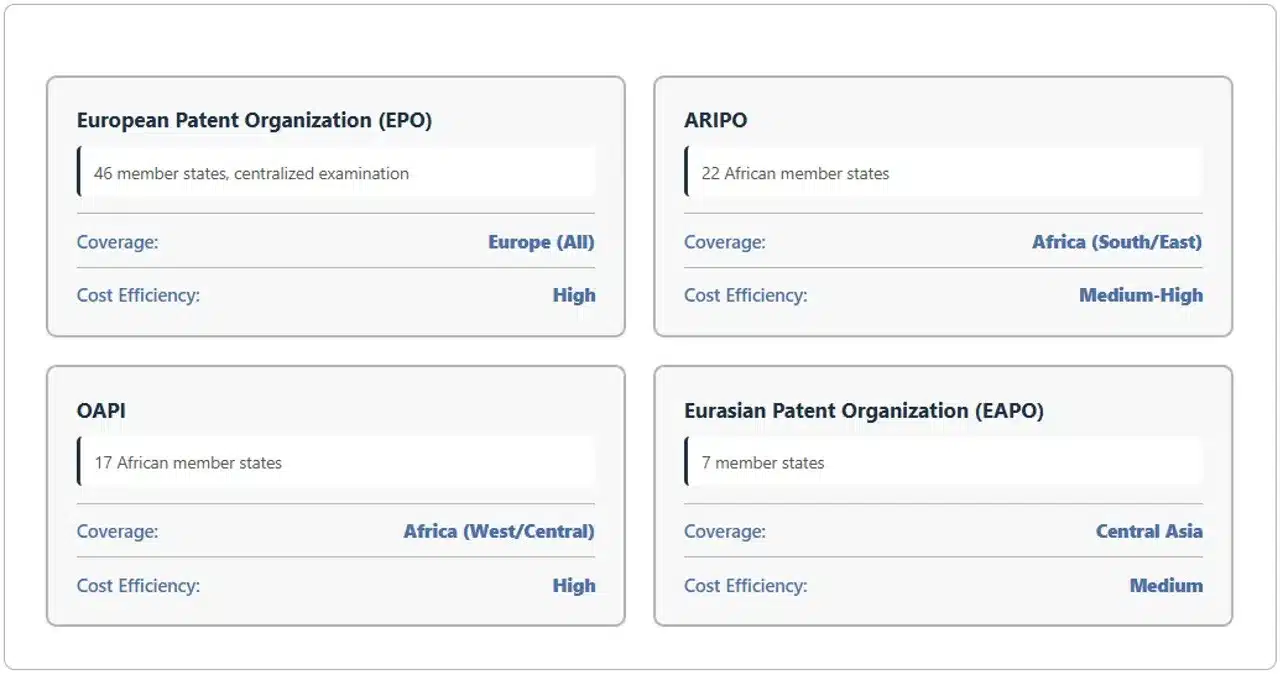
Major Regional Patent Systems
European Patent Organization (EPO) – 46 member states, centralized examination and prosecution, single filing covers Austria, Belgium, Bulgaria, Croatia, Cyprus, Czech Republic, Denmark, Estonia, Finland, France, Germany, Greece, Hungary, Ireland, Italy, Latvia, Liechtenstein, Lithuania, Luxembourg, Malta, Monaco, Montenegro, Netherlands, North Macedonia, Norway, Poland, Portugal, Romania, San Marino, Serbia, Slovakia, Slovenia, Spain, Sweden, Switzerland, Turkey, and the UK
African Regional Intellectual Property Organization (ARIPO) – 22 member states including Kenya, South Africa, Zimbabwe, Uganda, Ethiopia, and others
Organisation Africaine de la Propriété Intellectuelle (OAPI) – 17 African member states with French-language coordination
Eurasian Patent Organization (EAPO) – 7 member states including Russia, Kazakhstan, Belarus, Kyrgyzstan, and others, covering Eastern Europe and Central Asia
GCC Patent Office (potential) – Developing framework for Gulf Cooperation Council nations
How PCT Integrates with Regional Systems
A single PCT filing offers multiple pathway options for regional vs. national designation:
- EPO designation – File regionally through the European Patent Office covering 46 nations with one regional patent grant; significantly reduces per-country prosecution costs
- Individual state designation – Alternatively, designate individual EPO members (Germany, France, UK, etc.) separately for different prosecution strategies
- African regional selection – Use ARIPO or OAPI designations to cover multiple African countries cost-effectively
- Eurasian coverage – EAPO designation provides coordinated protection across Eastern European and Central Asian nations
- Combination strategy – Mix regional designations (EPO for Europe) with individual designations (US, Japan, China) for optimal cost-benefit
Cost Savings Through Regional Designation
Regional patent systems significantly reduce international patent costs. Rather than filing separately in 46 European nations, an EPO designation provides protection with a single examination process, dramatically lowering translation and prosecution fees while accelerating patent grant timelines across Europe.
Also, Read: PCT National Phase Deadlines: Complete Timeline Guide
6. Recently Joined PCT Members (PCT Countries and International Coverage)
The Patent Cooperation Treaty continues to expand as countries recognize the strategic value of integrated patent systems. Recent additions represent emerging markets and technological leaders seeking enhanced international collaboration.
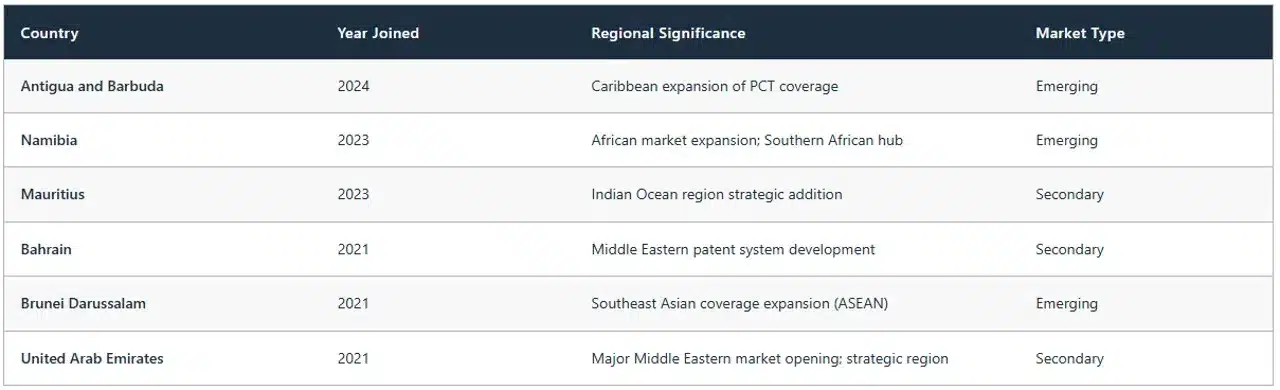
Recent Additions to WIPO PCT Countries
New patent cooperation treaty countries joining in recent years include:
- Antigua and Barbuda (2024) – Caribbean expansion of PCT coverage
- Namibia (2023) – African market expansion
- Mauritius (2023) – Indian Ocean region strategic addition
- Bahrain (2021) – Middle Eastern patent system development
- Brunei Darussalam (2021) – Southeast Asian coverage expansion
- United Arab Emirates (2021) – Major Middle Eastern market opening
- Dominica (2020) – Caribbean nation joining the treaty
Strategic Implications of New PCT Members
Each new PCT member represents expanded market access for patent applicants. Recent additions in emerging markets and strategic regions provide several benefits for international patent portfolios:
- Emerging market protection – Access to high-growth economies with single PCT filing
- Manufacturing hub coverage – New members often represent important production centers (Vietnam, Thailand, Bangladesh now accessible via regional patent coordination)
- Tech sector growth – Newly developed patent offices increasingly attract tech innovation and require patent protection
- Strategic geographic positioning – UAE and Bahrain additions strengthen Middle East coverage; Southeast Asian members serve growing semiconductor and electronics sectors
- Diversification opportunities – Reduced dependence on traditional patent markets; better position for tapping regional growth
Also, Read: National Phase Entry Patent Filing Process, Deadline and Strategy
7. Country-Specific PCT Advantages (PCT Countries and International Coverage)
Different patent cooperation treaty countries offer distinct strategic advantages depending on your innovation type, market focus, and business model. Understanding country-specific benefits enables optimization of your patent designation strategy.
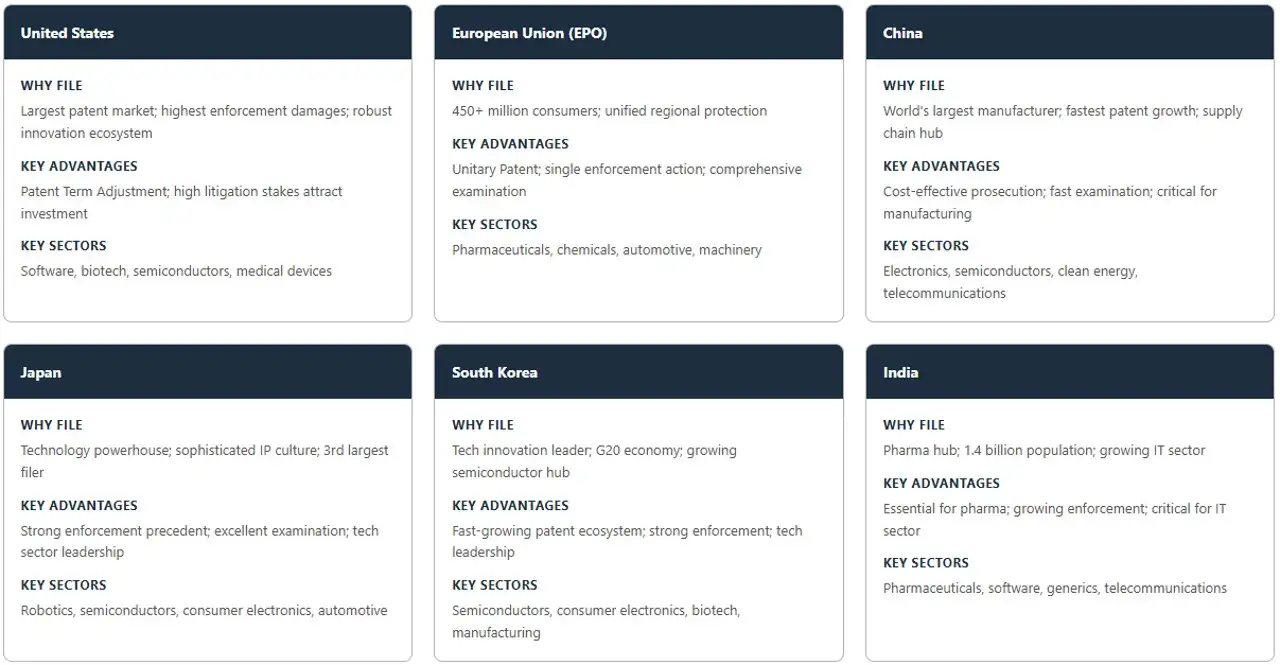
United States – The Primary Patent Market
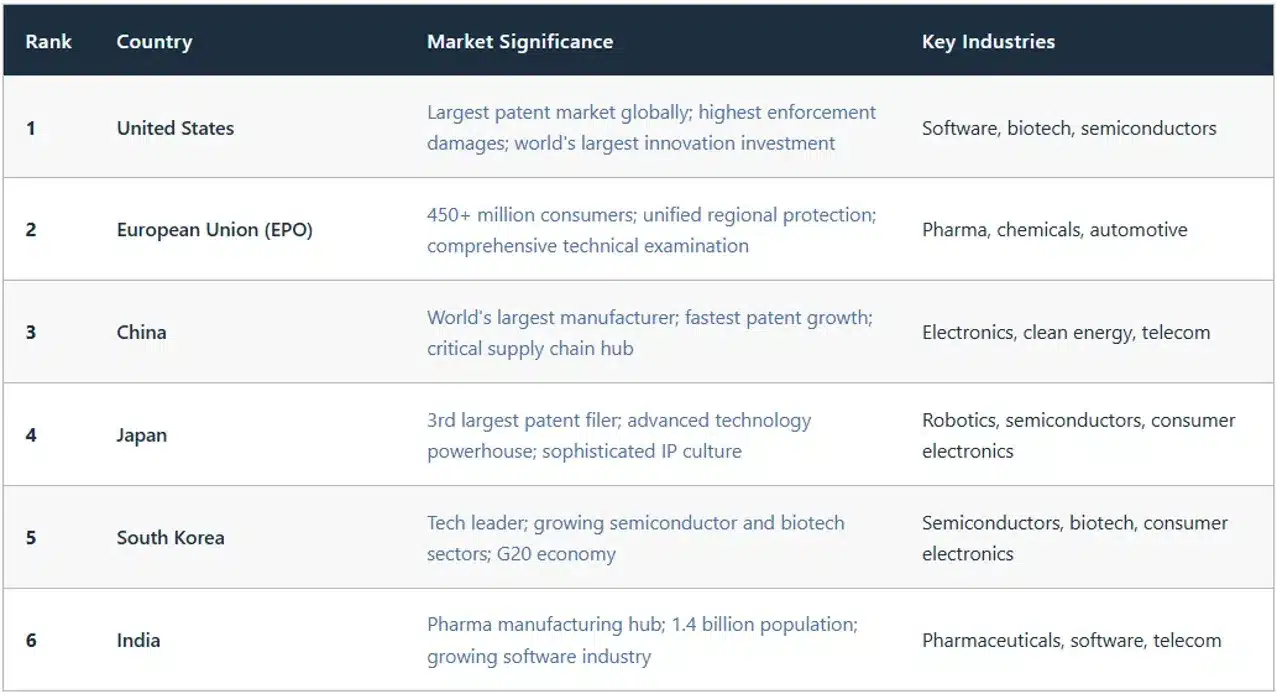
Why File: World’s largest market, highest patent enforcement activity, robust damages awards, strong technology investment concentration
Advantages: Patent term adjustment (PTA) can extend protection beyond 20 years; first-inventor-to-file system; high litigation stakes attract venture capital and licensing interest
Key Sector: Software, biotechnology, semiconductors, consumer electronics, medical devices
European Union (via EPO) – Unified Regional Power
Why File: Access to 450+ million consumers across Europe with one patent grant; strong enforcement infrastructure across member states
Advantages: Unitary Patent (available post-2023) covers all EU states with single enforcement action; comprehensive technical examination reduces later invalidation; strong pharmaceutical patent protection
Key Sector: Pharmaceuticals, chemicals, mechanical engineering, automotive
China – High-Growth Manufacturing Center
Why File: World’s largest patent filer; manufacturing superpower with massive IP portfolio development; rapidly growing enforcement infrastructure
Advantages: Cost-effective prosecution; fast examination timelines (can grant within 18-24 months); important for supply chain partners and manufacturing operations; valuable for defensive patent strategies
Key Sector: Electronics, semiconductors, hardware, telecommunications, clean energy
Japan – Technology Innovation Leader
Why File: Major technological powerhouse with sophisticated patent culture; third-largest patent filer globally
Advantages: Strong enforcement precedent in technology sectors; valuable for companies with Asian manufacturing; excellent examination quality
Key Sector: Robotics, consumer electronics, automotive, semiconductors
India – Pharma and IT Hub
Why File: Pharmaceutical manufacturing center, growing software industry, 1.4 billion consumer market
Advantages: Essential for pharmaceutical companies; growing enforcement activity; technology sector rapidly developing IP strategies
Key Sector: Pharmaceuticals, generics, software, telecommunications
Also, Read: PCT Filing Costs and Fees: Complete Breakdown
8. Emerging Markets and PCT Protection
As global manufacturing and innovation increasingly shift beyond traditional patent markets, emerging economies present both opportunity and challenge for patent strategy. Strategic emerging market designation through the PCT can protect intellectual property in regions experiencing rapid technology adoption and manufacturing growth.
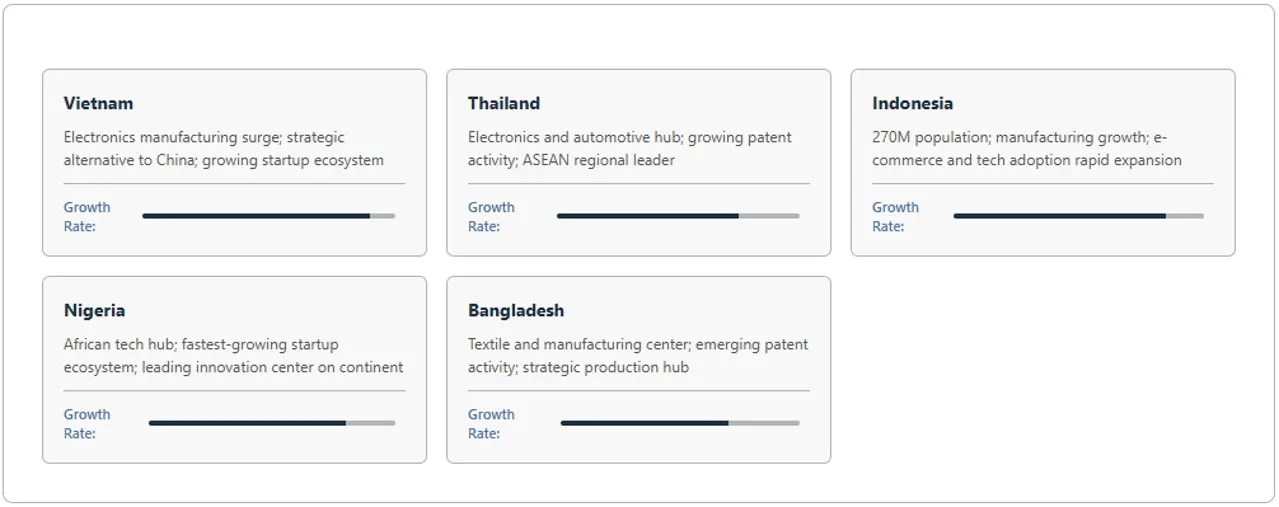
High-Priority Emerging Patent Markets
-
- Vietnam – Electronics and semiconductor manufacturing surge; strategic alternative to China; growing tech startup ecosystem
-
- Brazil – Large consumer market (215 million), pharma sector expansion, growing software development
-
- Mexico – Nearshoring destination for US manufacturing, USMCA advantages, growing IP enforcement
-
- Indonesia – Manufacturing growth, e-commerce expansion, 270 million population, rising innovation activity
-
- Thailand – Electronics hub, automotive manufacturing, growing patent activity
-
- Bangladesh – Emerging as textile and manufacturing center, growing patenting activity
-
- Nigeria – African tech hub, fastest-growing startup ecosystem, leading African innovation center
Why Emerging Markets Matter in Patent Strategy
Supply Chain Protection: Designate countries where key manufacturing partners operate
Market Expansion: Protect IP in high-growth regions before market share develops
Competitive Blocking: Prevent competitors from patenting similar innovations in emerging markets
Tech Talent Attraction: Patent protection demonstrates commitment to innovation in developing tech hubs
Cost-Effective Filing: Patent prosecution costs significantly lower in emerging markets than traditional patent offices
Emerging Market Patent Considerations
While emerging markets present opportunities, patent applicants should consider:
-
- Enforcement capability – Some emerging markets have developing IP enforcement infrastructure; assess enforcement mechanisms before designation
-
- Examination quality – Patent offices in developing nations may have different examination standards; review prosecuted patents for consistency
-
- Political stability – Assess country risk and regulatory changes that could affect IP protection
-
- Cost-benefit analysis – Lower filing costs must justify protection value relative to market size and manufacturing presence
-
- Regional coordination – Consider regional patent systems (ARIPO for African nations, EAPO for Central Asia) when possible for cost efficiency
Also, Read: Comprehensive PCT Guide: Mastering International Patent Applications
9. How to Research PCT Designated States
Effective international patent strategy requires understanding which PCT designated states offer maximum protection value for your specific innovation. This section provides practical tools and strategies for researching patent cooperation treaty countries to inform your designation strategy.
Official WIPO Resources for PCT Countries
-
- WIPO PCT Member States (wipo.int) – Official list of all 156 patent cooperation treaty countries with accession dates and details
-
- PCT Applicant’s Guide – Comprehensive reference provided by WIPO covering filing procedures, requirements, and designated state information
-
- PCT Rules (WIPO) – Detailed regulatory framework governing PCT procedures across all member states
-
- National Patent Office Websites – Individual WIPO PCT country patent offices provide specific requirements, fees, and prosecution timelines
-
- WIPO Statistics Database – Patent filing data by country, technology sector trends, and market analysis
Key Information to Research for Each Potential Designated State
When evaluating patent cooperation treaty countries for your designation strategy, research these critical factors:
-
- Market Size & Opportunity – Population, GDP, technology sector growth, manufacturing presence, consumer market potential
-
- Patent System Strength – Examination quality, enforcement track record, litigation outcomes, IP court infrastructure
-
- Prosecution Timeline – Average examination period, grant time, opportunities for expedited examination
-
- Fee Structure – PCT designation fees, national phase fees, maintenance fees, translation costs
-
- Competitive Activity – Patent filing trends in your technology sector, competitor patent portfolios in that country
-
- Regulatory Requirements – Mandatory translations, local agent requirements, disclosure requirements
-
- IP Enforcement Mechanisms – Available legal remedies, damages potential, court specialized in patent disputes
Practical Research Methodology
Follow this systematic approach to research patent cooperation treaty countries:
-
- Sector Analysis – Identify technology sector leaders and key markets for your innovation type. Review industry reports on manufacturing, software development, or pharma growth by country
-
- Competitive Intelligence – Search patent databases (Google Patents, Espacenet) for competitor patents in potential designated states. High competitor presence suggests valuable market
-
- Financial Modeling – Calculate total cost of ownership for PCT filing + national phase entry across potential designated states. Compare against market opportunity
-
- Expert Consultation – Work with patent attorneys in target countries to assess prosecution feasibility, enforcement capability, and strategic value
-
- Regional Strategy – For Europe and Africa, compare regional patent office designation (EPO, ARIPO) against individual country designation
Useful Patent Databases & Tools
-
- Google Patents (patents.google.com) – Free access to patent documents from 100+ countries, advanced search by technology class and country
-
- Espacenet (espacenet.ec.europa.eu) – European Patent Office database covering 130+ countries, essential for European and international research
-
- WIPO PATENTSCOPE (patentscope.wipo.int) – Searchable PCT application database showing filing trends and competitor activity
-
- USPTO (uspto.gov) – United States Patent and Trademark Office; essential for US market research, includes global filing analysis
-
- Derwent Analytics – Commercial patent intelligence platform providing competitive analysis, technology trends, and invalidity risk assessment
-
- WIPO IP Statistics (wipo.int/statistics) – National patent filing data, technology trends, global market analysis
Phased Designation Strategy
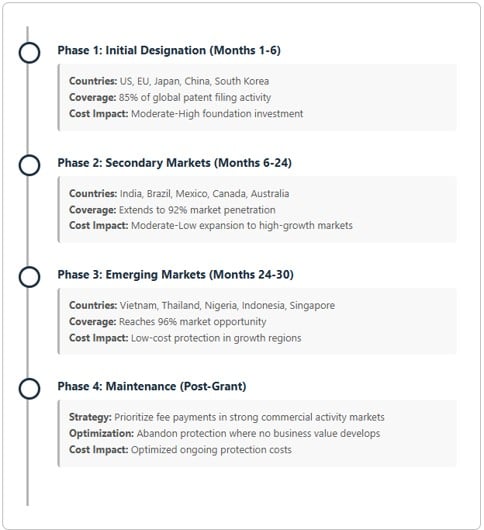
Rather than immediately designating all 156 patent cooperation treaty countries, consider phased approach:
-
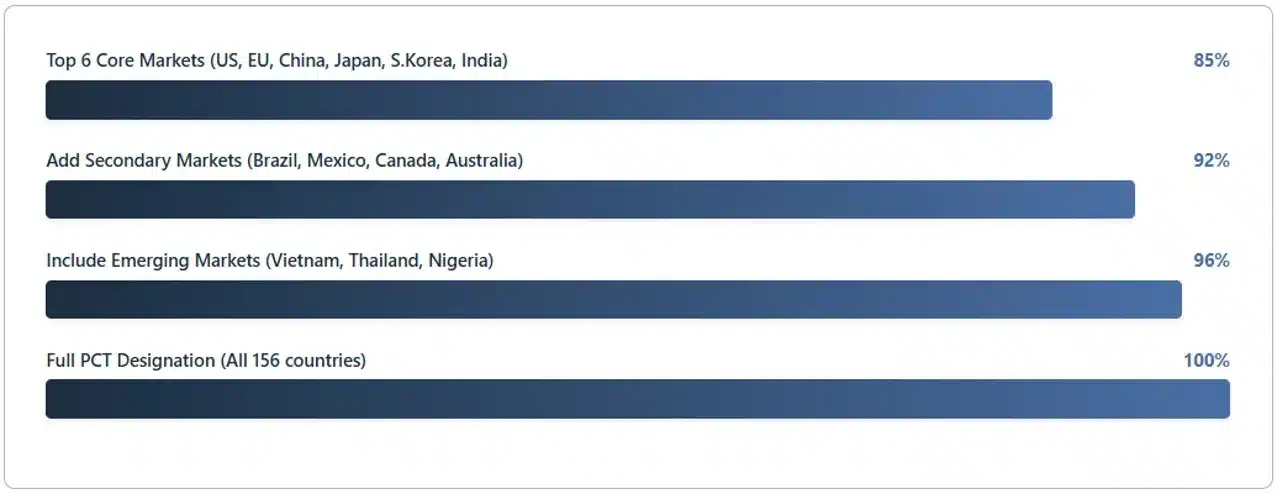
- Initial Designation (Months 1-6) – File PCT with US, EU, Japan, China, South Korea designations-covers approximately 85% of global innovation activity and 90% of patent litigation
-
- Secondary Phase (Months 6-24) – Based on International Search Report and Preliminary Examination findings, add secondary markets (India, Brazil, Mexico) that show strong commercial potential
-
- Emerging Market Phase (Months 24-30) – Evaluate market traction and competitive activity; selectively add emerging markets (Vietnam, Thailand, Nigeria) if manufacturing or market presence develops
- Maintenance Phase (Post-Grant) – Prioritize maintenance fee payments in countries showing strongest commercial activity; abandon protection in markets showing no business value
Conclusion: Optimizing Your International Patent Protection (PCT Countries and International Coverage)
The Patent Cooperation Treaty has fundamentally transformed international patent protection, enabling access to 156 patent cooperation treaty countries through a single coordinated filing. This comprehensive guide has explored the full landscape of available patent markets, strategic advantages of major jurisdictions, emerging market opportunities, and practical research methodologies for optimizing your international patent strategy.
The most successful international patent strategies are neither fully global nor narrowly focused. Rather, they employ strategic designation of patent cooperation treaty countries based on market opportunity, competitive activity, manufacturing presence, and financial feasibility. By leveraging WIPO PCT countries effectively-combining traditional markets (US, EU, Japan, China) with carefully selected secondary and emerging markets-innovators achieve robust global protection while managing costs strategically.
Whether you’re protecting breakthrough biotech innovations, next-generation software, industrial designs, or consumer electronics, the PCT system provides unprecedented flexibility to build a patent portfolio matching your specific business needs and market ambitions. Understanding which patent cooperation treaty countries offer maximum value, how regional patent systems streamline protection, and what emerging markets deserve strategic attention positions your innovation for global success.
Also, Read: Why Choose PCT Filing? 5 Key Reasons
Ready to build your international patent portfolio? Teak IP Services specializes in helping innovators navigate PCT filing strategies, optimize international designation decisions, and maximize patent protection across the global landscape. Our team of experienced patent attorneys understands the unique considerations of patent cooperation treaty countries worldwide and works with clients to develop strategic, cost-effective international patent protection plans.
Start your PCT patent filing journey today with careful planning, professional guidance, and a clear understanding of your commercial objectives.
Our Services: More About PCT Application Services.

