
In this in-depth guide resource, we will discuss about the comprehensive PCT guide for international patent applications in a detailed manner. We will cover, like what is a PCT patent application, how it works? benefits, how it can be compared with direct filing, steps to file PCT applications.
What is a PCT Patent Application?
A PCT (Patent Cooperation Treaty) patent application is a single international filing which allows patent filers to file their patent applications in multiple countries through PCT route in a one go. It covers over 150 member countries.
A PCT patent application is an international patent filing mechanism that allows inventors and businesses to protect their intellectual property across multiple countries through a single, unified application process. PCT stands for Patent Cooperation Treaty, an international agreement that streamlines the complex and expensive process of filing patents globally. Here you can visit our PCT patent applications service page.
Key Points:
- A PCT application enables you to file for patent protection in over 150 countries simultaneously
- You submit one international application instead of multiple separate national applications
- The process significantly reduces administrative burden and initial costs
- PCT filings maintain your priority date across all designated countries
When you file a PCT patent application, you’re essentially securing a placeholder for patent protection worldwide. This gives you time to assess market demand, secure funding, and make strategic decisions about which specific countries warrant full patent protection before incurring substantial costs.
Understanding the Patent Cooperation Treaty
PCT patent filing route is managed by WIPO. The PCT route is beneficial for every stakeholder in this patent ecosystem. The Patent Cooperation Treaty is a multilateral treaty administered by the World Intellectual Property Organization (WIPO) since 1970. It represents one of the most significant advancements in international intellectual property protection.
Core Objectives of the Patent Cooperation Treaty (Comprehensive PCT Guide):
- Facilitate international patent filings for inventors and companies
- Reduce duplication of effort in examining patent applications
- Create a standardized system for international patent protection
- Lower the financial burden of pursuing patents globally
How the Patent Cooperation Treaty Functions: The treaty establishes a cooperative framework where member countries agree to recognize and process international patent applications according to standardized rules. When you file through the PCT international application system, you benefit from uniform procedures, standardized documentation, and coordinated examination processes across participating nations.
The Patent Cooperation Treaty application system doesn’t grant patents directly. Instead, it facilitates the filing process and allows applicants to enter the national or regional patent systems of different countries with a single, priority-dated application. This is a crucial distinction that often confuses applicants new to international patent filing.
How the PCT System Works
In this comprehensive PCT guide, we are discussing about the PCT application route in detail. There are two different phases of the PCT system, one is the International Phase and another one is the National Phase.


The International Phase (Comprehensive PCT Guide):
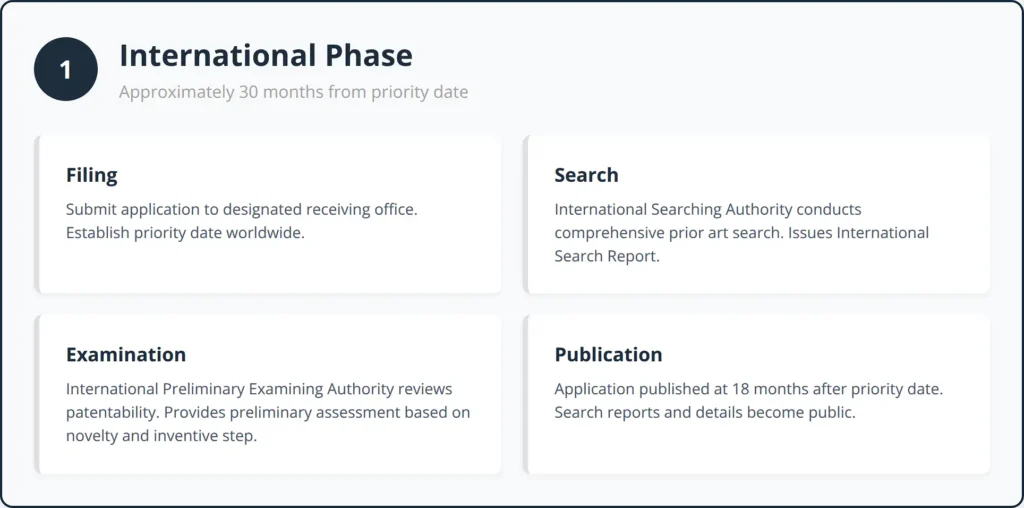
During this phase, your PCT international patent application undergoes preliminary examination. Key aspects include:
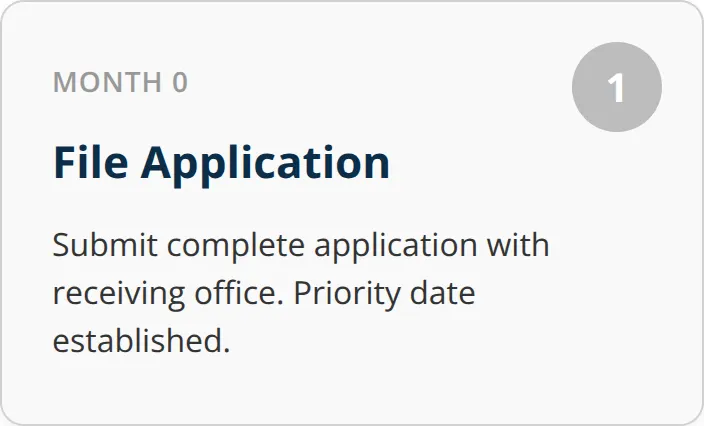
- Filing: You submit your PCT patent filing with the designated receiving office, typically your national patent office or the International Bureau of WIPO
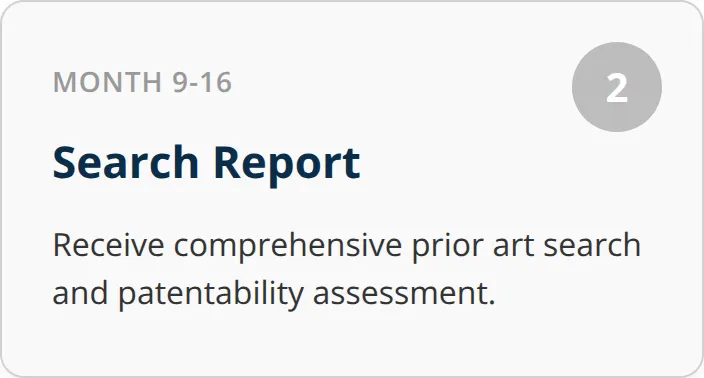
- Search: An International Searching Authority (ISA) conducts a comprehensive prior art search and issues an International Search Report
- Preliminary Examination: An International Preliminary Examining Authority (IPEA) reviews the application’s patentability based on novelty, inventive step, and industrial applicability
- Publication: Your application is published 18 months after the filing date
- Timeline: The international phase lasts approximately 30 months from your priority date
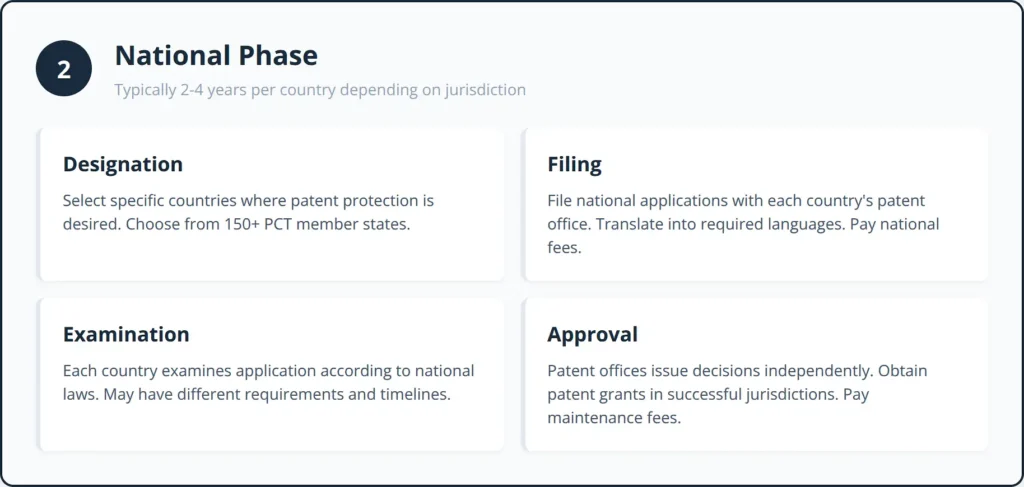
The National Phase:
After the international phase, you enter the national phase in countries where you want patent protection:
- Designation Selection: You choose which countries’ patent systems to enter
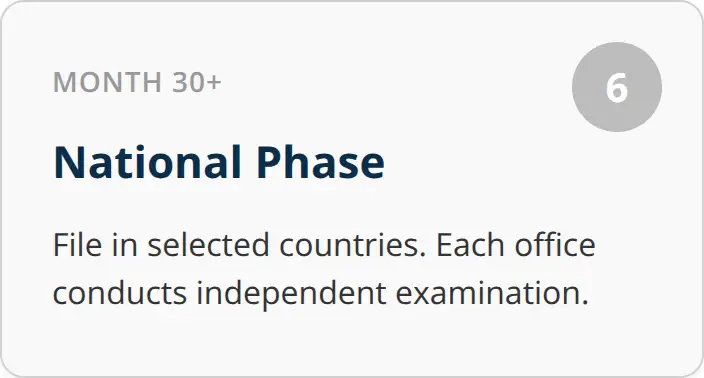
- National Processing: Each designated country examines your application according to its own patent laws
- National Examination: Patent offices in each country conduct their own examination and issue decisions
- Timeline: National phase typically lasts 2-4 years, depending on the jurisdiction
Critical Timeline: The PCT system provides a crucial 30-month window to decide which countries to pursue. This extended timeline allows you to evaluate market opportunities, secure financing, and develop your commercialization strategy before committing to expensive national filings.
How the PCT System Works – Two Phases
Benefits of Filing Through PCT
In this section of this Comprehensive PCT Guide, we will discuss about the benefits of filing patent applications through PCT way or route.
Filing a PCT patent application offers substantial advantages for inventors and businesses seeking international protection.
Cost Efficiency:
- Reduced initial filing costs compared to simultaneous national filings in multiple countries
- Consolidated documentation and application procedures
- Deferred costs: you pay full fees only for countries where you pursue protection
- Predictable expense structure with clear fee schedules
Strategic Advantages:
- Extended timeline (30 months) to evaluate market viability before committing resources
- Time to secure funding or investment based on patent prospects
- Ability to conduct competitive analysis and market research
- Option to adjust your international strategy based on business developments
Procedural Benefits:
- International Search Report provides valuable insight into patentability
- Preliminary Examination offers early assessment of invention strength
- Standardized application requirements reduce complexity
- Single filing date priority across all designated countries maintains novelty protection
Competitive Edge:
- Enhanced credibility with investors, partners, and licensees
- Protection against competitors filing similar patents in major markets
- Flexibility to add or remove countries based on market conditions
- Professional examination feedback helps refine your application
Geographic Coverage:
- Access to patent protection in over 150 countries
- Ability to target specific high-value markets
- Equal footing for small businesses competing internationally
- Simplified management of multiple patent applications

PCT vs. Direct National Filing: Which is Right for You?
There is one more option, as direct national filing, instead of PCT route. In the Direct patent filing, you need to file patent applications directly in each single country. Understanding the differences between PCT filing and direct national filing is essential for strategic decision-making.
Choose PCT Filing When:
- Your invention has international commercial potential
- You need time to evaluate which markets are most valuable
- You want to minimize initial filing costs while preserving global options
- Your budget is limited but your ambitions are international
- You’re uncertain about specific country targets
- You want standardized examination and search reports
- You need to file in multiple countries (typically 3 or more)
Choose Direct National Filing When:
- You’ve already identified specific target countries
- You want immediate, country-specific patent examination
- Your invention is relevant to only one or two markets
- You prioritize speed over cost reduction
- You need to file in countries with shorter examination timelines
- You prefer direct communication with specific national patent offices
- Filing cost is not a primary concern
Comparative Analysis:
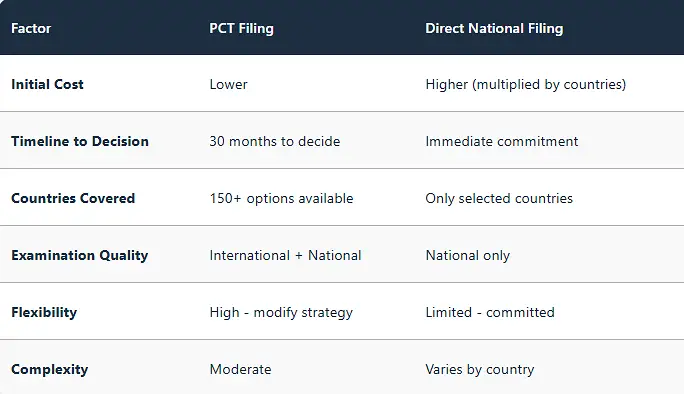
In this table, we will discuss about the comparison of PCT filing route and direct national filing route. It will include several important factors like initial cost, decision timeline, countries covered, etc.
| Factor | PCT Filing | Direct National Filing |
|---|---|---|
| Initial Cost | Lower | Higher (multiplied by countries) |
| Timeline to Decision | 30 months to decide | Immediate commitment |
| Countries Covered | 150+ options available | Only selected countries |
| Examination Quality | International + National | National only |
| Flexibility | High – modify strategy | Limited – committed |
| Complexity | Moderate | Varies by country |
Hybrid Approach: Many sophisticated filers use a hybrid strategy: file PCT for broad international coverage while simultaneously filing direct national applications in their most critical markets. This combines the strategic advantage of the PCT with immediate examination in key jurisdictions.
Step-by-Step Guide to Filing a PCT Application
Filing through PCT route has many single steps to follow. If we prepare for them carefully, then these steps are easy to follow. Filing a PCT patent application involves several sequential steps. Understanding each stage helps ensure a smooth and successful filing process.
Step 1: Prepare Your Documentation (Requirement gathering and preparing the documents)
- Compile a complete technical description of your invention
- Prepare detailed drawings or diagrams (if applicable)
- Develop clear claims defining your invention’s scope
- Create an abstract summarizing your invention
- Gather all supporting documentation
Step 2: Select Your Receiving Office (finalizing the receiving office)
- Determine which office will receive your application (typically your national patent office)
- Verify that your country is a PCT member state
- Confirm filing requirements and fees with your selected office
- Prepare required forms (typically Form PCT/RO/101)
Step 3: Submit Your Application (Sending application for further proceed)
- File your application with your designated receiving office
- Include all required forms and documentation
- Pay the required filing fees
- Obtain a filing date and application number
- This filing date becomes your priority date worldwide
Step 4: International Search Phase (prior-art and patentability search report)
- The International Searching Authority examines prior art
- You receive an International Search Report within 16 months of priority date
- Review the search report for cited references
- Evaluate the patentability assessment
- Prepare response if necessary
Step 5: International Preliminary Examination (Optional)
- Request preliminary examination if desired (available in most PCT systems)
- Examiner reviews patentability based on search results
- You may file amendments and arguments
- Receive a Preliminary Examination Report
- This step provides additional assessment before national phase entry
Step 6: Make Strategic Decisions
- Analyze search reports and examination feedback
- Evaluate market opportunities in potential target countries
- Assess patent enforcement feasibility in key jurisdictions
- Determine your budget for national phase filings
- Identify countries offering the best commercial opportunity
Step 7: Enter the National Phase
- Select specific countries for patent protection (before month 30)
- File national phase applications with each selected country’s patent office
- Translate applications into required languages
- Pay national filing fees
- Include required local documentation
Step 8: National Examination and Approval
- Each country’s patent office examines your application
- Address office actions and examination requirements in each jurisdiction
- Work with local patent attorneys as needed
- Respond to examiner rejections with arguments and amendments
- Obtain patent grants in successful jurisdictions
Step 9: Maintenance and Enforcement
- Pay maintenance fees to keep patents in force
- Monitor for patent infringement in relevant markets
- Enforce patents when necessary
- File patent office submissions to maintain patent validity
Common Misconceptions About PCT Applications
There are lot of misconceptions or doubts about the PCT applications, how to proceed with it? whether it would be better to go with direct filing or go with PCT route?, etc. Several widespread misunderstandings about the PCT system can lead to strategic mistakes. Clarifying these misconceptions helps applicants make informed decisions.
Misconception 1: “A PCT Application Grants International Patents”
Reality: The PCT system does not grant patents. It’s a filing procedure that leads to patents in designated countries. Each country’s patent office must approve your application according to its own laws. The PCT facilitates the process but doesn’t guarantee patent issuance.
Misconception 2: “PCT Protection Applies Automatically in All Countries”
Reality: You must actively designate specific countries in your application. The PCT allows you to designate any member country, but you don’t receive automatic protection everywhere. You choose your target countries strategically based on your business needs.
Misconception 3: “PCT Filing is Always Cheaper Than Direct National Filing”
Reality: The cost advantage depends on your target markets. If you’re filing in only one or two countries, direct national filing may be cheaper. PCT’s advantage emerges when targeting multiple countries (typically three or more), especially when combined with the extended decision timeline.
Misconception 4: “Once You File PCT, You’re Committed to All Designated Countries”
Reality: You retain flexibility throughout the process. The 30-month timeline allows you to withdraw from countries or abandon the application if circumstances change. You only pay for countries you actually pursue.
Misconception 5: “International Search Reports Determine Patentability”
Reality: Search reports provide preliminary assessment but don’t determine whether patents will be granted. National patent offices conduct their own examination and make final patentability determinations. Search reports are valuable for early indicators but not binding.
Misconception 6: “PCT Filing Replaces National Patents”
Reality: PCT is a tool for facilitating national patent filings, not a substitute for them. You must eventually file in national systems to obtain actual patent protection. PCT streamlines this process but doesn’t eliminate the need for national patents.
Misconception 7: “All Countries Accept PCT Applications”
Reality: While the PCT has over 150 member states, not all countries participate. Some nations require direct national filing. Verify your target countries’ participation before relying solely on PCT filing.
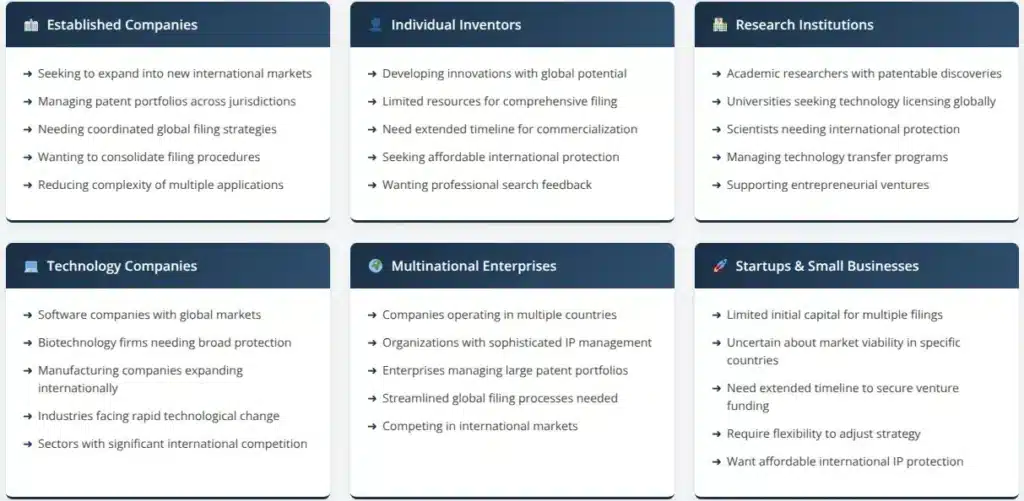
Who Should Consider PCT Filing? Comprehensive PCT Guide
This is an important part when it comes to the PCT filing, who actually should consider the PCT filing route? it is cost-saving, time-saving and strategy way to get extra edge in the multiple countries. PCT patent filing is advantageous for diverse applicants, though not universally appropriate for every situation.
Ideal Candidates for PCT Filing ( Comprehensive PCT Guide ):
Startups and Small Businesses (Small-size enterprises):
- Limited initial capital for multiple national filings
- Uncertain about market viability in specific countries
- Need extended timeline to secure venture funding
- Want to demonstrate intellectual property protection to investors
- Require flexibility to adjust strategy as business develops
Established Companies (Large and Mid-size organizations):
- Seeking to expand into new international markets
- Managing patent portfolios across multiple jurisdictions
- Needing coordinated global filing strategies
- Wanting to consolidate filing procedures and reduce complexity
- Requiring standardized examination across diverse markets
Individual Inventors:
- Developing innovations with potential international appeal
- Limited resources for comprehensive international filing
- Need extended timeline for commercialization decisions
- Seeking affordable access to international patent protection
- Wanting professional search and examination feedback
Research Institutions (University, Academic and R&D Professional Organizations):
- Academic researchers with patentable discoveries
- Universities seeking to license technology globally
- Scientists needing international protection for inventions
- Institutions managing technology transfer programs
- Organizations supporting entrepreneurial ventures
Technology-Focused Organizations:
- Software and technology companies with global markets
- Biotechnology firms requiring protection in major markets
- Manufacturing companies targeting international expansion
- Industries facing rapid technological change
- Sectors with significant international competition
Multinational Enterprises:
- Companies already operating in multiple countries
- Organizations with sophisticated IP management
- Enterprises seeking streamlined global filing processes
- Businesses managing large patent portfolios
- Companies competing in international markets
Industries Where PCT Filing is Particularly Valuable (Best Industries where PCT route is more beneficial):
Here is the list of industries which are preferred for PCT route filing stategy.
- Pharmaceuticals and biotechnology
- Software and information technology
- Advanced manufacturing and industrial equipment
- Consumer electronics and telecommunications
- Medical devices
- Clean technology and renewable energy
- Mechanical engineering and complex devices
- Chemical technologies
When to Reconsider PCT Filing:
- Your invention is relevant to only one country
- You’ve already identified specific immediate filing countries
- Your budget doesn’t allow national phase costs
- You need patent protection immediately without delays
- Your target countries have accelerated examination programs
- You require specialized national examination procedures
- You prefer direct relationships with specific patent offices
Key takeaway (In Short)
The PCT patent application system represents a transformative approach to international patent protection, offering inventors and businesses unprecedented flexibility, cost efficiency, and strategic advantage. By understanding how the PCT system of patenting works, evaluating the benefits of international patent filing, and avoiding common misconceptions, you can make informed decisions about protecting your intellectual property globally. In this Comprehensive PCT Guide, we have included all possible aspects and sub-topics related to PCT applications.
Whether you’re a startup seeking affordable international protection, an established company managing a global patent portfolio, or an individual inventor with cross-border potential, the PCT international application system provides the tools and structure necessary for effective intellectual property management. The 30-month decision timeline, reduced initial costs, and access to over 150 countries make PCT filing an essential consideration for anyone serious about comprehensive patent protection.
Start your PCT patent filing journey today with careful planning, professional guidance, and a clear understanding of your commercial objectives. Visit our website for PCT Application Services.
Also, Read: Why Choose PCT Filing? 5 Key Reasons

