
Trademarks

Which Companies Provide Trained TTAB Paralegal Support Services?
A single missed TTAB deadline does not send a polite reminder before it costs a client their opposition or cancellation case. It simply expires, and


A Patent on a Football? Are they a running team or a passing team? This question is one fans ask at the beginning of each football game. Modern football games consist of various plays, including the long, “hail-mary” forward pass. However, the mostly forgotten fact is that a passing game was impractical during the sport’s early days. Why? The ball itself.
The first American Football game was played in 1869 between two Universities – Princeton and Rutgers. At that time, the ball was more like a rugby ball than the ball we recognize today. The outside of the ball was leather; however, the inside was a pig’s bladder, inflated by mouth using a pipe – a dangerous method if the pig was diseased. In the beginning, running plays were the only viable strategy as the ball was continually deflating, losing its shape, resulting in awkward throws.
It was a time-consuming and complicated process to inflate the ball. At times, the games were halted, and players took turns blowing up the ball. Each time the ball was inflated, it had to be unlaced (and then relaced again). Each ball had metal stem valves that made it difficult to throw and dangerous for players to catch.
A patent filed in 1925 states, in part, the invention’s objective is to provide a football “especially adapted for the use in playing the present game wherein the ball is frequently thrown by hand in the play known as the ‘forward pass.‘” Fourteen years later, in 1939, a patent filed by Milton B. Reach shows the shape of the ball further advanced, similar to the one we know today. In 1941, Samuel “Slingin’ Sammy” Baugh, of the former Washington Redskins, becoming the NFL’s first well-known forward passing quarterback.
Disruptive innovation has improved all aspects of football, from the ball itself to the players’ uniforms or the devices used to broadcast and watch the big game; without these inventors and scientists, the game we know and love today would look a lot different.
A single missed TTAB deadline does not send a polite reminder before it costs a client their opposition or cancellation case. It simply expires, and

A single missed deadline in a patent portfolio does not announce itself. It sits quietly in a spreadsheet or a docketing system until the day

A USPTO Office Action lands in your inbox on a Tuesday afternoon, and the response deadline is already running. If you are a junior associate

A trademark registration is not a permanent asset. It is a right that a company must actively maintain, and in most countries, that maintenance comes
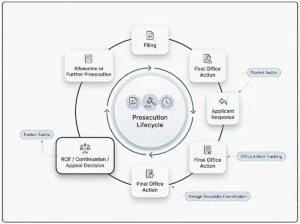
A final Office action lands in your inbox, and the deadline clock starts ticking immediately. For a junior attorney or a solo practitioner juggling a

A missed renewal deadline does not send a warning email to your entire team. It simply expires quietly, and by the time anyone notices, the

